



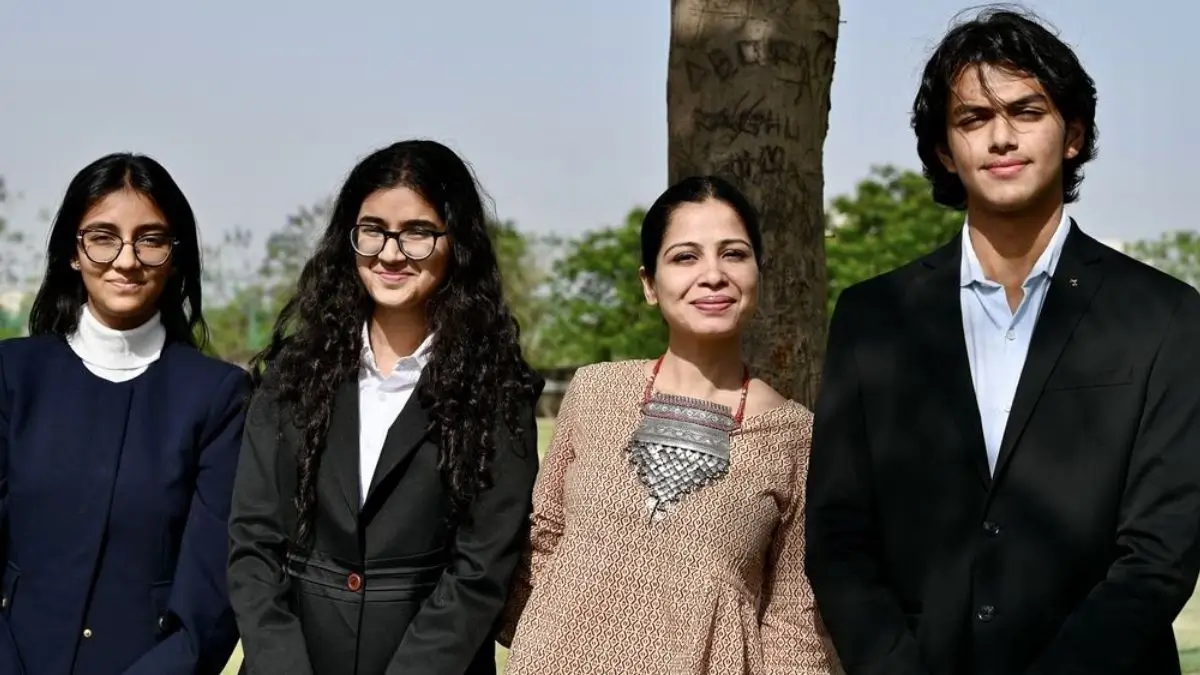
Three 16-year-old students developed Plas-Stick, a biodegradable powder made from discarded tamarind seeds capable of grouping microplastics present in water and removing them with a magnet.
The proposal, as novel as it is practical, was distinguished with the The Earth Prize 2026, the world’s most prestigious youth environmental competition.
How Plas-Stick Works
- It is produced with tamarind seeds that are usually discarded as agricultural waste.
- Upon contact with water, the powder attracts plastic particles and gathers them into visible clusters.
- These clusters can be easily removed with a portable magnet, without the need for electricity or complex filtration systems.
- The system is economical, easy to manufacture, and applicable in vulnerable communities without technological infrastructure.
The Protagonists
The team consists of Vivaan Chhawchharia, Ariana Agarwal, and Avyana Mehta, who became the first representatives from India to receive this international recognition.
- The proposal was chosen after a global vote with the participation of 23,000 people.
- It had already been previously selected as the best project in Asia among hundreds of environmental initiatives.
During the ceremony, the students highlighted: “Being named global winners of The Earth Prize is incredibly special for us, especially as the first team from India to receive this recognition”.
Origin of the Idea
The initiative was born after a visit to a rural Indian community, where they observed that many families stored water in plastic containers without proper treatment.
That experience led them to investigate how millions of people could be exposed daily to microplastics in water.
A Global Problem
More than 2.2 billion people lack access to safely managed drinking water services.
In this context, simple and accessible solutions like Plas-Stick can make a difference in communities that rely on domestic storage or contaminated sources.
Scientific Support and Dissemination
The project was advised by specialist Rajesh Khandelwal, who helped validate the experimental tests.
- Plas-Stick has already been presented in workshops and demonstrations reaching more than 8,000 students and teachers.
- The proposal demonstrates how to transform agricultural waste into useful tools to tackle global environmental challenges.
International Recognition
The founder of The Earth Foundation, Peter McGarry, stated: “The Plas-Stick team represents exactly the type of innovation that The Earth Prize seeks to promote: scientifically-based solutions, environmentally responsible, and accessible to the communities that need them most”.
The creation of Plas-Stick shows how youthful creativity can offer concrete responses to global environmental problems.
Turning tamarind seeds into a powder capable of removing microplastics from water is not only a scientific advancement but also an example of how innovation can arise from local experiences and become a global solution.



