



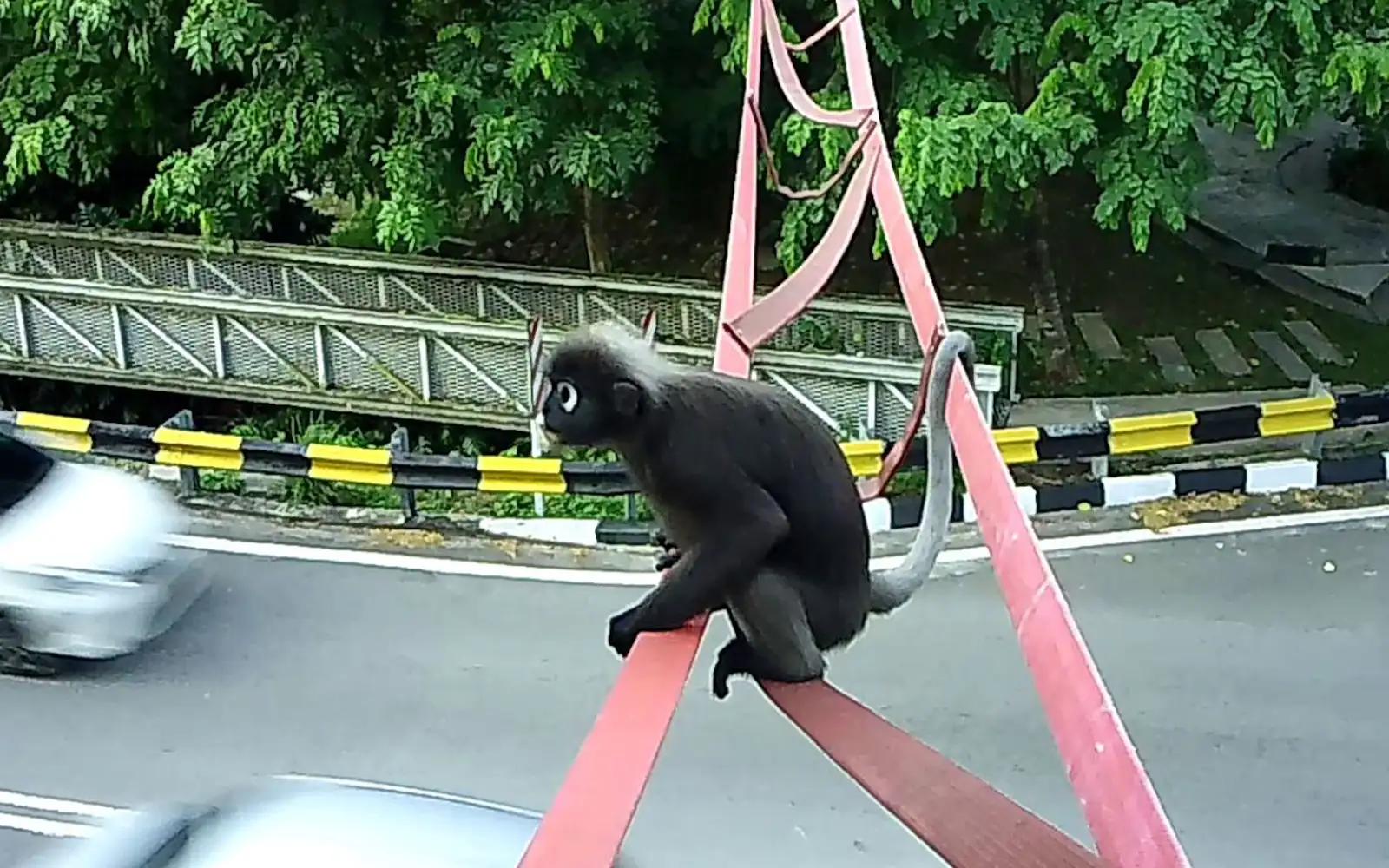
In the city of Penang (Malaysia), the dusky langurs —primates recognizable by the white patches around their eyes— found a safe way to move thanks to the suspended rubber bridges installed by the conservation group Langur Project Penang (LPP).
The loss of forests had forced these animals to cross streets and avenues, exposing themselves to accidents that threatened their survival. The bridges mimic the flexibility of branches and allow the monkeys to move without descending to the ground, drastically reducing mortality.
Citizen Science and Environmental Education
The driving force of the project is the community network of neighbors, turned into “citizen scientists.” They track groups of langurs, study their routes, and record feeding habits to guide future reforestations.
To reduce conflicts with the urban population, volunteers conduct door-to-door education, teaching harmless tactics to scare away the animals, such as gently spraying them with water in case of incursions into homes.
Function of Wildlife Bridges
The rope bridges and terrestrial wildlife crossings play a key role in ecological connectivity:
- Protection of arboreal fauna: they mimic lianas and branches so that monkeys, sloths, and squirrels can cross roads without risk.
- Reduction of mortality: in countries like Colombia and Costa Rica, they have reduced accidents involving monkeys and other mammals.
- Genetic connectivity: European and Latin American ecoducts prevent the isolation of populations.
- Human safety: by keeping animals on their natural routes, traffic accidents and damage in agricultural areas are reduced.
Ecological Importance of the Dusky Langur
The Trachypithecus obscurus is vital for the health of Southeast Asian forests:
- Ecosystem health: disperses seeds through its feces, ensuring the natural regeneration of the jungle.
- Trophic balance: serves as prey for birds of prey, snakes, and carnivorous mammals.
- Environmental indicator: its population status reflects the quality of forest habitats.
Main Threats
- Deforestation: agricultural expansion (palm oil) and urbanization.
- Hunting and illegal trafficking: captured for consumption or as exotic pets.
- Road accidents: frequent when moving along roads and rural paths.
The installation of rope bridges in Penang demonstrates how community innovation can save endangered species.
The dusky langurs, seed dispersers and guardians of biodiversity, find in these structures an opportunity to survive in hostile urban environments. Protecting them is essential to maintaining the ecological balance of Asian forests and advancing conservation models that integrate society in the defense of wildlife.



