



During the summer of 2026 in Argentina, biopools stopped being a landscaping curiosity and became a real alternative to traditional swimming pools.
What sets them apart is not only their natural aesthetics but also their system: the water is kept clean through a biological process that replicates what happens in lagoons and healthy aquatic ecosystems.
This approach marks a cultural shift: the goal is no longer just a functional pool but a system that combines well-being, design, and natural balance, redefining the concept of a pool in modern homes.
How they work
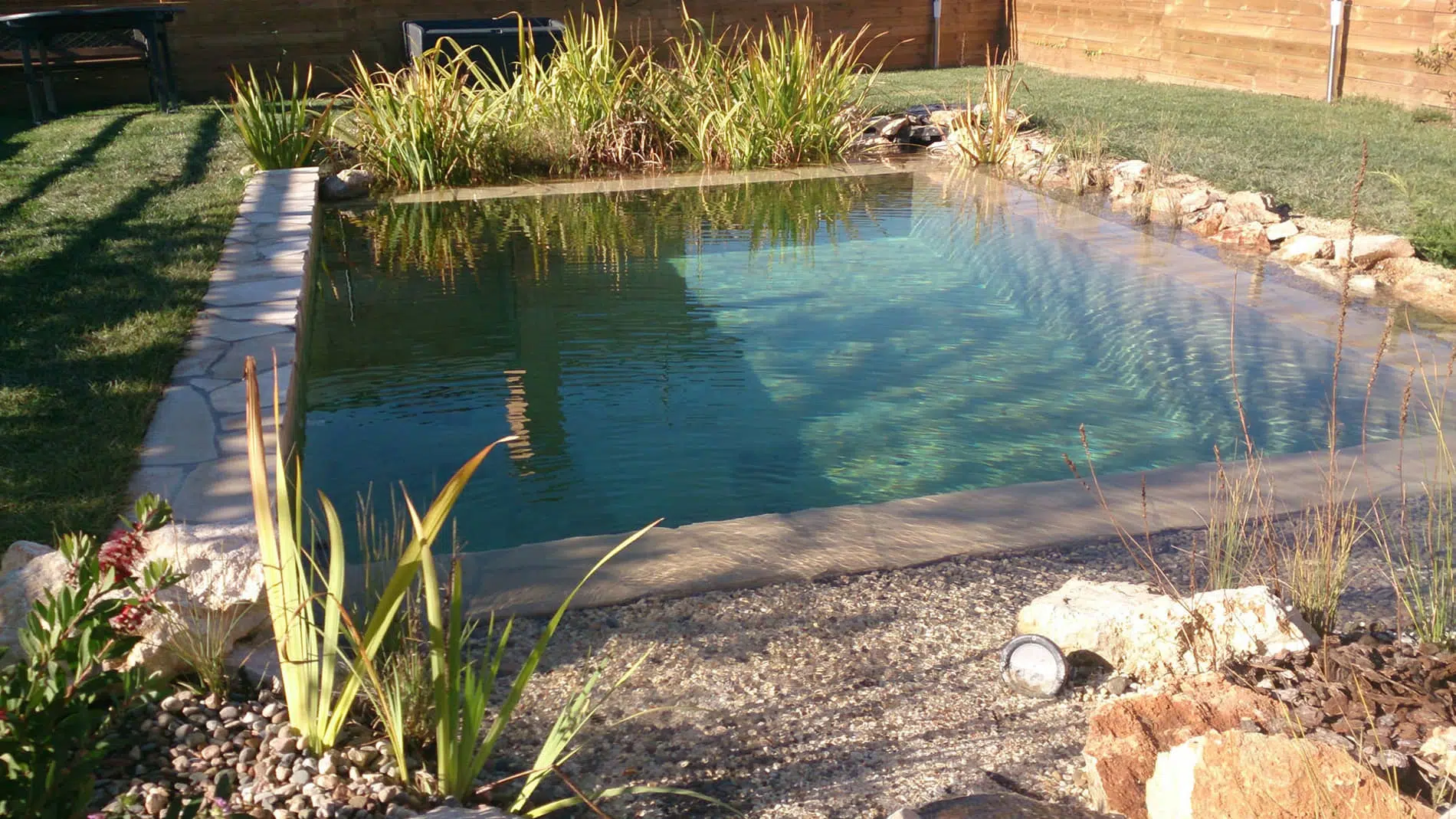
Every biopool is organized into two fundamental areas: the swimming zone and the regeneration zone.
The operation is based on a hydrobotanical system that naturally purifies the water:
- The water enters an artificial wetland, where an initial filter retains particles.
- It then passes through a bed of stones, roots, and natural substrates.
- Aquatic plants oxygenate the water.
- Microorganisms eliminate harmful bacteria.
- Finally, the clean water returns to the swimming zone.
This cycle is continuous: the water circulates permanently, maintaining its biological balance and remaining clear, stable, and free of chemicals.
Main advantages
Biopools offer benefits that make them an attractive option:
- Healthy and ecological: without chlorine or chemicals, ideal for people with sensitive skin or allergies.
- Resource saving: they are not emptied in winter and only require replenishing evaporated water.
- Natural aesthetics: they harmoniously integrate into the landscape, functioning as an ecosystem.
- Less long-term maintenance: once the system is balanced, they require less daily care.
- Thermal stability: the stones in the system help keep the water pleasant.
Challenges and disadvantages
However, they also present limitations:
- High initial cost: their construction is customized and more expensive than a conventional pool.
- Space requirement: they require dividing the surface 50% for swimming and 50% for purification.
- Specialized maintenance: they demand control of the biological balance and care of the plants.
- Appearance of the water: it may look more like a natural pond than a crystal-clear pool.
- Associated fauna: insects or frogs may appear in the plant area.
- Usage limits: they are not recommended for an excessive number of simultaneous bathers.
Biopools represent a sustainable and aesthetic alternative to traditional pools. Their natural, chemical-free operation makes them a healthy option in tune with the environment. Although they require a higher initial investment and space, more and more architects recommend them as the new paradigm of water design in the home.



