



Work isn’t stuck in the office anymore. People are working from everywhere now, their kitchen, coffee shops, shared spaces. You’ll catch someone at a cafe with a laptop, probably on some video call, just powering through their day. Most of my friends work from home most days, and honestly, it sucks trying to squeeze everything onto a tiny screen. Nobody really talks about how messed up this is. Companies are throwing money at ergonomic chairs, standing desks, all these wellness apps and subscriptions.
But they’re missing the point.
People are working from their couches and kitchen tables, and that’s just not the same.But the one tool that most directly impacts how much a remote worker can actually accomplish in a day, the screen in front of him or her, is left entirely to chance. The vast majority of remote professionals are quietly absorbing the productivity cost of whatever their laptop shipped with.
If you’ve made a commitment to flexible work policies, hired talented remote professionals or built a culture of output over presence then the tools your people use at home matter just as much as the ones waiting for them at a desk.
In the age of remote work, the portable monitor may be the most underrated productivity tool out there. And that’s the reason that has to change.
The hidden cost of multitasking on one screen
Ask any remote worker what hampers their productivity and very few will say “bad internet” or “too many meetings.” More often than not, the truthful answer is friction the toggling, the constant switching, the squinting at a screen split four ways trying to hold a spreadsheet, an email thread, a brief, and a video call all at once.
Laptop screens are made for portability, not productivity. A 13- or 14-inch screen is perfectly adequate for casual writing or Web browsing. It’s not built for the deep, focused, multi-source work that remote professionals are actually hired to do. Writers need to reference as they write. Analysts have to compare data across multiple files at the same time. Project managers need their task board next to their inbox. And all that on one little screen. Constant context-switching. Context-switching is expensive.
The cognitive sciences are very clear on this: every time the brain switches from one task to another it takes time and energy to reorient. Those micro-transitions, over the course of a full working day, mean a lot of lost time and mental fatigue that is building. Workers don’t know it’s happening, but by mid-afternoon they feel it.
What the Research Repeatedly Shows
Research on dual-screen setups consistently shows similar results across different industries or roles:
- Faster task completion – when they don’t have to switch between open apps over and over again, workers complete complex tasks measurably faster
- Reduced errors side-by-side comparison reduces errors in data entry, editing and cross-referencing documents
- Less cognitive fatigue – the brain has to work much harder carrying context that a second screen could carry passively
- Improved focus & depth – workers report longer uninterrupted focus when reference material is visible without effort
- Greater job satisfaction – employees who feel properly equipped report increased confidence and reduced end-of-day exhaustion
There is no upgrade in luxury. It is a basic working condition and for remote workers it is one most employers have silently ignored while assuming the laptop they issued is enough.
Why portable monitors are the right answer
The obvious solution A second monitor at once poses a practical problem for anyone who does not work from a single fixed location. A desktop monitor fixes the screen problem at home but then creates a new one the second your employee grabs their bag and heads off to a client meeting, coworking space, or week of travel. It sits on a desk doing nothing, they go back to a single screen the moment they leave.
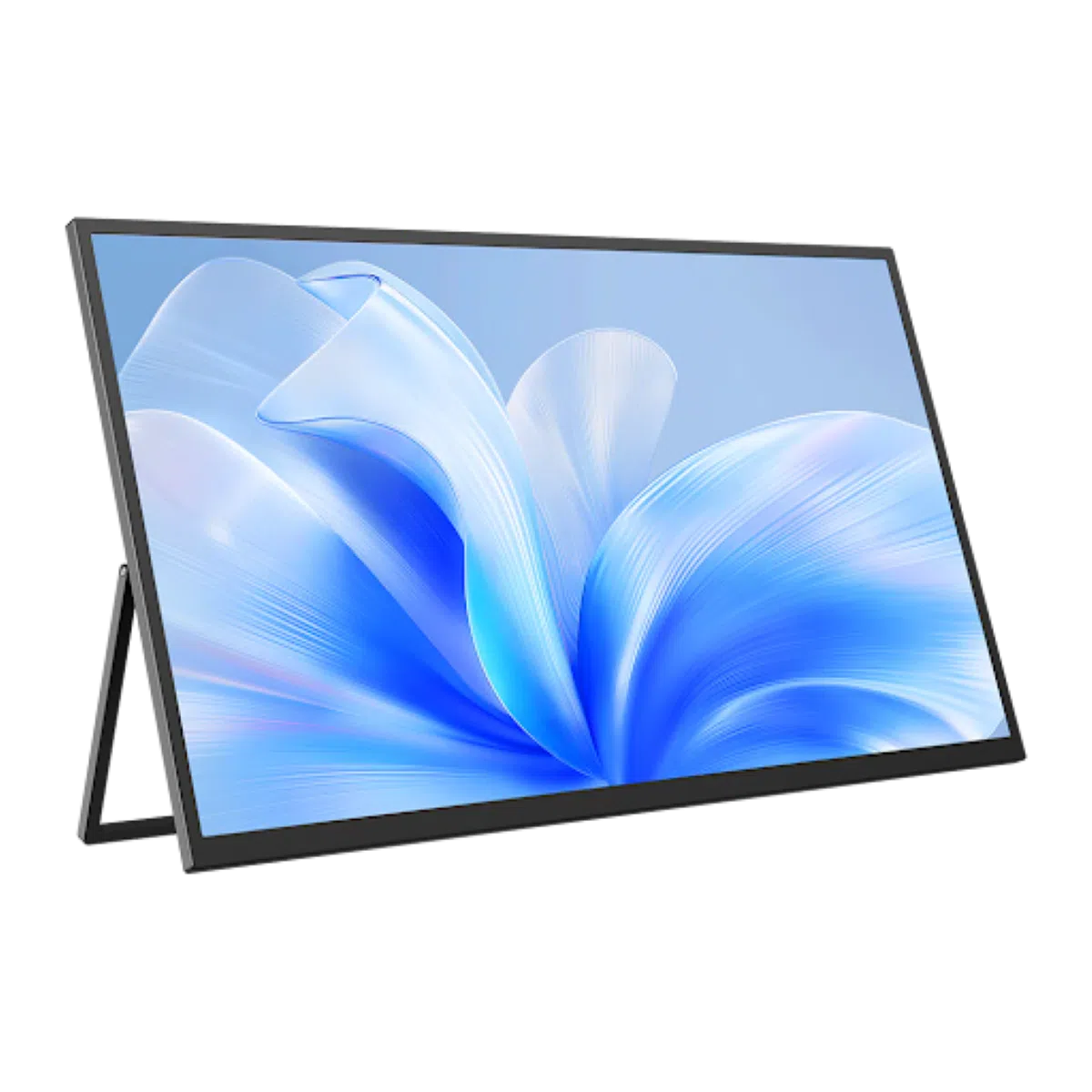
Portable monitors solve both problems at the same time. They are made for people who carry their office with them.
Key Features that Make Them Practical for Remote Pros
- Lightweight design – most good models weigh less than 800 grams so they fit easily in a bag with a laptop without adding noticeable bulk
- Single cable setup – one USB-C connection powers and displays at the same time; no power adapters, no tangles, no IT request needed
- Ready in less than 30 seconds – unpack, plug and work; no drivers, no complicated display settings, no wasted time
- Works everywhere – home office, coworking space, client site, hotel room, airport lounge – same setup everywhere
- Works with virtually any modern laptop — USB-C is now universal and most laptops bought in the last four years support it natively
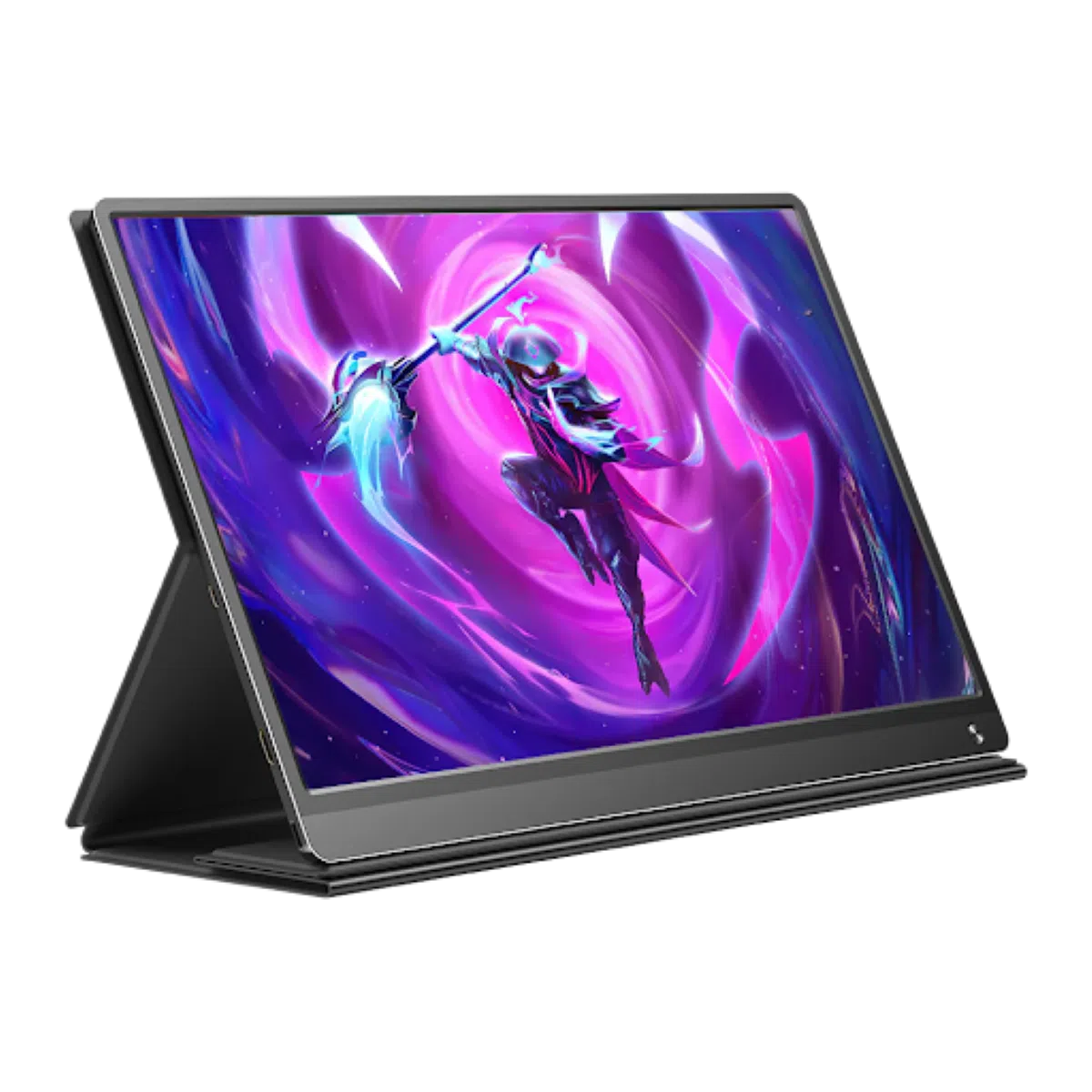
UPERFECT Portable monitor is the only second-screen solution that truly goes where part-time remote workers who split their time among multiple locations do, and delivers consistent results.
The Performance Advantages of Consistency
Even the best workers have good days and bad days. A lot depends on whether their workspace actually works for them or just gets in the way. When you’ve got a comfortable setup that feels normal to you, it’s way easier to focus and do good work wherever you are.
But if you’re constantly adjusting to stuff or working in some cramped, noisy place, you burn out just dealing with the problems instead of actually getting anything done.
That invisible tax compounds over time and over months and quarters, it shows up in missed deadlines, increased errors and quiet disengagement.
It’s not a gift to give remote workers the right tools. It is the operational strategy.
The Environmental Case , Why it Matters to Your Business
Sustainable business practice is not a differentiator anymore. It’s an expectation of clients who ask about supply chain ethics, investors who score ESG performance, and the talent pool companies are competing hardest to attract and retain. What your organisation says about the environment is important and remote working is one of the most credible parts of that story.
Remote Work’s Environmental Dividends Are Already Paying Off
- Less commuting equals lower emissions – transport is one of the biggest contributors to greenhouse gas emissions in most countries, so cutting down on days in the office reduces that footprint directly
- Partially empty offices consume less energy – lighting, HVAC, and shared equipment operating at reduced capacity is a real saving at scale
- Real-world evidence is compelling – studies conducted during COVID-19 lockdowns demonstrated dramatic improvements in air quality within days of commuting coming to a halt, providing tangible proof that where work is done has measurable environmental consequences.
Portable Monitors: How They Take That Benefit Even Further
| Comparison | Portable Monitor | Standard Desktop Monitor |
| Power Consumption | 7–10 watts | 30–80 watts |
| Power Adapter Required | No — USB-C powered | Yes — dedicated adapter |
| Hardware Lifecycle | Single owner, longer use | Corporate refresh every 3–4 years |
| E-Waste Risk | Low | High |
| Manufacturing Footprint | Compact, minimal materials | Larger, heavier, more materials |
Every device that is not prematurely manufactured, not prematurely discarded, is a real reduction of environmental cost. And that’s multiplied across a team, a department or a whole distributed workforce and it starts to become a credible, defensible sustainability story one that more and more shapes how clients and investors see the organisations with which they work.
Implications for HR and People Teams
If you’re responsible for improving employee productivity or overall work experience, this is something worth paying attention to. Tools like portable monitors shouldn’t be treated as a small IT expense or pushed to next year’s budget they can make a real difference right now.
The companies doing well in the remote work era aren’t just the ones with flexible policies written down. They’re the ones that actually support their teams with the right tools. Those are the ones who actually put those policies into action, with the infrastructure to get it done. An inadequate toolset does not equal a flexible work arrangement. It is a source of daily, silent frustration that grows into disengagement.
The Business Case for . . .
- Engagement increases — employees who feel really well-equipped perform at a higher level and report greater connection to their work and their employer
- Lower turnover – the fully-loaded cost of replacing a mid-level employee is normally between 50% and 200% of their annual salary. The cost of a quality portable monitor is a rounding error by comparison.
- More robust remote culture — equipping teams with the right tools to make remote work truly productive sends a message of organisational commitment to flexible work that’s more powerful than words in a policy document.
- Competitive talent positioning – when evaluating offers, professionals are increasingly taking into account how well employers support remote work in practice, not just in principle.
What to Consider When Outfitting Your Team
Not all AI portable monitors are created equal. When selecting models for a distributed workforce, consider:
- USB-C bus-powered models – power is drawn directly from the laptop, eliminating the need for a separate wall adapter and simplifying setup in any environment
- IPS or OLED panels with adaptive brightness — the automatic brightness adjustment reduces energy consumption during the whole working day and reduces eye strain
- Durable construction with a carry case – a monitor that lasts three or four years of daily travel is a far better value product than a cheaper one that has to be replaced each year
- Energy Star certified – third-party verified efficiency standards instill confidence in the environmental credentials of the hardware
- Refurbished options where available – a good quality refurbished portable monitor has a fraction of the manufacturing footprint of a new unit and performs the same in daily use
Conclusion
Most companies have already signed up for flexible work as the future. At this point, the question isn’t whether remote work is here to stay—that’s already clear. The real question is whether companies are willing to invest in making it work properly in the long run.
Remote work isn’t changed by a portable monitor alone. But it eliminates one of its most stubborn, least-discussed constraints, and it does so cost-effectively, portably, and with a lighter environmental touch than virtually any alternative.
Your team is made up of people doing serious work. They deserve a serious setup, wherever they happen to sit.
A portable monitor is not a good thing. It’s infrastructure. And infrastructure, when done right, pays for itself many times over.



