



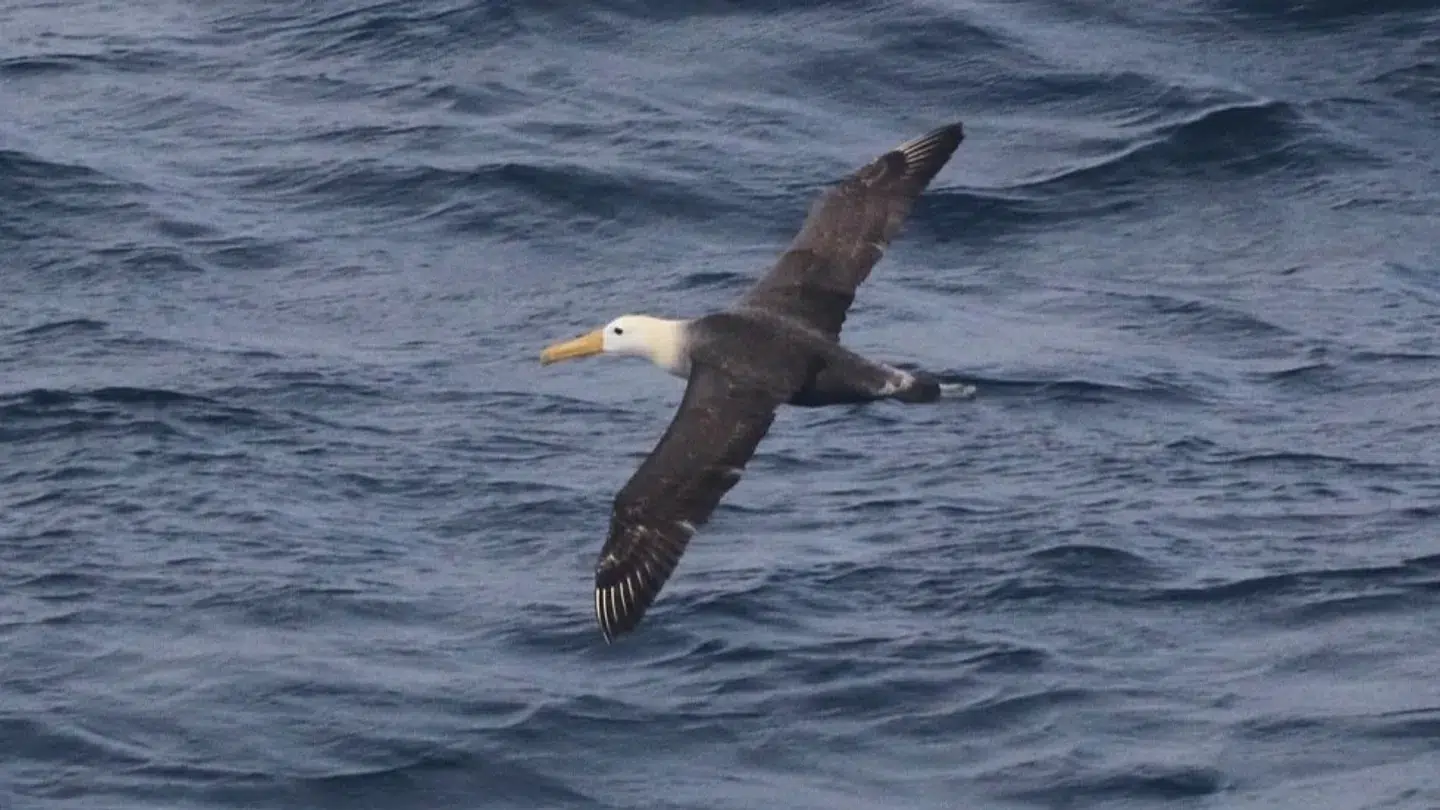
Researchers in the United States recorded the presence of a Galapagos albatross (Phoebastria irrorata) on the shores of Piedras Blancas, California, more than 4,800 kilometers from its natural habitat.
The sighting was made by scientist Tammy Russel from the Farallon Institute, who documented the bird from January 23 and managed to track it for three months on the Californian coast.
This record constitutes the first time the species has been documented north of Costa Rica, making it a unique and exciting event for the scientific community.
Interpretation of the finding
Russel explained that there is not enough data to consider this sighting as an alarming change in the species’ habits. It could be a case of vagrancy, an anomalous behavior in seabirds that may be due to physiological factors, storms, winds, or even exploration.
The waved albatross spends much of its life at sea and is classified as Critically Endangered by the IUCN, due to threats such as illegal fishing, plastic consumption, and irresponsible tourism.
Broader context: tropical birds in the North Pacific
Russel highlighted that in recent years there has been a documented increase in sightings of tropical seabirds on the west coast of the United States, including five species of boobies. According to a study published by her team, this phenomenon is related to marine heatwaves, warm water events that have increased in frequency and intensity due to climate change.
As part of the CalCOFI program, researchers have gathered data showing how the climate and oceans are changing. Although a single individual does not represent a trend, these studies allow for understanding the long-term transformations of marine ecosystems.
The importance of albatross migrations
Albatross migrations are essential for their survival and fulfill multiple functions:
- Foraging: they travel thousands of kilometers in search of fish and squid distributed sparsely.
- Energy efficiency: their dynamic soaring flight allows them to move with low energy consumption, taking advantage of winds and waves.
- Ecological role: by feeding, they contribute to the balance of marine food chains.
- Biological indicators: their migratory routes are used by scientists to monitor ocean health and the effects of climate change.
- Conservation challenges: their routes expose them to interaction with fishing gear, making their routes key areas for protection measures such as the Agreement on the Conservation of Albatrosses and Petrels (ACAP).
The sighting of the Galapagos albatross in California is an extraordinary event that reflects both the ability of these birds to travel epic distances and the need to continue monitoring changes in marine ecosystems.
Although it is an isolated event, its scientific value is enormous: it allows for a better understanding of migration dynamics and the impact of climate change on the distribution of threatened species.



