



From the top of a mountain in Chile, the largest digital camera in the world begins to reveal the best-kept secrets of the universe. This is the Vera C. Rubin Observatory, a monumental work of science that released its first images, marking the beginning of a decade dedicated to exploring the boundaries of the southern sky.
This unprecedented instrument was designed to observe unexplored regions of the sky, and in its first captures, it showed astonishing visual richness: nebulae like the Trifid and the Lagoon, brimming with colors and shapes, along with clusters of galaxies millions of light-years away from our planet.
With unrivaled resolution, the camera will allow detailed documentation of astronomical phenomena and the detection of millions of galaxies, asteroids, and celestial objects still unknown. This scientific tool promises to transform our understanding of the cosmos.
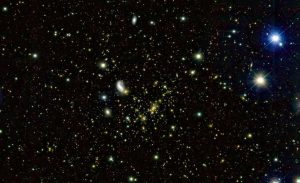 Chile created a giant digital camera to study the universe.
Science, conservation, and a planetary perspective: the camera to study the universe
Located in a region privileged for its atmospheric stability, the observatory also highlights the importance of clean night skies. The choice of northern Chile is not accidental: its low light pollution makes the area one of the most suitable in the world for astronomical observation.
Projects of this magnitude remind us of the connection between technology and nature. Preserving air quality and limiting uncontrolled urban expansion are essential for observatories like Vera Rubin to continue operating without interference. The clarity of the sky benefits not only science but also inspires future generations.
The initiative is named after the astronomer Vera Rubin, a pioneer in dark matter detection, that invisible force that constitutes the majority of the universe. Now, with the sharpest digital eye ever built, it is expected to advance in understanding this and other cosmic enigmas.
This cosmic journey from the Andes is not just a scientific feat. It is also a reminder of how much is still unknown about the universe and the need to protect the planet to continue looking beyond.
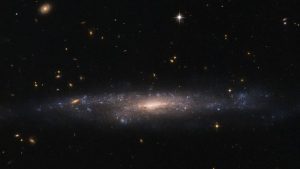
Exploring the galaxy to understand our place
Studying the galaxy is key to understanding the origin and evolution of the universe. By analyzing stars, planets, nebulae, and clusters of galaxies, scientists can reconstruct the cosmic history from the Big Bang to the present, revealing the processes that shaped everything we know.
Observing distant phenomena also allows detecting patterns that help predict the future of the cosmos. The search for exoplanets, for example, not only expands knowledge about other solar systems but also raises new questions about the possibility of life beyond Earth.
Furthermore, galactic study drives the development of technologies applicable on Earth, such as advanced sensors, artificial intelligence, and new data analysis methods. Altogether, astronomy not only teaches about the universe, but also about how to protect our own planet.



