



The mercury pollution could have a much older origin than previously thought. An international study conducted in Greenland managed to reconstruct the history of this pollutant from a 1,250-meter-deep ice core, revealing that human activities began to alter atmospheric levels of the metal approximately 4,000 years ago.
The research, developed by specialists from the Blas Cabrera Institute of Physical Chemistry and other scientific centers, analyzed environmental records preserved throughout the Holocene, a period that spans from 11,700 years ago to the present.
The results show that the human footprint on the environment did not begin with the Industrial Revolution, but was already detectable during the Bronze Age, when various extractive and metallurgical activities began to release mercury into the atmosphere.
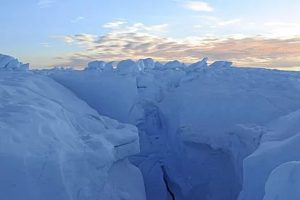
The Greenland ice as an environmental archive
The core was obtained as part of the East Greenland Ice Core Project. Subsequently, researchers divided the material into sections equivalent to five-year periods to achieve a detailed reconstruction of environmental evolution.
Additionally, each sample underwent rigorous cleaning processes to avoid external contamination. Then, the ice was melted and analyzed in the laboratory using high-precision techniques.
Thanks to this procedure, scientists obtained one of the most extensive and detailed records on the presence of mercury in the atmosphere of the northern hemisphere over thousands of years.
Traces of human activity since the Bronze Age
The results suggest that the first significant mercury emissions were linked to the refining of copper and tin ores, activities fundamental to the development of ancient societies.
Likewise, another possible source was the use of cinnabar, a mercury-rich mineral widely used as a red pigment and in various cultural and medicinal practices of the time.
The evidence found in Greenland shows that those emissions were significant enough to spread across wide atmospheric regions and reach ecosystems extremely far from their places of origin.
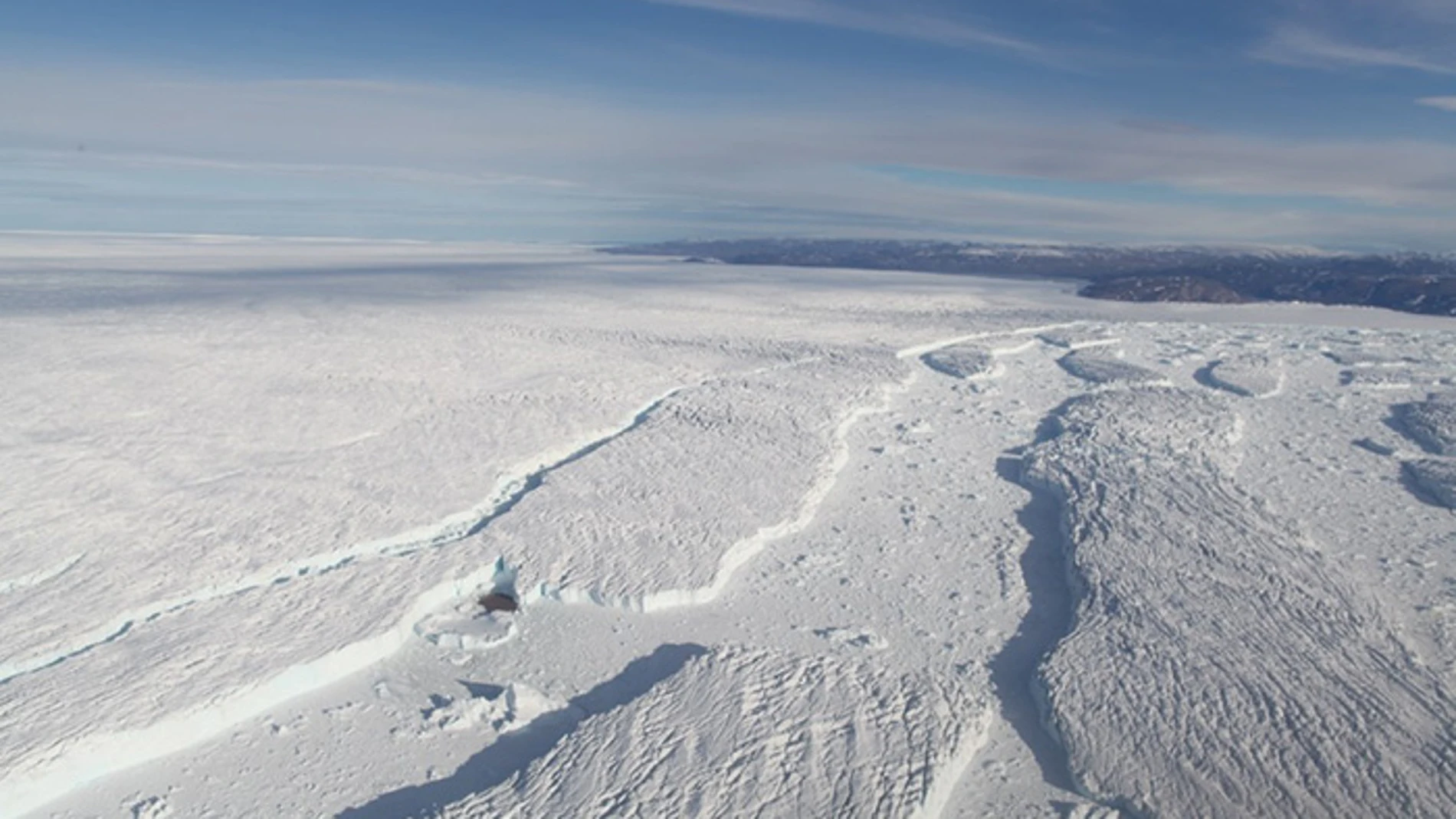
Pollution that intensified over time
The records also show a sustained increase in pollution. Since the 13th century, the accumulation of mercury in Greenland has multiplied by 2.7, while from 1840 onwards, the increase reached levels 7.4 times higher.
This growth coincides with the industrial expansion and the massive use of fossil fuels and large-scale metallurgical processes. As a result, the presence of mercury began to spread globally.
On the other hand, the methodology used allowed for the differentiation of human emissions from natural contributions generated by major volcanic eruptions, such as those of the Laki volcano in Iceland and the Novarupta volcano in Alaska.
How mercury exposure occurs and its effects
People can come into contact with mercury in various ways. The main route of exposure is the consumption of contaminated fish and seafood, especially large species that accumulate high concentrations of the metal along the food chain.
Additionally, some industrial, mining, and metallurgical activities can release mercury into the environment. In certain regions, it can also be found in soils, water bodies, or products containing compounds derived from this element.
Prolonged exposure poses a significant risk to health. Among its main effects are neurological alterations, cardiovascular problems, developmental disorders in children, and immune system impairments.
For this reason, the Minamata Convention on Mercury seeks to reduce its use and limit its emissions. Studies like the one conducted in Greenland provide fundamental information to understand the historical magnitude of this problem and strengthen strategies aimed at protecting both human health and the planet’s ecosystems.



