



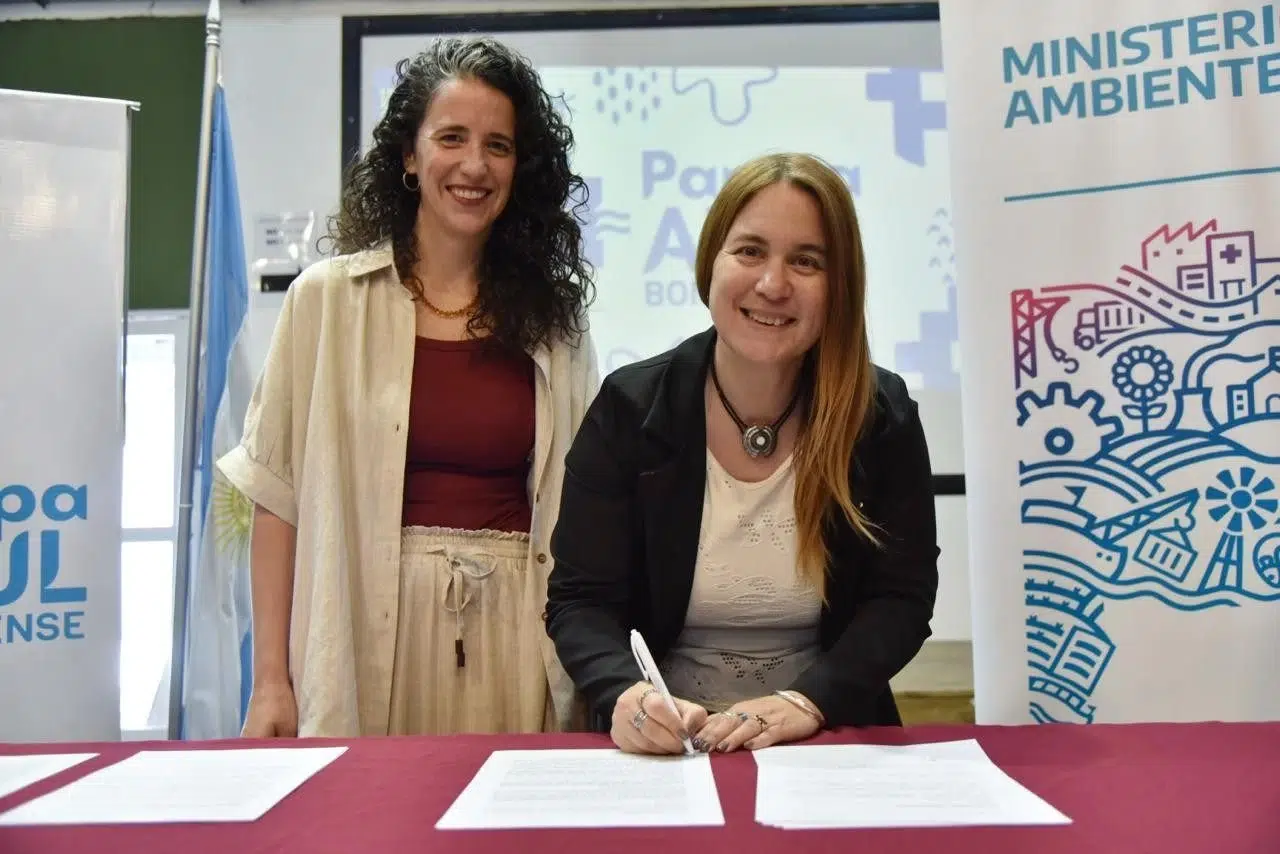
The province of Buenos Aires will advance in the implementation of a marine-coastal observation system aimed at improving the knowledge and protection of the Atlantic coast ecosystems. The initiative was formalized through an agreement between the Buenos Aires Ministry of Environment and the National Scientific and Technical Research Council (Conicet), consolidating an environmental monitoring strategy based on scientific information.
The project will be developed alongside the Marine-Coastal Stressors Research Network in Latin America and the Caribbean (Remarco), an international platform comprised of specialists from nearly 20 countries. Thanks to this collaboration, the capacity to analyze changes affecting coastal and oceanic environments will be strengthened.
Additionally, the proposal is framed within a regional vision that seeks to improve the management of natural resources and generate tools to anticipate increasingly frequent environmental risks in the context of climate change.
Strategic stations along the Buenos Aires coast
As part of the initiative, continuous monitoring stations will be installed in Santa Teresita, Villa Gesell, Mar Chiquita, and Mar del Plata. These points were selected for their ecological relevance and for representing different coastal environments of the province.
Through specialized technology, the stations will collect real-time data on fundamental environmental variables to understand the dynamics of marine ecosystems. The information obtained will allow the construction of historical series and early detection of alterations.
Furthermore, the system will include the monitoring of transition areas between terrestrial and oceanic ecosystems, sectors particularly sensitive to human pressures and global environmental changes.
Monitoring threats to protect biodiversity
One of the main objectives will be to study the so-called marine-coastal stressors, that is, factors that alter the natural balance of ecosystems due to human activities or environmental processes.
Among the variables to be observed are ocean acidification, harmful algal blooms, the presence of microplastics, and other emerging contaminants that generate concern in the international scientific community.
On the other hand, permanent monitoring will allow the evaluation of long-term trends and improve the response capacity to phenomena that may affect both biodiversity and economic activities related to the sea.

An initiative with environmental advantages
The creation of a permanent observation network represents a key tool for the conservation of coastal ecosystems. Having continuous information facilitates the early detection of environmental problems before they reach critical levels.
Moreover, the data obtained will allow the design of more efficient public policies for the protection of marine species, coastal wetlands, and habitats essential for the functioning of regional biodiversity.
Additionally, the project will promote evidence-based decision-making, improving territorial planning and promoting actions aimed at reducing pollution, preserving natural resources, and strengthening resilience to climate change.
Science and cooperation for sustainable development
The initiative also seeks to consolidate an environmental management agenda supported by cooperation between public organizations, scientific institutions, and international research networks.
In this regard, the information generated will contribute to the monitoring of global environmental commitments related to the conservation of the oceans and the sustainable use of marine resources.
Finally, the strengthening of scientific observation on the Buenos Aires Atlantic Coast represents an important step to better understand current environmental challenges and ensure the protection of a natural heritage essential for present and future generations.


