



Researchers from the CONICET made a surprising discovery in Misiones: they found evidence of a millenary civilization in Iguazú, within the National Park.
The team found remains of a people who inhabited the region around 6000 years ago, something that changes the understanding of the province’s history.
Among the recovered objects are arrows, knives, and axes dating back between 2000 and 4000 years old.
Discovery of a millenary civilization that inhabited Misiones: the details
The research, which began in 2019, focused on the cliffs, rivers, and streams within the area of the famous Iguazú Falls. By analyzing sediment layers, scientists were able to map a historical timeline of human occupation over millennia.
The initial objective was to analyze sediment layers in areas where the passage of time leaves visible traces.
Carbon 14 dating revealed that some of the oldest remains date back 6000 years, long before the arrival of the Spanish conquistadors. It was noted in the demarcated area that “eras of time” are perfectly preserved.
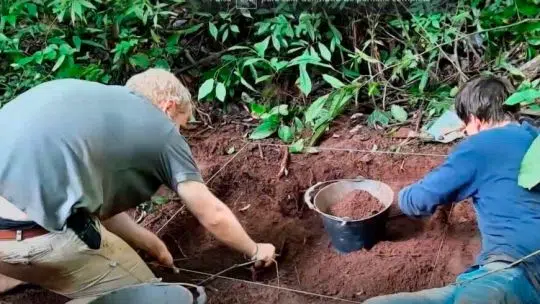 The prehistoric discovery in Iguazú National Park. (Photo: Perfil).[/caption>
According to the CONICET team, the findings suggest that these ancient civilizations used the rivers of the Misiones jungle as mobility routes and connections with other human groups.
The impressive archaeological discovery
The archaeologist and anthropologist Eduardo Apolinaire, leader of the University of La Plata team, provided Perfil newspaper with data about the discovery.
He pointed out that prehistoric communities used stone fragments as sharp tools, as well as woods and carbonized animal remains. This indicates a remarkable mastery of their environment and great adaptability.
Most fascinating for the researchers, as they specified, was the discovery of charcoal remains, ceramic fragments, and primitive tools.
Radiocarbon tests confirmed that these objects are over 6000 years old, representing a milestone in the region’s archaeology. Dr. Apolinaire highlighted the fortune of being able to recover “very old charcoal remains,” key for the precise dating of the site.
 The discovery in Iguazú.
Furthermore, according to specialists, everything points to these civilizations using rivers as mobility routes in the midst of the Misiones jungle, facilitating contact with other human groups. “We were fortunate to recover very old charcoal remains,” said the researcher.



