



After more than twenty years of development, the European Space Agency (ESA) launched in April 2024 one of its most ambitious projects: Biomass, an unprecedented satellite that allows us to “see the invisible”.
Equipped with P-band radar technology, the first of its kind in orbit, it can penetrate vegetation cover, clouds, and even deep ice layers, providing unprecedented information about the internal structure of the planet’s most complex ecosystems.
From its orbit at more than 600 kilometers altitude, Biomass began to generate detailed images of tropical forests, wetlands, and grasslands that allow us to accurately estimate the amount of carbon stored in forests, a key metric to understand the role of these systems in global climate regulation.
Radar that penetrates canopies and measures wood
The key innovation of Biomass is its use of P-band radar, a frequency capable of penetrating tree canopies and reflecting off trunks and soil, completely transforming the way satellites observe Earth. The first images reveal different landscapes color-coded as follows:
- Intense green: dense forests
- Blue and purple: open grasslands
- Vibrant red: forested wetlands, like those bordering Bolivian rivers
Given that most plant carbon is concentrated in tree trunks, this capability represents a qualitative leap in global climate monitoring.
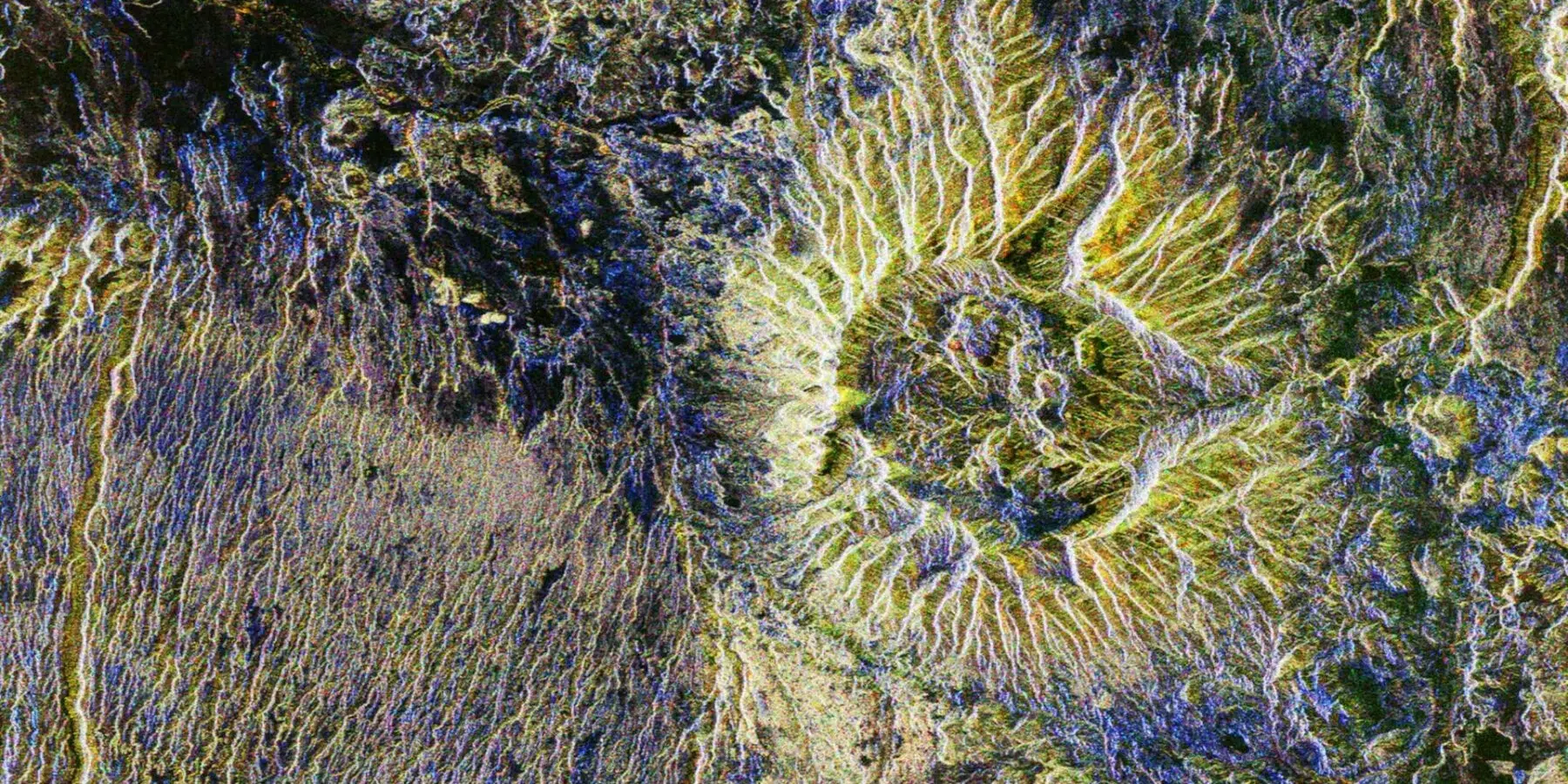 Biomass Images
A three-dimensional map of terrestrial carbon
The central objective of Biomass is to create the first global 3D map of forest biomass, an essential tool for:
- Quantifying terrestrial carbon with high precision
- Studying deforestation impacts
- Predicting future climate variations
- Designing conservation policies based on verifiable data
Surveillance against illegal logging and polar ice melting
In addition to quantifying biomass, the satellite has direct applications in early detection of illegal deforestation, allowing the identification of logged areas that previously escaped satellite monitoring. Its enhanced resolution will facilitate faster responses from environmental authorities.
Furthermore, its radar can penetrate deep ice, becoming a unique tool to monitor glacier movement and study melting in polar regions, a critical phenomenon with global implications.
Orbital science for a planet at risk
The launch of Biomass — carried out from French Guiana — represents an alliance between space technology and climate science.
With its expanded observation capabilities, the satellite positions itself as a strategic instrument to protect biodiversity, support mitigation actions, and guide environmental policies based on evidence.



