



The launch of the Butantan-DV vaccine marks a turning point in the regional response against dengue. The immunizer, developed in Brazil, will be administered in a single dose and will protect against the four serotypes of the virus.
The strategy aims to strengthen prevention in territories affected by increasing outbreaks and climatic conditions favorable to the mosquito. Regulatory approval enables the country to incorporate the vaccine into the National Immunization Program in 2026.
By then, the Butantan Institute expects to have tens of millions of additional doses available. The first units could be used even earlier, given the health urgency.
The spread of the virus in Latin America drives the need for rapid responses. The Butantan-DV was evaluated for almost a decade and demonstrated high overall efficacy and total protection against hospitalizations. Its single-dose format makes it a relevant tool for rural, indigenous, and riverside communities.

A region under epidemiological and climatic pressure
Dengue is advancing strongly in contexts where climate change expands the presence of the Aedes aegypti mosquito. Higher temperatures, irregular rainfall, and accelerated urbanization favor its reproduction. The result is a sustained increase in severe cases and deaths in several countries.
Brazil reached record numbers in 2024, with more than six million documented infections. The situation was repeated in other Latin American nations, where the simultaneous circulation of serotypes affected the capacity for health response. Authorities agree that vaccination does not replace vector control strategies.
The challenge is twofold: strengthen immunization and sustain environmental actions that reduce breeding sites. The Butantan-DV complements, but does not replace, epidemiological surveillance. The risk of other mosquito-borne diseases reinforces this need.
New generation vaccine and expanded production
The Butantan-DV uses attenuated viruses capable of generating immunity without causing the disease. Its evaluations included more than ten thousand participants in different regions of Brazil. The results showed 74.7% protection against symptomatic cases and 91.6% against severe forms.
The Butantan Institute already has one million doses ready for immediate use. An agreement with an Asian manufacturer will allow the production of another 60 million in two years. This volume will consolidate Brazil as a regional provider of dengue vaccines.
The country plans to prioritize its public system before offering doses abroad. The distribution logistics will focus on vulnerable areas with accessibility difficulties. Populations dependent on river transport will have key benefits with the single-application scheme.
Other countries affected by dengue that already have access to the vaccine
Most cases are concentrated in Latin America and the Caribbean. Brazil, Argentina, Colombia, and Mexico report the largest recent outbreaks. Together, they represent the vast majority of infections and deaths in the region.
Brazil has three authorized vaccines: Butantan-DV, Qdenga, and the now discontinued Dengvaxia. Argentina, Mexico, Peru, and other countries have Qdenga at different levels of use and approval. The arrival of the Brazilian vaccine could expand coverage in the coming years.
In the Caribbean, several nations have begun authorization processes or pilot programs. The PAHO promotes regional agreements to facilitate distribution. Availability, however, depends on the capacity for global production.
What are the symptoms of dengue and its effects on the body?
Dengue usually starts with high fever, intense muscle pain, and general discomfort. Joint pain, headaches, and discomfort behind the eyes are common. In many cases, skin rashes and nausea also appear.
Severe forms may include severe abdominal pain, persistent vomiting, and signs of bleeding. Fluid accumulation in the chest or abdomen indicates complications. Without timely attention, the condition can progress to shock and compromise vital organs.
Reinfection with a different serotype increases the risk of severity. Therefore, comprehensive protection against the four serotypes is a key advancement. Specialists emphasize that early warning is essential to avoid hospitalizations.
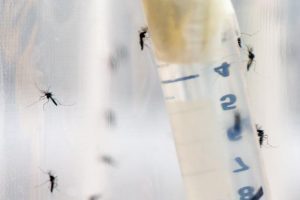
How to prevent, treat, and reduce the impact of dengue?
There is no specific treatment that eliminates the virus from the body. Medical care focuses on hydration, fever control, and symptom monitoring. Vigilance is essential in the face of warning signs in the first 48 hours.
Prevention remains the most effective measure. Eliminating containers with water, cleaning gutters, and covering tanks reduce breeding sites. The use of repellents, mosquito nets, and light-colored clothing helps prevent bites.
Health authorities emphasize the importance of the environmental surroundings. Waste management and reducing flood-prone areas decrease the presence of the mosquito. Climate change multiplies the risks, so measures must be sustained throughout the year.
A health advance with ecological and social impact
The incorporation of the Butantan-DV strengthens the regional capacity to face growing outbreaks. The logistics of a single dose promote health equity in complex territories. The positive impact can extend beyond Brazil and benefit all of Latin America.
Dengue prevention requires an integral approach that includes science, public health, and the environment. In this sense, climatic pressure and the increase of vectors confirm the need for accessible innovations. Thus, the new immunizer is presented as a key tool in that path.


