



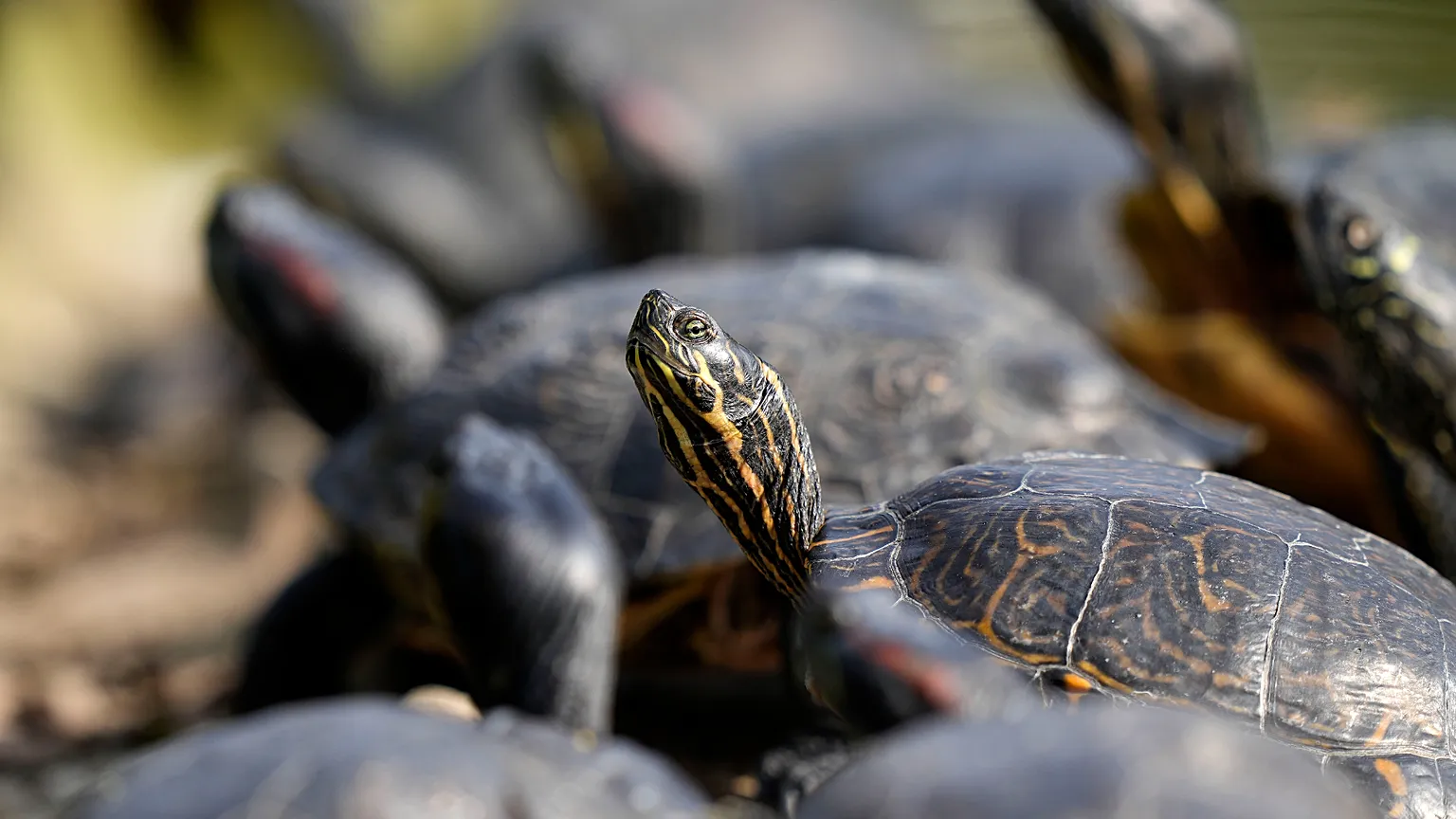
In a historic effort to save the biodiversity of the rainforest, approximately 1,500 Amazonian turtles were released on the banks of the Negro River, one of the most important tributaries of the Amazon.
This action is part of an ambitious conservation program aimed at halting the disappearance of a species threatened by poaching, illegal trade, and habitat loss.
Alliance between science and communities
The success of this release lies in the collaboration between scientists and local communities, who have transitioned from being consumers to guardians of the species. The local inhabitants protect the nests and actively participate in the release of hatchlings, aware that without these urgent interventions, the Amazonian turtle could become extinct in a few years.
This model of community management has been replicated in other areas of the Amazon, demonstrating that conservation is more effective when local communities become protagonists in the process.
Ecological and cultural importance
The Amazonian turtle (Podocnemis expansa and related species) plays an essential role in the balance of ecosystems:
- Ecological balance: disperses seeds and cleans rivers, maintaining biodiversity.
- Biodiversity: species such as the arrau (P. expansa), the taricaya (P. unifilis), and the Amazon river turtle (P. sextuberculata) are key in the Amazon basin.
- Cultural and community value: indigenous and local communities integrate conservation with sustainable development, reinforcing the connection between nature and culture.
Conservation in Brazil
Protection actions include:
- Mass releases of hatchlings in the Negro River and Jaú National Park.
- Community monitoring of nesting beaches to reduce poaching.
- Community-based management in reserves like Abufari, where nesting sites are protected from human predators.
- Threat mitigation such as wildlife trafficking, mercury pollution from illegal mining, and the construction of hydroelectric dams.
Persistent threats
Despite the progress, Amazonian turtles face serious risks:
- Poaching for consumption and illegal trade.
- Pollution from mercury derived from illegal mining.
- Dams like Belo Monte, which alter the natural flow of rivers and affect nesting areas.
- Climate change, which modifies reproduction cycles and habitat availability.
International projects and alliances
The program is led by the Chico Mendes Institute for Biodiversity Conservation (ICMBio) along with organizations such as the Wildlife Conservation Society (WCS). These entities work on nest protection, hatchling release, and strengthening populations of Amazonian turtles in Brazil.
Additionally, citizen science projects are promoted, involving sport fishermen and riverine communities, reinforcing environmental education and awareness about the importance of conserving these chelonians.
The release of 1,500 Amazonian turtles in the Negro River symbolizes a milestone in the conservation of Amazonian biodiversity. The alliance between science and local communities demonstrates that the protection of threatened species is only possible with the active participation of those who inhabit the region. This effort not only aims to repopulate the rivers but also to ensure the natural reproduction and ecological stability of one of the planet’s most important ecosystems.


