



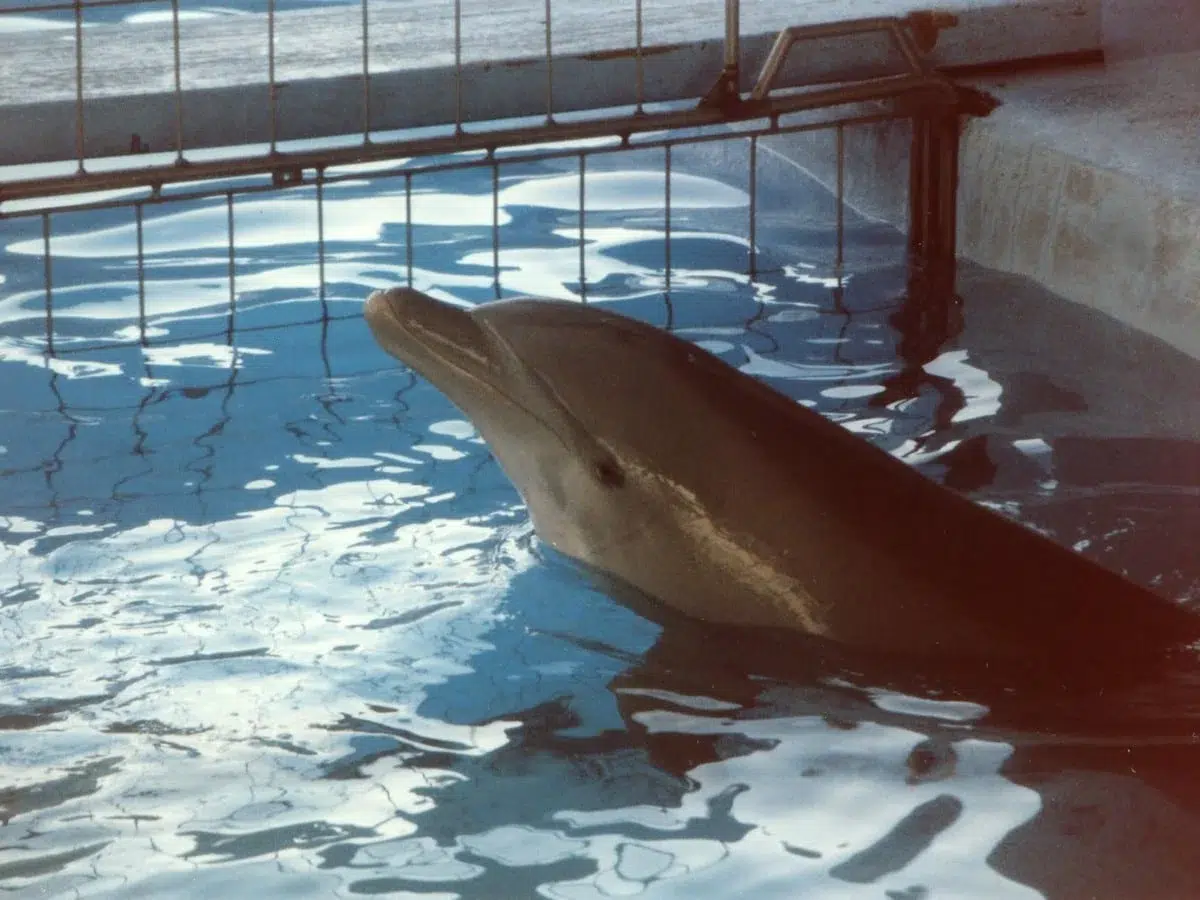
Cada July 4th commemorates the World Day for Captive Dolphins, promoted by the Dolphin Project, an organization founded by Ric O’Barry —former trainer of the series Flipper—. The day aims to raise awareness about the situation of cetaceans that remain in dolphinariums, aquatic parks, and “swimming with dolphins” programs in various regions of the world.
Although the aquatic entertainment industry often presents captivity as an educational and conservation tool, scientific evidence consistently questions it.
What science says
Research led by neuroscientist Lori Marino has shown that dolphins, especially the bottlenose dolphin (Tursiops truncatus), possess cognitive abilities comparable to those of great apes:
- Self-recognition in mirrors.
- Use of individual signature whistles.
- Cultural transmission of behaviors.
- Complex and dynamic social structures.
In the wild, dolphins travel dozens of kilometers daily, dive to great depths, and organize into changing social groups. No dolphinarium pool can replicate these conditions.
Consequences of captivity
Various studies document that dolphins in captivity exhibit:
- Elevated levels of cortisol (a stress indicator).
- Stereotyped behaviors such as swimming in circles or remaining motionless.
- Higher neonatal mortality.
- Reduced life expectancy compared to wild populations.
- Early separation of offspring and frequent transfers between facilities.
- Constant exposure to contact with visitors.
Latin America and tourism
The region concentrates a significant portion of dolphinariums and cetacean interaction programs linked to international tourism. Countries like Mexico, the Dominican Republic, Cuba, Jamaica, and the Bahamas operate these programs intensively, often as part of all-inclusive tourist packages.
Some countries have advanced in regulations:
- Brazil: IBAMA regulations limited cetacean shows.
- Chile: regulations restricting capture, import, and exhibition.
- Costa Rica and Bolivia: legal frameworks on the use of wild animals in shows.
- In parallel, countries like France, Canada, and India have expressly banned the captivity of cetaceans for exhibition purposes.
The Argentine case
In Argentina, two facilities keep cetaceans in captivity:
- Aquarium of Mar del Plata.
- Mundo Marino, in San Clemente del Tuyú.
The dolphinarium of the former Buenos Aires Zoo was deactivated as part of the transformation of the site into an Ecopark.
Jesica Bon Denis, founder of Animal Interseccional, summarizes:
“The captivity of dolphins is one of the most visible expressions of a model that continues to treat animals as resources for human consumption, this time in the form of entertainment. It’s not about improving the pools: it’s about closing them.”
World Day for Captive Dolphins invites reflection on the tension between entertainment and animal welfare. Science shows that dolphins have complex social lives and needs that cannot be met in captivity.
The international trend points towards the restriction and closure of these practices, promoting conservation models based on respect and protection of marine ecosystems.



