



The CONICET received new global recognition following the discovery of the worm Acanthobothrium goleketen, chosen among the 10 most emblematic marine species of 2025 by the World Register of Marine Species (WoRMS).
The discovery was made by teams from the Instituto de Investigaciones Marinas y Costeras (IIMyC, CONICET-UNMDP) and the Instituto de Biodiversidad y Biología Experimental y Aplicada (IIBEA, CONICET-UBA), who highlighted the importance of taxonomy and the role of Argentine science in the international arena.
The discovered species
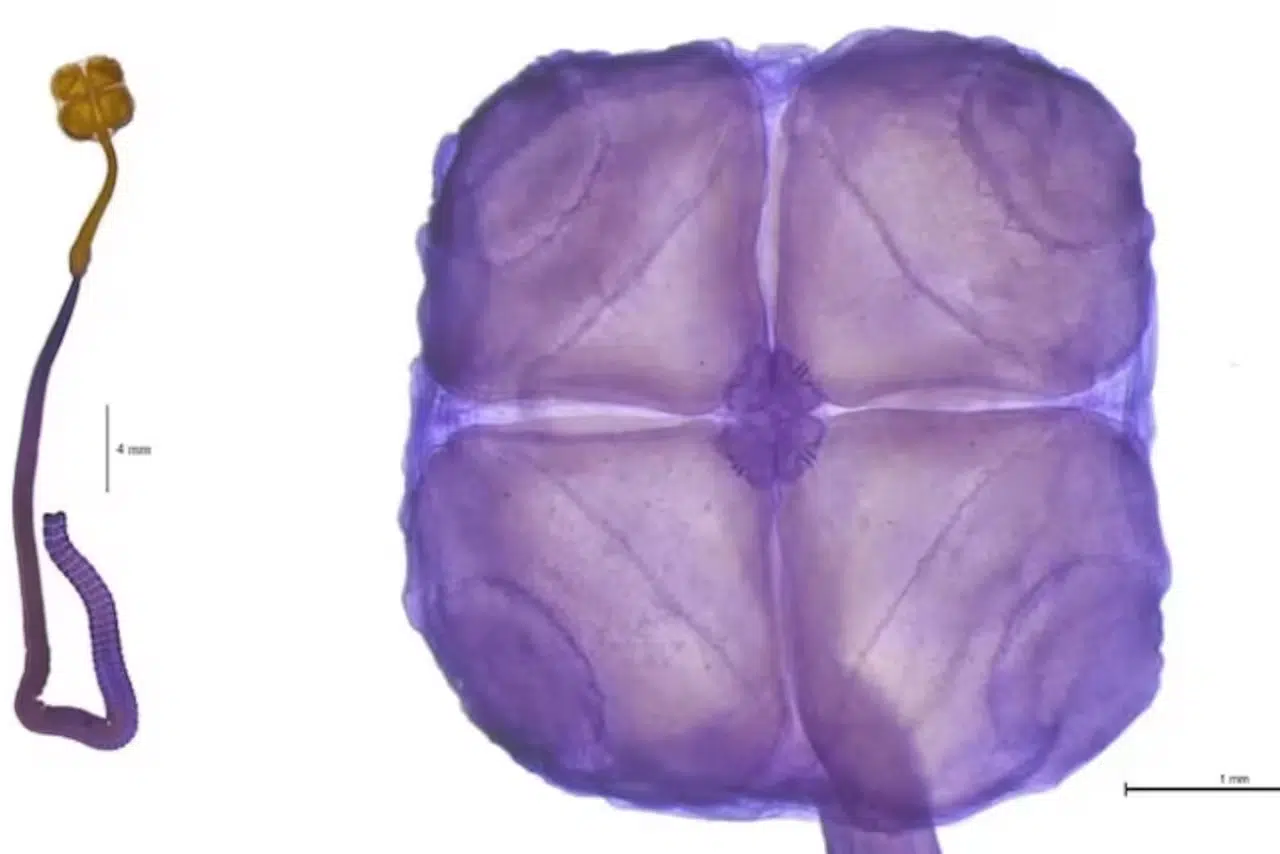
Acanthobothrium goleketen is a cestode or flatworm, related to the tapeworm, found exclusively in the guitar fish (Pseudobatos horkelii), known as “melgacho”. This fish, currently endangered, is the only recorded host, highlighting the vulnerability of certain ecosystems and the need to protect critical species.
The name goleketen means “good luck” in the Tehuelche language and was chosen due to the shape of the parasite’s scolex, which resembles a four-leaf clover. The naming was advised by linguist Ana Fernández Garay (UBA), a specialist in native languages, thus integrating biological research with cultural preservation.
The importance of taxonomy
The announcement was made on March 19, World Taxonomy Day, in honor of Carl von Linné (Carolus Linnaeus), creator of the binomial nomenclature system. Taxonomy organizes biological diversity into hierarchical categories (species, genus, family, order, class, phylum, and kingdom), facilitating the study, communication, and conservation of life.
The identification of Acanthobothrium goleketen required interdisciplinary work:
- Sampling conducted by fishermen from Buenos Aires.
- Morphological and genetic analyses.
- Histological sections and microscopy photography.
- Scientific drawing to document the species.
The team was led by researcher Manuel Irigoitía, who emphasized: “Knowing the species is the first step to protect ecosystems”.
Background and projection
This is not the first time that CONICET has received this type of recognition. In 2020, WoRMS included Dendrapta nasicola, a parasitic copepod of the skate Bathyraja scaphiops, among the relevant species of that year. These precedents strengthen the position of Argentine science on the international stage, even in contexts of budgetary constraints.
The institutional statement emphasizes the collaboration between institutes and the continuity of research, key factors in sustaining national scientific production.
Science and culture
The discovery of Acanthobothrium goleketen not only contributes to the knowledge of marine biodiversity but also integrates a cultural component by rescuing the Tehuelche language, considered functionally extinct since 2019. There are currently initiatives to preserve this linguistic heritage, such as the development of a Spanish-Tehuelche dictionary.
The discovery of Acanthobothrium goleketen reaffirms the role of CONICET as a leader in scientific research and biodiversity conservation. The selection of this species among the most emblematic of 2025 reflects the ability of Argentine science to project itself internationally.


