



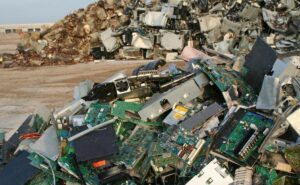
Electronic waste is accumulating at an accelerated rate and contains valuable metals that are rarely recovered efficiently. Among them, silver is essential for electronics, solar energy, and the energy transition. However, its recycling remains limited compared to the growth of technological consumption.
Traditional methods for extracting silver rely on strong acids and highly toxic substances. These processes generate environmental risks, high costs, and occupational safety issues. The result is a persistent dependence on primary mining.
In this scenario, new solutions aim to transform electronic waste into an urban source of metals. The key is to reduce toxicity and simplify processes without losing efficiency. A recent innovation points exactly in that direction.
Silver recovered with fats and light: how the new method works
The approach is based on the use of fatty acids as solvents to extract silver from electronic waste. These compounds can even come from used cooking oils. Thus, an everyday waste becomes a recycling tool.
Through a process of photocatalysis and controlled evaporation, silver is dissolved without resorting to cyanide or aggressive acids. The reaction is activated with light and mild oxidants, under safe conditions. The metal is trapped and then recovered in solid form.
This system avoids complex stages and reduces the generation of secondary waste. The solvents can be reused several times. The simplicity of the process opens the door to a more accessible recovery.
From traditional mining to sustainable urban mining
The technique falls within the concept of urban mining, which prioritizes recovering existing materials. Instead of opening new mines, the dispersed metals in discarded products are utilized. This reduces pressure on ecosystems and vulnerable territories.
The silver present in keyboards, circuits, and solar panels ceases to be an environmental problem. It becomes part of a cleaner and more efficient productive cycle. The waste is transformed into a strategic resource.
Moreover, by decreasing the need for primary extraction, emissions and energy consumption are reduced. Urban recycling is consolidated as a key piece of the circular economy. Technology thus accompanies the energy transition.
Environmental and social benefits of this initiative
One of the main benefits is the elimination of highly polluting substances. By replacing strong acids with biodegradable solvents, the environmental impact is significantly reduced. Risks for workers and nearby communities are also reduced.
The use of used oils connects different waste streams in a single circular system. This multiplies the environmental value of the initiative. A domestic waste becomes a sustainable industrial input.
In the long term, this type of process can decentralize metal recycling. It allows for the consideration of smaller plants closer to consumption centers. Local resource recovery strengthens environmental and economic resilience.
A concrete step towards a real circular economy
The innovation demonstrates that it is possible to recycle critical metals with less impact. It is not just about chemical efficiency, but a change in productive logic. Sustainability is incorporated from the process design.
If it can be scaled, this technique could reduce pressure on traditional mining. It would also help ensure the supply of silver for clean technologies. The environmental benefit is combined with a strategic advantage.
In a context of increasing electronic waste generation, solutions like this set the path. Closing cycles, reducing toxicity, and reusing existing materials. Small technological changes with a profound ecological impact.



