



A new and groundbreaking study published in the journal Nature has raised alarms in the international scientific community. It is about the serious global water crisis that is being faced. The planet is losing freshwater at a much faster rate than previously believed.
This trend, driven by climate change, deforestation, and excessive resource use, represents a direct threat to food security, access to clean water, and the stability of ecosystems.
Unprecedented Water Crisis: the planet is losing freshwater worldwide
The study analyzed satellite data obtained between 2002 and 2022 through the GRACE (Gravity Recovery and Climate Experiment) mission by NASA and the German Aerospace Center.
Researchers identified over 1200 critical points where underground and surface freshwater reserves have steadily decreased over the past two decades.
Among the most affected regions are densely populated areas such as India, California, the Middle East, China, Australia, and western South America. This includes parts of the Amazon, the planet’s “green lung.”
Causes vary by region, but overexploitation of aquifers, river diversion, deforestation, and extreme weather events such as prolonged droughts or intense rainfall are predominant.
Human footprint and climate change exacerbate the problem
The study concludes that over half of the critical points detected have anthropogenic origins. That is, human activities such as intensive agriculture, urban expansion, mining, and poor water management.
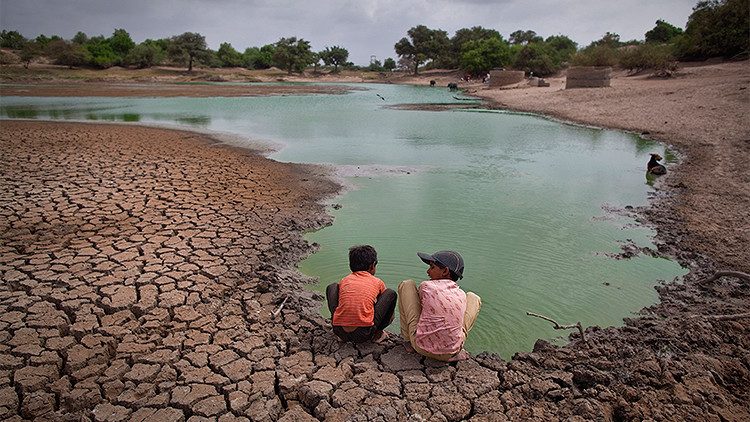 The water crisis is more severe than previously thought.
The rest is attributed to natural factors, such as climate cycles or geological variations, although these are also intensified by climate change.
Researchers warn that, without urgent actions, many of these reserves could become irreversible, affecting both human populations and biodiversity. In some cases, such as in the Aral Sea, the degradation is already practically irreversible.
A global call for sustainable water management
The scientific team highlights the importance of constantly monitoring the state of water sources, as well as promoting an integrated and sustainable freshwater management.
This includes stricter public policies, investments in efficient irrigation technologies, protection of wetlands and forests, and changes in consumption patterns both domestically and industrially.
Additionally, the study emphasizes the need for international cooperation, as many of the affected basins are transboundary. Without a joint vision, conflicts over water could intensify in the coming years.
Freshwater, the finite resource that demands immediate action
Freshwater represents only 2.5% of the planet’s total water, and of that small fraction, only 1% is available for human consumption.
 Water scarcity is an increasingly imminent threat.
The loss of these essential resources jeopardizes the ecological and economic balance of entire regions, especially in developing countries.
The new report reinforces the urgency of addressing the global water crisis. Protecting freshwater is not only essential for the health and nutrition of billions of people, but also to mitigate the effects of climate change and ensure a sustainable future for the next generations.



