



Among the cold rocks of eastern Greenland, a jaw fragment ignited the excitement of the scientific community. What seemed like a minor find ended up revealing the remains of the oldest known mammal within the lineage of the docodontans, a key group in the evolutionary transition towards modern mammals.
The discovery, made in the Rhaetelv formation, corresponds to a new species named Nujalikodon cassiopeiae. This fossil, dated at about 183 million years, cuts seven million years off the oldest known record of the group, rewriting part of the evolutionary history of the Jurassic.
The find was analyzed using advanced microtomography techniques, which allowed detailed examination of the cusps and ridges of the found molar. These structures, unique to each species, confirmed that it was a completely new specimen. The fossil, consisting of a partial jaw and a complete molar, thus becomes an essential piece for understanding the development of complex dentition in early mammals.
Thanks to this discovery, Greenland is consolidated as a territory of enormous paleontological value. Its geology, practically unchanged for millions of years, preserves key testimonies about the origin and evolution of the species that inhabited the Earth when the continents began to separate.

The key to the discovery: a tooth that revealed millions of years of history
The docodontans were pioneers among the mammaliaformes, with a more sophisticated dentition than their contemporaries. Their molars had multiple cusps and ridges that allowed them to crush different types of food. This versatility was their evolutionary advantage, facilitating their adaptation and survival during the Jurassic.
The analysis of the molar of Nujalikodon cassiopeiae showed a unique pattern of cusps, which allowed it to be placed in a basal position of the order Docodonta. This characteristic makes it a transitional form between the most primitive mammals and the later ones, which already had specialized teeth for various diets.
The discovery not only fills a gap in the fossil record but also reinforces the theory that the first docodontans emerged in what today corresponds to Europe and Greenland. From there, they would have expanded to the supercontinent of Laurasia, leaving traces of their evolution in different parts of the northern hemisphere.
A treasure under the ice: the ecological value of Greenland
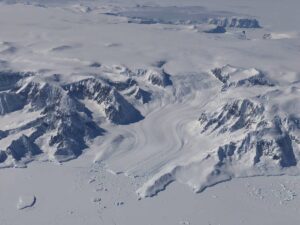
Greenland continues to surprise scientists with its ability to preserve fossils in an exceptional state. In regions like Jameson Land, the sediments of the Early Jurassic remained almost intact, offering a direct window into life more than 180 million years ago.
The discovery of Nujalikodon cassiopeiae reinforces the idea that the ecosystem of Greenland was much more diverse than previously thought. The climatic conditions of the Jurassic allowed the existence of forests and lakes where small vertebrates, insects, and primitive mammals thrived.
In ecological terms, this finding helps to understand how ancient ecosystems responded to climatic and geological changes. Moreover, it highlights the importance of protecting these natural environments, where every rock can hide a crucial chapter of the evolutionary history of the planet.
Far from being an inhospitable territory, Greenland reveals itself as a fossil sanctuary. There, under layers of sediment and ice, the Earth continues to hold the keys to its past. With each discovery, scientists reconstruct a story that speaks not only of evolution but also of the planet’s incredible ability to preserve its memory.


