



What usually ends up on the floor after a haircut today acquires a new environmental value in the Xochimilco canals. Tons of human hair are being collected to manufacture filters capable of absorbing oils and fats.
The project combines environmental science and citizen participation in Mexico City. In this way, it transforms an everyday waste into a low-cost tool to tackle water pollution.
The proposal aims to intercept oily substances that enter the canals through runoff and urban discharges. Thus, it seeks to reduce one of the main factors of degradation of the ecosystem.
Additionally, the initiative promotes the circular economy by reusing an organic material that is normally discarded. Therefore, hair ceases to be waste and takes on a key environmental function.
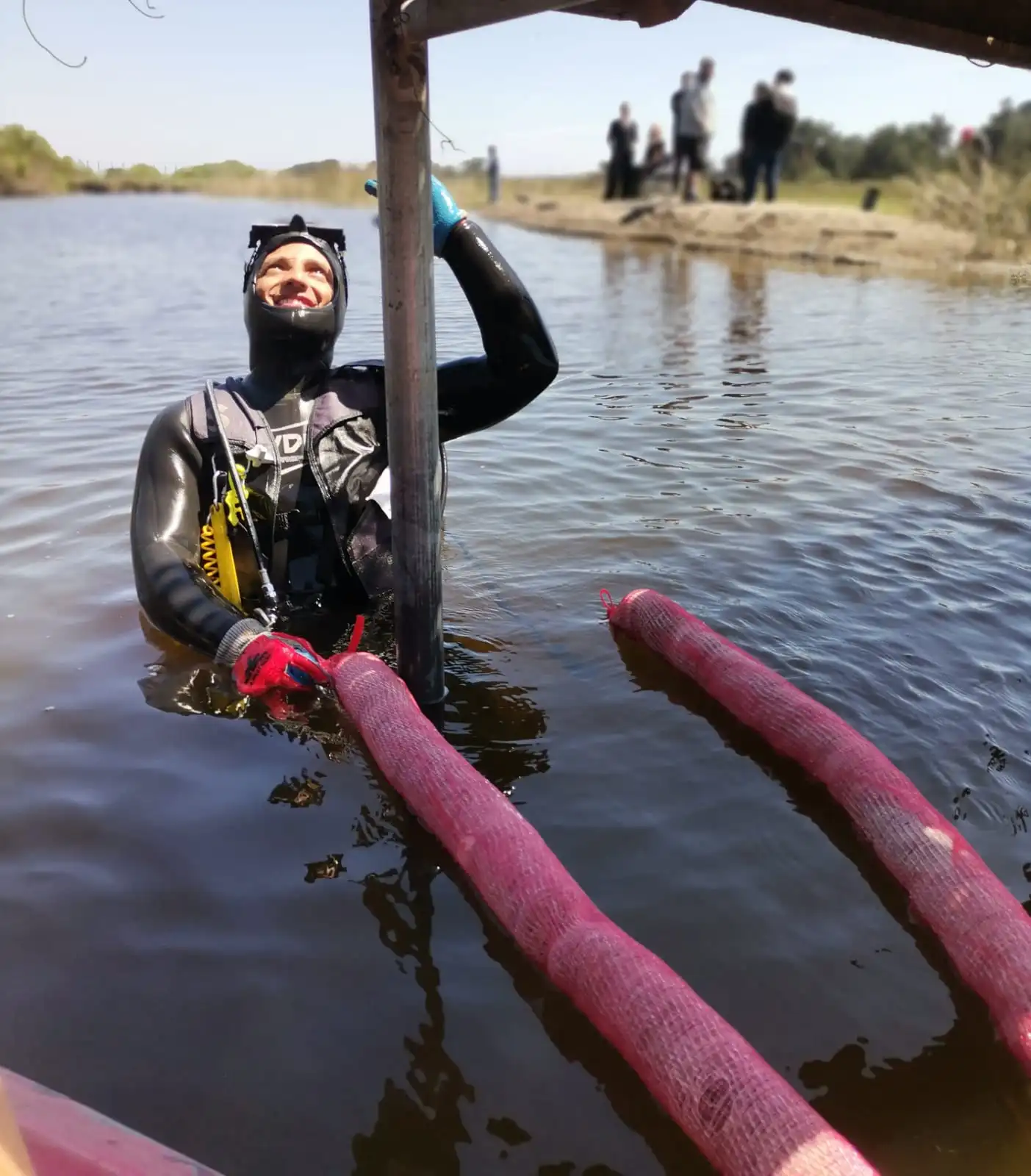
How the system works and the benefits of hair
The scientific principle is simple and effective. Human hair has lipophilic properties, meaning it attracts and retains fats without absorbing water. Thanks to its fibrous structure, a kilo of hair can absorb several liters of oil. Consequently, it acts as a natural sponge without generating microplastics or synthetic waste.
Moreover, its keratin-rich composition gives it resistance and durability in humid environments. This allows it to be used within special nets strategically placed in the water flow.
Another advantage is its constant and free availability. Hair salons donate the material collected daily, which facilitates the continuous production of filter barriers.
From an ecological perspective, hair represents a renewable resource that does not require complex industrial processes. Therefore, it is considered an accessible and replicable solution in other degraded basins.

Environmental restoration and challenges in a World Heritage Site
The Xochimilco canals, declared a World Heritage Site by UNESCO, face constant pressure from urban waste and contaminant discharges.
In this context, hair filters are integrated into other restoration strategies, such as the installation of biofilters with aquatic plants. Thus, a bioremediation approach based on natural solutions is strengthened.
However, specialists warn that this technique does not replace structural improvements in drainage and water treatment. Even so, it functions as an immediate barrier against visible pollutants. The network of collaboration between citizens, stylists, and environmental organizations is key to sustaining the project. In this way, the community actively participates in the ecosystem recovery.
The interest this experience generates goes beyond Mexico. Several Latin American cities are considering replicating the initiative, demonstrating that a sustainable response can arise from materials as simple as human hair itself.


