



Air quality, with **natural particles** in suspension and those that are **product of emissions**, play a fundamental role in health and in the causes of **lung cancer**.
While researchers at the **University of Miami, United States**, revealed a decrease in **deaths from this disease**, they also showed that cases generated by particles in the air are increasing.
Suspended particles and lung cancer: what is the relationship
Suspended particles are **microscopic elements** that float in the air, composed of solid and liquid substances.
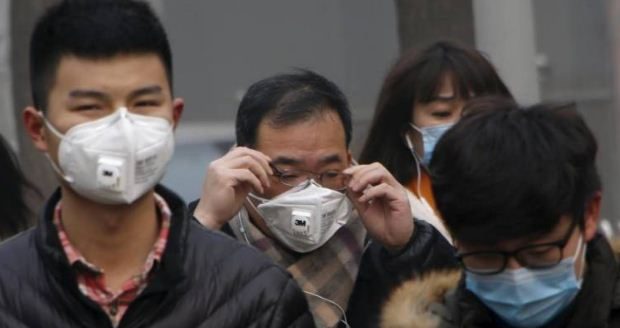 The relationship between lung cancer and air quality.
They have a wide variety of sizes and are a mixture of substances of both organic and inorganic origin. In addition to their natural origin, such as dust and pollen, they come from **human activities, such as the burning of fossil fuels**, industry, and agricultural processes.
Therefore, the presence of suspended particles in the air we breathe plays a crucial role **in its quality**.
They are considered globally as **Total Suspended Particles** (**TSP or** TSP in English), and their size ranges from a diameter of less than **10 µm or micrometer** to several hundred micrometers.
Statistics reveal that there was a decrease in deaths from lung cancer and other related tumors in the 10 most populous countries in the world. This occurred in the period between **1990 and 2019**.
However, they warned of an **increase in mortality** due to exposure to environmental suspended particles.
Risk factors: what the research revealed
Specialists conducted a thorough analysis of the evolution of the **main risk factors** leading to trachea, bronchi, and lung cancer (TBL).
The study, published in *eClinicalMedicine*, is based on information extracted from the open-source Global Burden of Disease database.
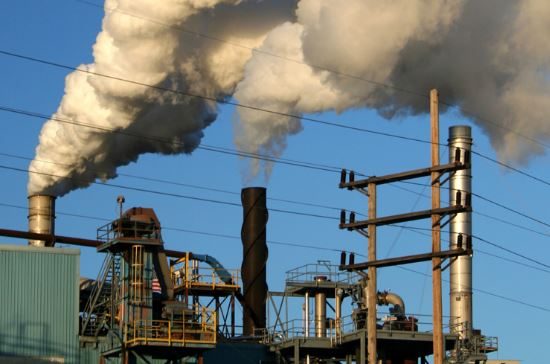 The statistics.
In the three decades analyzed, **deaths from trachea, bronchi, and lung cancer (TBL) show an overall 8% reduction**. In terms of risk factors, deaths related to tobacco have decreased from **72% in 1990 to 66% in 2019**, except in countries like **China** and **Indonesia**, where they continue to rise.
Regarding **tobacco**, the global mortality rate among women increased by 2%. Men still account for about three-quarters of deaths.
The study emphasizes that **tobacco continues to account for the majority of cases of this cancer**.
At the same time, **air pollution** currently accounts for almost 20% of global mortality from **trachea, bronchi, and lung cancer (TBL)**.
Although deaths linked to pollution decreased between 1990 and 2019, experts highlight the **growing risk posed by suspended particles**, whose associated deaths did increase by **11%**.
“The relationship between lung cancer mortality and **atmospheric pollution remains controversial**, but there is increasing evidence of a connection that must be paid attention to,” noted researcher **Estelamari Rodríguez**.
Have you checked out our YouTube channel? Subscribe!


