



The domestic dogs we see daily may seem harmless and far removed from their wild ancestors. However, a study published in the journal Proceedings of the National Academy of Sciences (PNAS) shows that many of them retain wolf genes in their DNA.
The scientific finding
The team of American researchers analyzed thousands of dog and wolf genomes available in public databases. The results were surprising: almost two-thirds of modern breeds show some level of wolf ancestry.
The most striking thing is that these are not ancient remnants from 20,000 years ago—when dogs evolved from wolves—but recent crosses between domesticated dogs and wild wolves.
“This does not mean that wolves are entering your home and mixing with your dog,” clarified Logan Kistler, curator at the Smithsonian National Museum of Natural History.
Concrete examples
Even small breeds like chihuahuas have around 0.2% wolf DNA. “This makes perfect sense to anyone who has a chihuahua,” joked Audrey Lin, lead author of the study and researcher at the American Museum of Natural History.
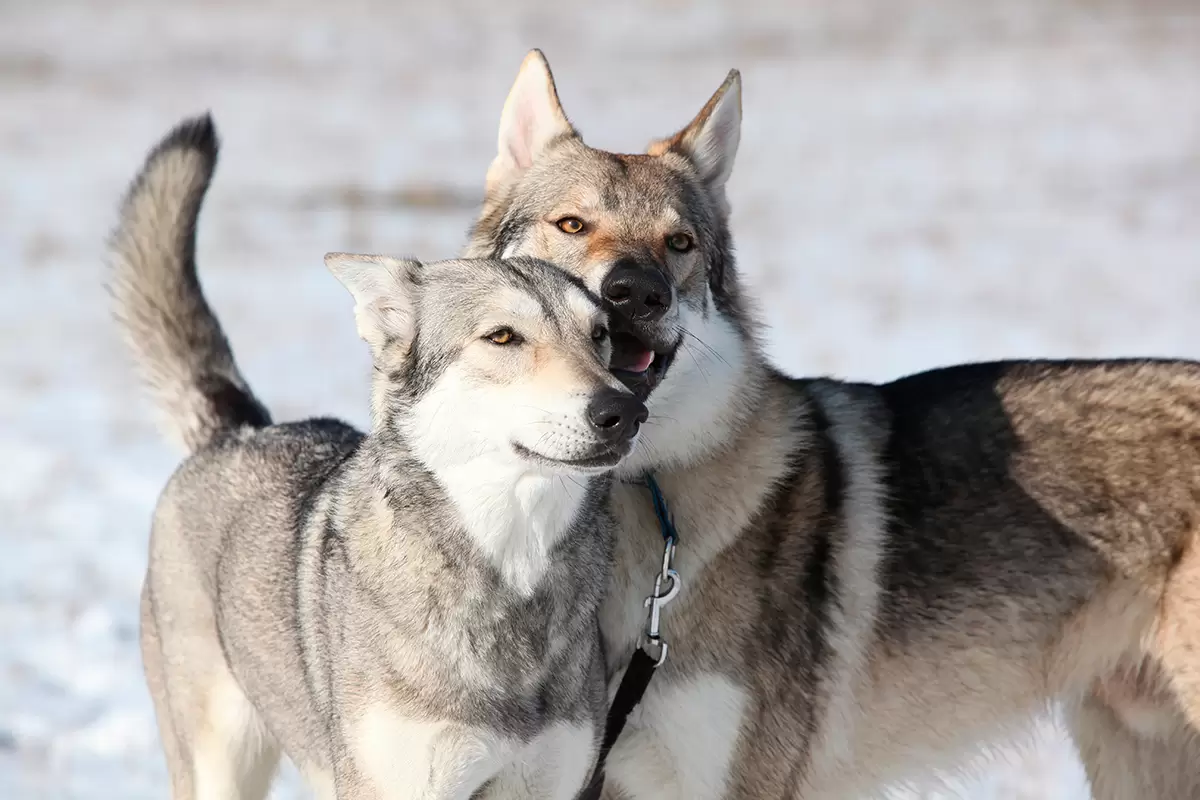
At the other extreme, the Czechoslovakian Wolfdogs and Saarloos top the list with up to 40% wolf DNA. Among domestic breeds, the Grand Anglo-Français Tricolore hound reached nearly 5%, followed by sighthounds like salukis and Afghans.
Curiously, large breeds like Saint Bernards showed no trace of wolf ancestry.
Stray dogs: the genetic bridge
The study also revealed that 100% of stray dogs—those living near humans but without an owner—possess wolf ancestry. According to Kistler, these animals, having more contact with wolves, could be the main route of wolf DNA introduction into the canine population.
Additionally, the pressure of human activity on natural habitats may have displaced wolves, facilitating crossings with ownerless dogs.
Influence on temperament and characteristics
The genetic exchange between wolves and dogs seems to have influenced aspects such as size, olfactory power, and personality of modern breeds.
- Breeds with little or no wolf DNA: tend to be friendly, affectionate, and easy to train.
- Breeds with higher wolf ancestry: tend to be independent, territorial, and wary of strangers.
This contrast shows how genetics can shape both the appearance and behavior of today’s dogs.
Evolutionary advantages
Although dogs evolved as human companions, wolves have been their genetic lifeline. According to the authors, when dogs faced evolutionary challenges—such as surviving in harsh climates, seeking food on the streets, or protecting livestock—they could rely on their wolf ancestry as part of their survival kit.
A notable case is that of several Tibetan breeds, such as the Lhasa Apso, which possess the EPAS1 gene, associated with adaptation to high altitudes and inherited from the Tibetan wolf. This example shows how genetic mixing could offer evolutionary advantages in extreme environments.
The study redefines the relationship between dogs and wolves, showing that wolf ancestry remains present in most modern breeds. Beyond the companionship dogs provide, their genetics retain traces of survival inherited from wolves, which have influenced their behavior, resilience, and adaptability.
This finding not only provides a new perspective on the evolutionary history of canines but also opens the door to future research on how shared genetics with wolves continues to shape the lives of our closest companions.



