



The plastic pollution continues to advance in the oceans and threatens birds, turtles, and mammals that depend on a healthy sea. For decades, there was uncertainty about how much ingested waste could be considered lethal, making it difficult to establish protection criteria.
A new international analysis provides concrete parameters to gauge the risk faced by these species. The research was based on more than ten thousand necropsies performed on animals from different regions of the planet.
The study reconstructed decades of scattered data to measure the relationship between ingested quantity and probability of death. The results allow for a better understanding of how plastic pressure alters the balance of marine ecosystems.

How much plastic waste can kill a marine animal
The scientific work determined lethal doses for different groups of oceanic fauna. In seabirds, the ingestion of 23 pieces of plastic, or a volume equivalent to 0.098 cc per centimeter of length, implies a 90% risk of death.
In marine mammals, the threshold is 29 pieces or 39.89 cc per centimeter; in sea turtles, 405 pieces or 5.52 cc per centimeter. The differences are due to the size of the fragments ingested by each species.
Mammals tend to swallow large debris, which increases the total volume with few units. Turtles, on the other hand, ingest more small fragments, requiring a larger quantity to reach a lethal level.
The ingested volume turned out to be the most reliable indicator for anticipating mortality. The main cause of death remains the physical obstruction of the digestive tract. Hard fragments, nets, ropes, balloons, and bags are the objects that most frequently cause irreversible damage.
A devastating impact on marine biodiversity
Records show that almost half of the sea turtles examined had plastic in their bodies. In birds, the presence was found in more than a third of the individuals; in mammals, in about 12%.
Some materials are especially dangerous: six pieces of rubber can be fatal for a bird, or 28 fragments of net for a mammal. Necropsies detail consequences such as perforations, intestinal twists, and complete blockages.
In many cases, the animal dies slowly from the inability to feed or from infections caused by the obstruction. Ingestion occurs because floating plastics are often mistaken for prey, algae, or organic debris.
The study analyzed fauna belonging to 57 species of seabirds, 31 species of mammals, and all known species of sea turtles. The breadth of the sampling allows for tracing common patterns despite the biological differences between groups. It also shows that even small amounts of plastic can be lethal depending on the material involved.

How this data can guide public policies and protection
The values obtained serve as a reference to assess risks on coasts, migratory routes, and feeding areas. With this information, it is possible to adjust monitoring programs to detect critical areas and prioritize urgent actions.
They also allow for designing regulatory frameworks that limit products and materials with greater lethal impact. The research underscores the need to unify counting and recording methodologies. Currently, each team uses different criteria, making it difficult to compare impacts between regions.
More robust global databases would allow updating risk thresholds and improving the conservation of vulnerable species. The results can also strengthen local cleanup campaigns and strategies to reduce the use of disposable plastics.
The evidence shows that small reductions in the waste load achieve a significant impact on the survival of fauna. Science thus provides tools for more effective management aimed at preventing new losses.
Microplastics: the microscopic enemy already circulating around the planet
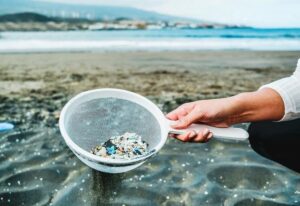
The microplastics, particles smaller than five millimeters, represent a threat that intensifies year after year. They originate from the fragmentation of larger plastics or from products that contain them from their manufacture.
Their tiny size facilitates their entry into all levels of the marine food chain. These particles are ingested by organisms ranging from plankton to large predators.
Once inside the body, they can accumulate in tissues and release chemical substances associated with heavy metals and toxic additives. This alters biological functions, affects reproduction, and weakens the overall health of animals.
The problem is not limited to the ocean: microplastics are already detected in rivers, agricultural soils, drinking water, and even in the air. Their persistence is so high that they become a global pollutant capable of traveling thousands of kilometers. This dispersion makes them one of the most complex and urgent environmental challenges of the present.
The ecological and health implications of plastic in the sea
In marine ecosystems, microplastics reduce the ability of filter-feeding species to feed properly. They also interfere in processes like the photosynthesis of microscopic algae, affecting the base of food webs.
As they ascend the food chain, the impacts are amplified in fish, birds, and mammals. For humans, exposure occurs mainly through the consumption of marine foods and contaminated water.
Although studies are underway, it is suspected that they can affect the endocrine system and cause chronic inflammation. Their presence in the atmosphere indicates that they can also be inhaled, expanding the entry routes into the body.
The growing evidence demands the adoption of global strategies to reduce their release. Limiting the use of single-use plastics and improving waste management are essential measures. The transition to biodegradable materials and circular economy systems is key to halting their expansion.


