



For years, plastic pollution was associated with the sea surface. However, new findings show that the problem silently descends to the depths of the ocean, revealing a hidden circuit that redistributes waste on a large scale.
In this process, zooplankton, the most abundant group in the ocean, plays a role. In particular, copepods act as a permanent biological vector. Thus, microscopic particles change levels without relying on currents or storms.
The phenomenon is not sporadic but daily and constant. Therefore, even minimal individual actions generate cumulative effects. Thus, pollution integrates into basic ecological processes.
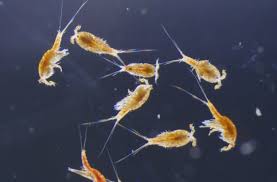
Zooplankton: small, abundant, and decisive
Zooplankton occupies the animal base of the marine food chain. Additionally, it connects microalgae with fish, seabirds, and mammals. Therefore, any alteration at this level is amplified upwards.
The copepods, such as Calanus helgolandicus, dominate in number and distribution. They are present from the illuminated surface to deeper zones. Thus, their repeated behavior becomes an ecological engine.
Eating, excreting, and migrating vertically are constant actions. However, they now also involve moving microplastics. In this way, pollution ceases to be passive and becomes biologically processed.
From the gut to the seabed
Studies show that copepods process microplastics in about 40 minutes. Moreover, they do not distinguish between food and artificial particles. Therefore, fibers and fragments follow the same digestive path.
Then, the ingested material is compacted into dense fecal pellets. These wastes sink rapidly to deep waters. Thus, microplastics travel along with organic carbon.
This mechanism is part of the biological pump. However, it now also transports pollution. Thus, a climate regulator is altered.
Chronic risk at the base of the food chain
Copepods are direct food for fish larvae and small fish. Therefore, microplastics enter the food web early. Thus, exposure becomes chronic and silent.
It’s not just about immediate toxicity. Additionally, energy costs and physiological alterations can arise. Consequently, ecological balances become more fragile.
This impact adds to other global stressors. Among them, warming, acidification, and hypoxia. Thus, the pressure on marine ecosystems intensifies.
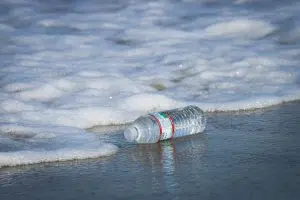
The role of zooplankton in the ecosystem
Zooplankton plays a central role in the carbon cycle. By feeding at the surface and descending, it transports organic matter. In this way, it helps to regulate the planet’s climate.
Additionally, it supports fisheries productivity. Without this link, many species could not survive. Therefore, its health defines that of the ocean as a whole.
Its enormous number amplifies any environmental change. Thus, small alterations generate effects on a global scale. Caring for zooplankton means protecting the functioning of the sea.
Towards more realistic models and decisions
These findings allow for the improvement of ocean models. Now, microplastics cease to be inert particles. Thus, real biological variables are incorporated.
Understanding these flows helps identify critical areas. Additionally, it guides more precise reduction and mitigation policies. In this way, science and environmental management advance together.
Finally, the message is clear. Pollution is already part of the living processes of the ocean. Therefore, protecting the base of marine life is an ecological urgency.


