



A team from the University of Córdoba, Spain, managed to develop a battery using pistachio shells, marking a significant advancement in the transition towards cleaner energies. This technology avoids the use of lithium and critical metals, reducing environmental impact.
Moreover, the project arises as a response to the growth of waste derived from the pistachio boom. Indeed, the increase in its production generated the need to find sustainable solutions for its utilization.
In this context, researchers from the Chemical Institute for Energy and the Environment transformed this waste into a key resource. Thus, they managed to integrate scientific innovation with circular economy principles.
How does the ecological battery work?
The developed technology is based on a combination of sodium and sulfur, materials more abundant and accessible than those used in conventional batteries. Therefore, it is a more economical and sustainable alternative.
Additionally, the pistachio shells are converted into activated carbon, which acts as a conductor within the system. This process presents a simple and scalable synthesis, favoring its implementation on a larger scale.
As a result, the batteries achieve up to 1,000 charge and discharge cycles, a remarkable performance in sustainable technologies. Consequently, this advancement positions these materials as a viable option for the energy future.

Less critical metals, more sustainability
One of the main contributions of the development is the elimination of elements such as cobalt, nickel, and copper. These materials, besides being costly, present environmental and social impacts in their extraction.
Instead, the use of sodium and sulfur allows reducing the dependence on scarce resources. Therefore, it promotes a more equitable and less polluting energy model.
At the same time, this innovation aligns with the global challenges of reducing the environmental footprint of energy storage. Thus, it contributes to the development of technologies compatible with renewable energies.
The pistachio boom and the challenge of its waste
In recent years, pistachio has experienced a notable growth in its production, especially in Spain. This increase, however, also implied a greater generation of agricultural waste.
Faced with this situation, the reuse of shells presents itself as a strategic solution. Indeed, it allows reducing waste and, at the same time, generating added value.
Therefore, initiatives like this demonstrate how waste can become key inputs for technological innovation. In this way, a more sustainable productive model is promoted.
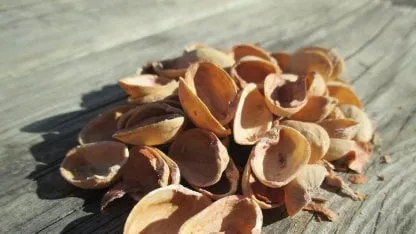
Other ecological uses of pistachio shells
Beyond their application in batteries, pistachio shells have multiple ecological uses. For example, they can be used as compost material, providing nutrients to the soil.
Additionally, they are used as biofuel or as thermal insulation in sustainable constructions. In both cases, they contribute to reducing the use of non-renewable materials.
Furthermore, they can also serve as a substrate for gardening or as filler in industrial processes. Consequently, their reuse favors the reduction of waste and promotes more responsible practices.
A key step towards energy transition
This development is part of the SuperNas project, aimed at creating safe and efficient batteries. In this sense, it seeks to respond to the growing demand for energy storage.
As renewable energies advance, having sustainable storage systems becomes essential. Therefore, innovations like this acquire a strategic role.
Finally, transforming waste into energy solutions represents a paradigm shift. Thus, science shows that the path to a cleaner future can also begin with what was once discarded.



