



A scientific expedition conducted in 2021 in the Fram Strait, a maritime corridor located between Greenland and Svalbard, led to the discovery of an unusual phenomenon that is silently altering the ecosystems of the Arctic Ocean. The observation of enormous icebergs loaded with sediments and rocks opened the door to an investigation that ultimately revealed the emergence of new marine habitats in the depths.
Researchers detected large blocks of ice covered by abundant geological debris. From the air, these masses appeared dark due to the amount of mineral material they carried from their glacial origins.
Following this observation, specialists from the Alfred Wegener Institute in Germany and the Woods Hole Oceanographic Institution in Massachusetts began studying the impact of these icebergs on the seabed, finding evidence of an emerging biodiversity in regions previously dominated by soft sediments.

Rocks transported by ice that create new life refuges
The work allowed the identification of marine organism communities associated with rocky deposits left behind by icebergs during their melting. These materials function as solid surfaces where numerous species can settle and develop.
Among the recorded organisms are soft corals, anemones, sponges, starfish, and bryozoans, all dependent on firm substrates to grow in deep environments.
Additionally, a network of 21 underwater stations belonging to the Hausgarten observatory documented how these stone accumulations create true islands of biodiversity on the ocean floor.
The obtained images showed that where there were once few scattered rocks, now appear more extensive groupings that favor biological colonization and enrich the diversity of species in the depths of the Arctic.
The link between ice melt and ecological changes
The satellite reconstructions indicated that many of these icebergs come from glaciers in northeastern Greenland and regions of the Upper Arctic of Russia. During their movement, they transport large amounts of sediments that eventually end up deposited in the ocean.
On the other hand, mineralogical analyses confirmed that the stones found on the seabed have characteristics compatible with the materials observed on the icebergs.
Although there are still uncertainties about the exact influence of global warming on the increase in the detachment of these blocks, scientists believe that the transformation of glaciers is altering ecological and geological processes on a large scale.
Furthermore, these changes offer new opportunities to understand the relationship between climate, the oceans, and biodiversity in one of the planet’s most sensitive ecosystems.
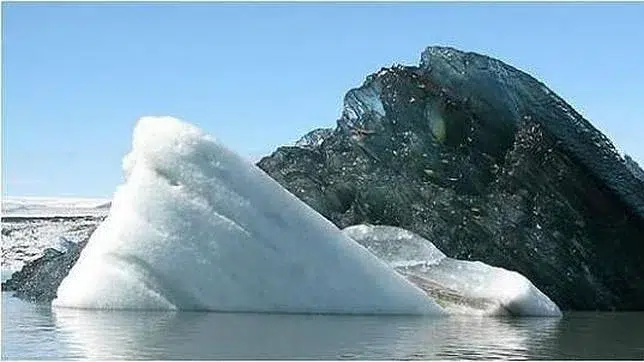
What are black icebergs
The so-called black icebergs do not constitute a different species of iceberg. They are masses of ice that incorporate large amounts of sediments, sand, mud, volcanic dust, and rock fragments during their formation or movement.
When these materials become trapped in the ice, they alter its appearance and can give it dark, gray, or even black hues. In some cases, the color becomes especially visible when the ice begins to melt and concentrates the sediments in certain areas.
In addition to transporting enormous amounts of geological material, these icebergs function as natural vehicles that redistribute nutrients and rocks between continents and oceans. Therefore, they play an important role in the configuration of marine ecosystems and in the sedimentation processes of polar regions.
New challenges for navigation and conservation
The increase in icebergs in some areas of the Arctic also poses challenges for human activities. Commercial navigation, tourist cruises, and research operations must adapt to a growing presence of floating ice blocks.
In turn, the rocks deposited by these icebergs can create obstacles for certain fishing activities in shallower areas.
However, the discovery also demonstrates how environmental changes can trigger unexpected ecological processes. The new habitats detected in the Fram Strait reflect the extraordinary adaptability of marine life, although they also signal the profound transformations currently occurring in the Arctic as a consequence of climate change.


