



Although it does not enjoy the same popularity as eclipses or supermoons, the Black Moon is an astronomical phenomenon that generates great interest among enthusiasts and experts.
According to the specialized site StarWalk, this event will occur on August 23, and represents a rare lunar phase with both observational and symbolic implications within the lunar calendar.
What is the Black Moon and how is it classified?
There are two ways to define it: by astronomical season or by calendar month.
The Black Moon can appear in two modalities:
- Seasonal: it occurs when there is an additional New Moon in the same astronomical season. Each season usually has three new moons, but if a fourth one appears, the third one is called the Black Moon.
- Monthly: it happens when there is no New Moon in a calendar month, something that only can occur in February, as it is the only month shorter than a complete lunar cycle.
A darker sky, ideal for astronomical observation
During the Black Moon, our satellite is positioned between Earth and the Sun, showing its non-illuminated side. This makes it invisible to observers, although the most attentive ones can notice the occultation of stars that are behind its disk.
The main advantage of this phase is that it offers the darkest skies of the month, allowing to contemplate planets, stars, the Milky Way, and deep-sky objects with greater clarity. It is a perfect opportunity for those who practice astrophotography or simply enjoy night observations.
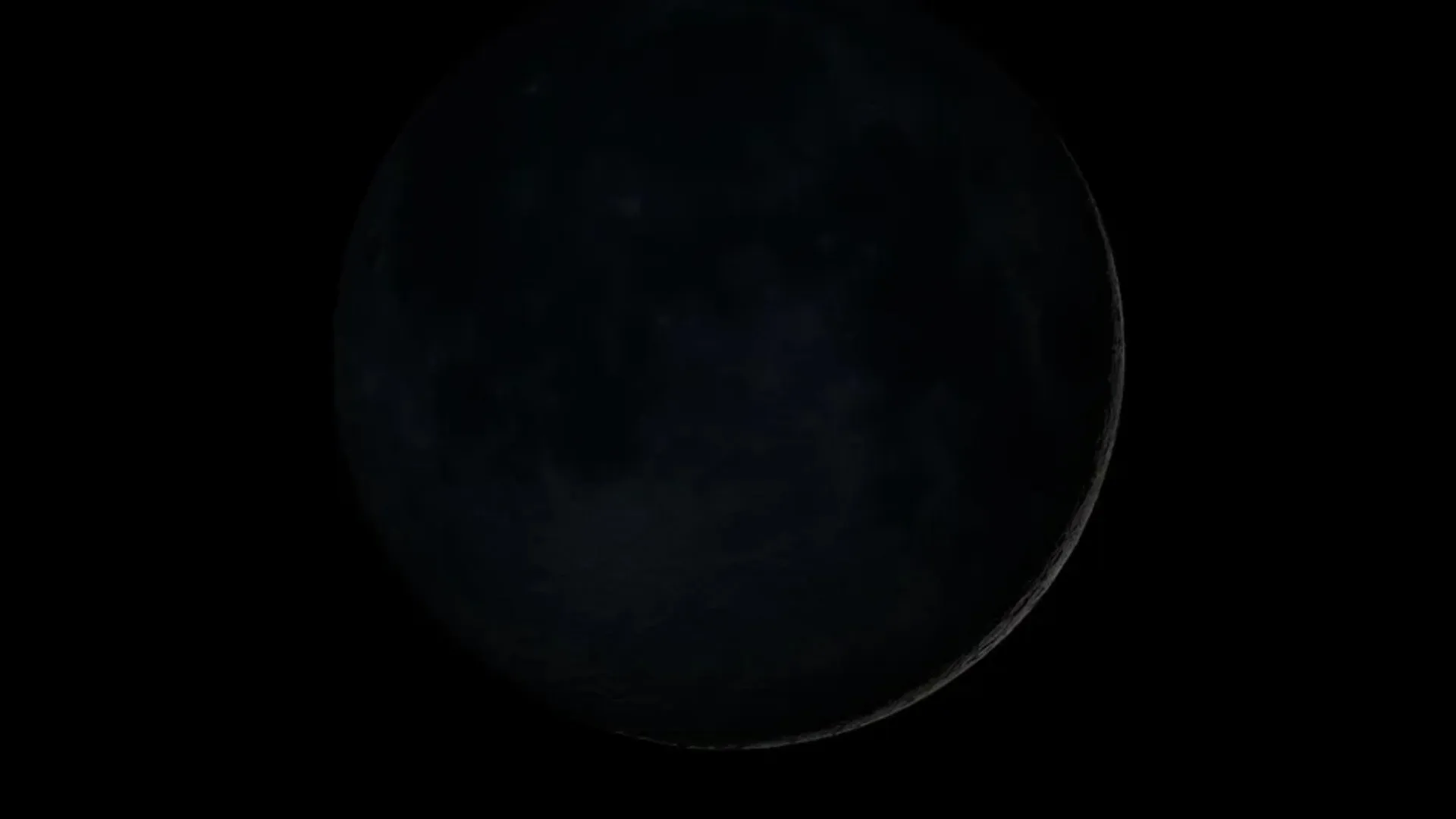
Lunar phases: a cycle of constant transformation
Lunar phases are the apparent changes in the illuminated portion of the Moon, caused by its relative position to Earth and the Sun. This complete cycle is called lunation, and it is divided into major and minor phases:
Major phases:
- New Moon (Novilunio): the Moon is between Earth and the Sun, and its illuminated face is not visible.
- First Quarter: the right half illuminated from Earth is visible.
- Full Moon (Plenilunio): the entire visible face is fully illuminated.
- Last Quarter: the left half illuminated from Earth is visible.
Minor phases:
- Waxing Crescent: the illuminated portion increases from the New Moon.
- Waxing Gibbous: more than half is illuminated and continues to grow.
- Waning Gibbous: more than half is illuminated, but decreases.
- Waning Crescent: the illuminated portion decreases towards the New Moon.
The duration of each phase may vary slightly due to the elliptical orbit of the Moon, adding complexity to the lunar calendar and associated phenomena.

