



A momentous event has taken place at the Oceanogràfic in Valencia: the birth of a guitarfish (Glaucostegus cemiculus). This is a species classified as critically endangered by the Red List of Threatened Species of the International Union for Conservation of Nature (IUCN).
This birth, which took place on February 18 in front of the public, represents a milestone for the Valencian marine center and reinforces its dedication to preserving animals at risk.
A birth with challenges and a conservation project
The Oceanogràfic team detected the gestation of a female during veterinary checks, a crucial finding within the framework of the Glaucostegus Project. This European initiative, led by the Oceanogràfic Foundation in collaboration with the Seville Aquarium, the Blue Marine Foundation, and other organizations, aims to develop strategies for the management and conservation of the guitarfish population in its natural habitat.
To ensure the well-being of the pregnant female, the Oceanogràfic specialists transferred her to a more protected area within the Oceans facility. The gestation culminated in the birth of two offspring, a male and a female, of which only the male survived.
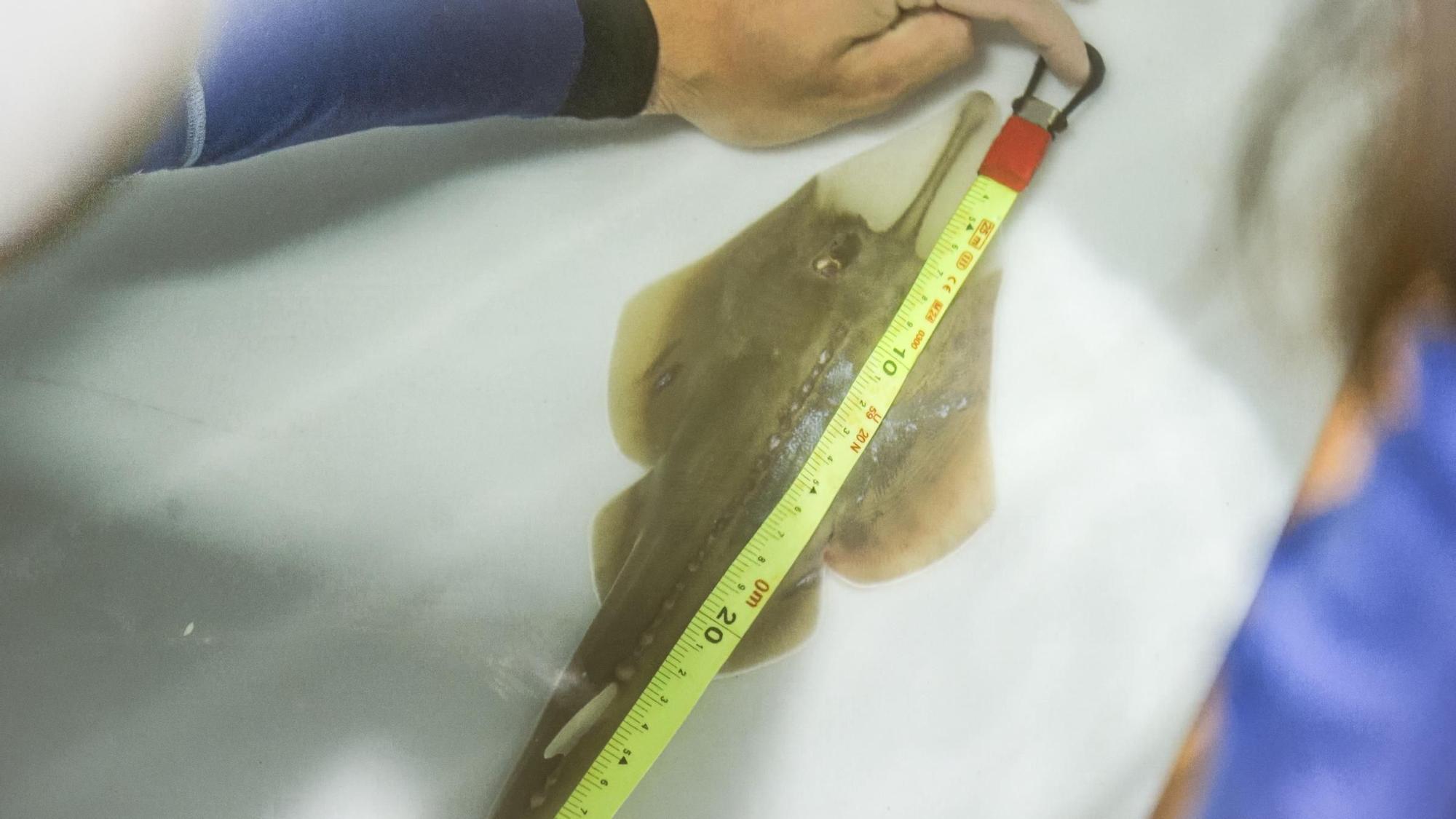
The guitarfish: an ovoviviparous and highly threatened species
The guitarfish is an ovoviviparous species, meaning that the offspring are born fully developed at the time of birth.
During mating, males bite the pectoral fins and disc of the females, a behavior previously observed at the Oceanogràfic, but without reproductive results until now.
The birth of “Ukelele” (name given to the male) will help expand knowledge about this species, one of the most threatened globally, surpassed only by sawfish and amphibians.
Where does the guitarfish inhabit?
This cartilaginous fish species, related to rays, lives in sandy, muddy, or rocky Atlantic bottoms between the coast and the continental shelf. It is common to find them buried in the seabed.
It can be found in the Eastern Atlantic, from the south of the Bay of Biscay to Angola. It is also present on all coasts of the Mediterranean Sea, with prevalence in the southern and eastern regions, particularly in the Gulf of Gabès, off the eastern coast of Tunisia.
Do you already know our YouTube channel? Subscribe!


