



The historic The Royal Mint has initiated an unprecedented transformation. It now converts electronic waste into pure gold using advanced chemical technology.
With over 1,100 years of working with metals, the entity adapts its expertise to the 21st century. In this way, it integrates industrial innovation with environmental sustainability.
The initiative is developed in collaboration with Excir, a firm specialized in selective metal recovery. Thus, the United Kingdom incorporates a model that prioritizes efficiency and lower ecological impact.
The project marks a structural change, as it is not just about minting coins, but also about recovering strategic resources.

Clean technology versus traditional methods
Unlike conventional smelting, the process operates at room temperature. Consequently, it reduces energy consumption and avoids associated emissions.
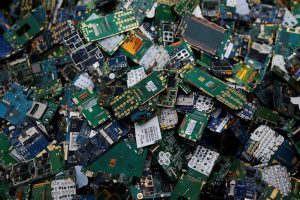
The technology acts directly on printed circuit boards. Through selective chemistry, it separates valuable metals in seconds.
The result exceeds 99% gold recovery with 999.9 purity. It also allows the extraction of silver, palladium, and copper.
In this way, furnaces, smoke, and unnecessary transport are eliminated. Therefore, the environmental impact significantly decreases.
The global challenge of electronic waste
Each year, more than 50 million tons of electronic waste are generated. However, less than 20% is properly recycled.
If the trend continues, the volume could reach 74 million tons by 2030. Consequently, critical metals valued at billions are lost.
Many devices end up buried or exported. This shifts environmental impacts to countries with weaker controls. In this scenario, local recovery gains strategic relevance. Processing materials in South Wales enhances traceability and regulatory control.
It also reduces dependence on primary mining. This decreases socio-environmental conflicts and associated emissions.
What are the benefits?
The chemical recovery of gold extracted from electronic waste drives a tangible circular economy. Waste ceases to be waste and becomes urban reserves.
Likewise, the initiative strengthens material sovereignty. Recovering critical metals within the country reduces external vulnerabilities. The project also promotes specialized technical employment. Therefore, it combines ecological transition with economic development.
Additionally, it opens the door to ecodesign. Designing products with disassembly and recycling in mind improves future efficiency. Integrating this model into industrial and climate policies can transform strategic sectors. Batteries, electronics, and renewable energies depend on these metals.
Ultimately, the innovation lies not only in chemistry. It involves rethinking the relationship between industry and resources on a finite planet.



