



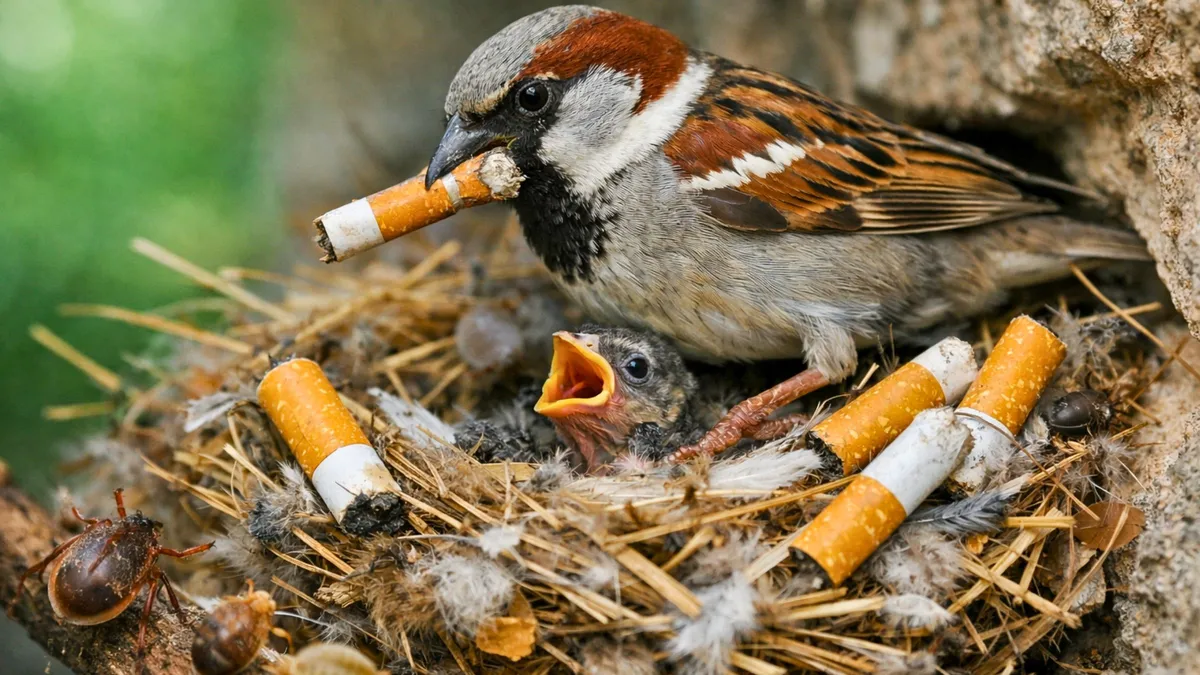
A study published in Biology Letters revealed that sparrows and finches in Mexico City incorporate smoked cigarette butts into their nests.
Researchers found that this behavior is not a collection error but a strategy to reduce the load of ectoparasites through the chemical compounds present in the filters.
The cellulose acetate fibers in the filters were negatively related to the number of mites and other parasitic arthropods.
In experimental tests, parasites were attracted to unsmoked filters but systematically avoided the remains of used cigarettes. Nicotine and other toxic substances acted as a pesticide biological within the nests.
Natural Background
Historically, many birds have integrated aromatic plants into their nests to take advantage of their antiparasitic effects.
In urban environments, where these resources are scarce, cigarette butts discarded by humans functioned as an accidental version of repellent vegetation.
Hidden Costs
Although finches increased the collection of butts upon detecting infestations, subsequent studies showed that contact with these materials caused genotoxic damage to the birds’ DNA.
Specialists warned that this is not a cute case of animal recycling but an adaptive response to an altered environment, with immediate benefits but high biological risks.
Urban Adaptation
The research highlighted the plasticity of species like sparrows and crows, which have learned to coexist with noise, artificial heat, and plastic waste.
By integrating synthetic fibers and butts, the birds demonstrated an adaptive capacity that allowed them to thrive in urban architecture. However, the study concluded that human garbage is already an essential part of wildlife, modifying basic protection and rearing habits.
Importance of Urban Birds
The phenomenon opens a debate about the role of birds in cities and their value as environmental bioindicators:
- Ecological balance: species like swallows and raptors control insect populations.
- Seed dispersal and pollination: frugivorous and nectarivorous birds maintain local flora and mitigate the heat island effect.
- Human-nature connection: birdwatching in squares and parks promotes emotional well-being and environmental education.
Challenges of Adaptation
For this adaptation to be beneficial, cities must mitigate risks such as:
- Collisions with windows.
- Light pollution.
- Loss of nesting sites.
- Competition for processed foods.
The design of sustainable cities, with green roofs, native trees, and reduced artificial lights, allows avifauna to thrive and coexist harmoniously with human infrastructure.
The use of cigarette butts in urban bird nests reflects both the resilience and vulnerability of wildlife in the face of pollution. This finding demonstrates how human waste integrates into natural cycles, altering basic survival behaviors.
Understanding these adaptations is key to designing more sustainable cities, protecting biodiversity, and ensuring that the coexistence between humans and birds is healthy and balanced.


