



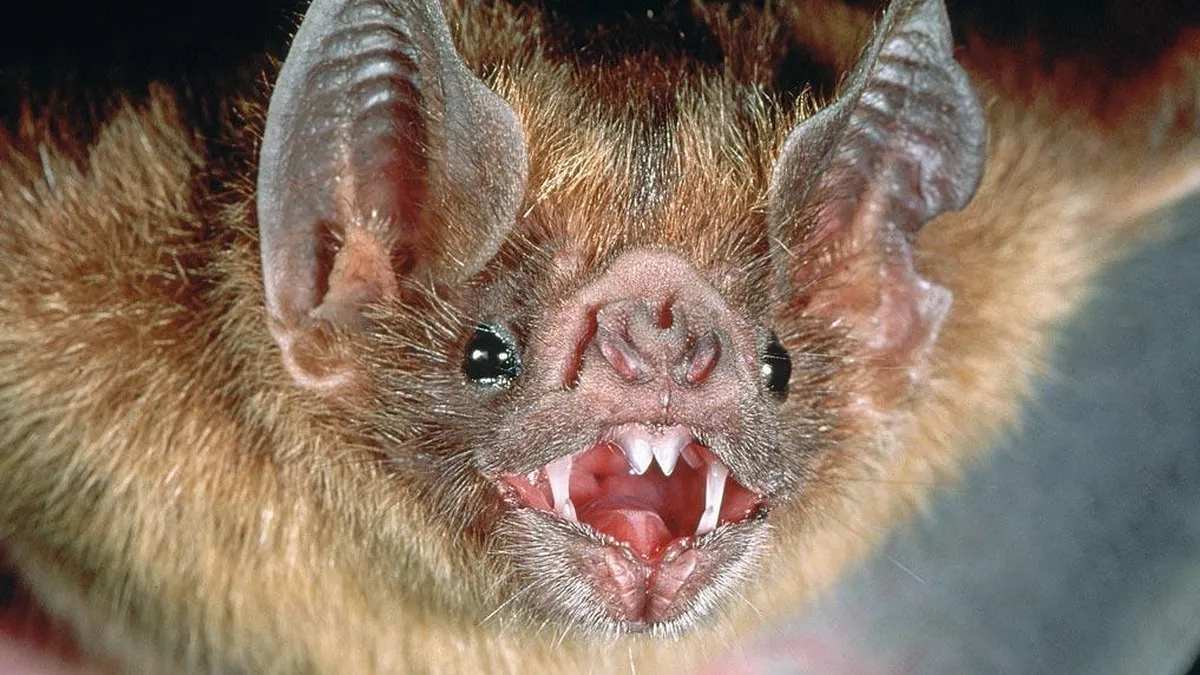
A study published in the journal Proceedings of the Royal Society B: Biological Sciences demonstrated that common vampire bats (Desmodus rotundus) modify their vocalizations to resemble those of their closest companions, especially when forming social bonds and sharing food.
The team, led by Julia Vrtilek from Ohio State University along with international colleagues, provides evidence on the complexity of animal communication and suggests that these mammals exhibit social vocal learning similar to that observed in humans and other social animals.
Study Design and Methodology
The research gathered females known to each other and others completely unknown in laboratory cages. The specimens were captured in different regions of Panama and kept under observation in the United States between 2011 and 2019.
Specialists from Michigan State University, Princeton University, University of Maryland, and the Smithsonian Tropical Research Institute participated.
The scientists analyzed behaviors such as mutual grooming and exchange of regurgitated food, common among these animals to feed hungry companions. Subsequently, they recorded nearly 700,000 contact calls from 95 bats using ultrasonic equipment and spectrograms, as most of the sounds emitted are inaudible to the human ear.
Results: Vocalizations that Adapt to the Group
The results revealed that, upon integrating into new groups, the vampire bats adjusted their vocalizations to match those of their new companions.
Julia Vrtilek explained:
“When they found themselves in a new social group, they modified their calls to match those they met.”
The vocal convergence was not indiscriminate. Analyses indicated that females who shared food tended to sound more alike than those with less close ties.
Social Vocal Learning
For Grace Smith-Vidaurre, a researcher at Michigan State University, this phenomenon suggests that bats learn their calls by listening to each other during social interactions, beyond emitting sounds defined only by genetics.
Professor Gerald Carter (Princeton University) noted that having the same “accent” could help differentiate familiar individuals from strangers and facilitate the building of new relationships or improve communication in noisy environments.
Comparisons with Other Species
Vocal learning and call convergence are also observed in other social species. Smith-Vidaurre mentioned that similar behaviors appear in dolphins, elephants, parakeets, monkeys and in humans, who often adjust their way of speaking according to the social environment.
In bats, the similarity in calls arose both from group cohabitation and in specific bonds, especially among females who shared food.
Evolutionary Implications
The study distinguishes between vocal convergence originating from simple exposure to sounds and that forged through close social relationships. The data showed that the similarity in calls was more pronounced among cooperative females.
These findings reinforce the idea that vocal learning in mammals is more common than previously thought and that vocal flexibility in bats goes beyond echolocation. The team considers that convergence could play a key role in the formation and maintenance of social bonds, although the exact functions still require analysis.
Next Steps
The researchers hope to determine if females use specific calls to address particular companions, which would be equivalent to an individual “name” system in their communication.
The study was approved by the animal ethics committees of the University of Maryland, the Smithsonian Tropical Research Institute, and the Ministry of Environment of Panama, with support from the National Science Foundation.
The research provides evidence that social familiarity and cooperative bonds influence the vocal convergence of vampire bats, opening new avenues to understand the evolution of vocal learning and cooperation in mammals.



