



The development of safer and more durable storage systems is one of the major challenges of the ecological transition. Without efficient batteries, the integration of renewable energies and the electrification of transport advance with structural limitations.
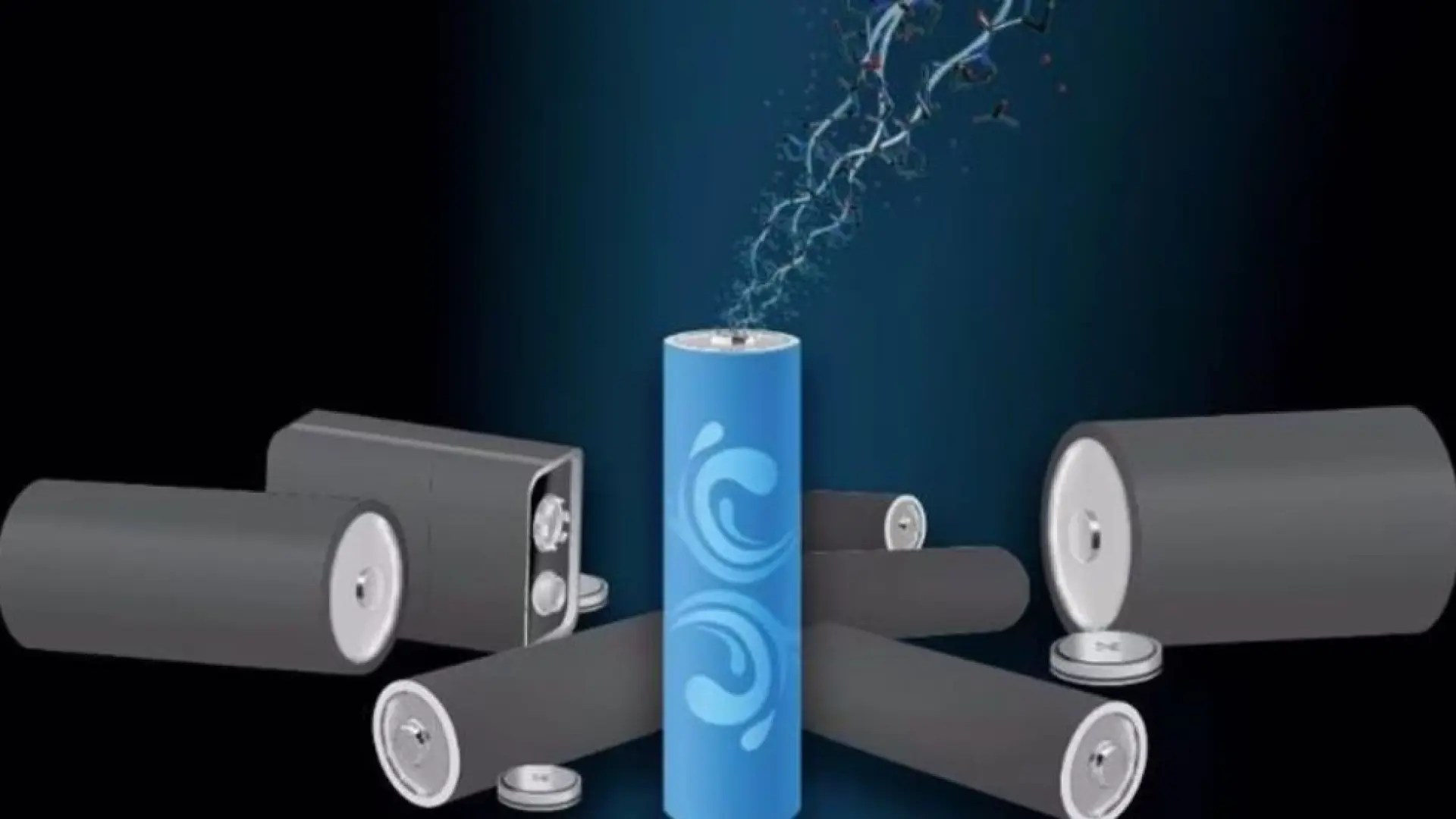
In this scenario, a team from the Chinese Academy of Sciences presented an aqueous battery capable of surpassing 120,000 charge cycles. The study was published in Nature Energy and suggests a possible paradigm shift.
The innovation lies in an energy density close to 1,200 Wh/L. This figure practically doubles that of many conventional lithium batteries with organic electrolytes.
More energy and less fire risk
One of the main problems with lithium batteries is the flammability of their components. Organic electrolytes can generate fires that are difficult to control in the event of overloads or physical damage.
In contrast, aqueous batteries use water as the base of the electrolyte. This drastically reduces the risk of combustion and improves the thermal stability of the system.
Historically, the limitation of these batteries was their low energy density. However, through an electrolyte based on iodine and bromine, researchers managed to expand the electrochemical window of water.
As a result, performance previously unthinkable for this technology was achieved. Additionally, tests with different anodes showed prolonged stability and competitive efficiency.
Applications beyond the laboratory
The first evaluations included cadmium and vanadium anodes. With the latter, the battery managed to extend its lifespan up to 1,000 cycles with solid results in energy efficiency.
Although these data correspond to controlled tests, the potential for scalability is one of the strong points. The materials used are relatively well-known and compatible with existing industrial processes.
Consequently, the technology could position itself as a viable alternative for both stationary storage and mobile applications.

Environmental and strategic benefits of water batteries
Aqueous batteries present relevant environmental advantages. By reducing the risk of fire, they decrease the likelihood of accidents in urban environments and in mass storage systems.
Moreover, their greater durability implies fewer replacements and less generation of technological waste. This contributes to reducing pressure on critical supply chains.
In the realm of electrical grids, they allow for storing solar and wind surpluses more securely. This is crucial in countries with a high penetration of renewable energies. Likewise, they could facilitate the deployment of microgrids in neighborhoods or buildings, minimizing risks associated with flammable technologies.
In electric mobility, their thermal stability could favor their use in public transport fleets or urban logistics. A safer battery strengthens social trust in electrification.
Although it is not an immediate or definitive solution, the advancement by the Chinese Academy of Sciences demonstrates that energy storage can still be reinvented. And, on this occasion, it does so using a resource as simple and abundant as water.



