



After being “asleep” for 40 years, an **iceberg adrift** with a surface **three times the size of New York City** has broken free from a **huge frozen platform in Antarctica**. With a surface area of about **4,000 km²**, the iceberg A23a has emerged on the surface and is now adrift.
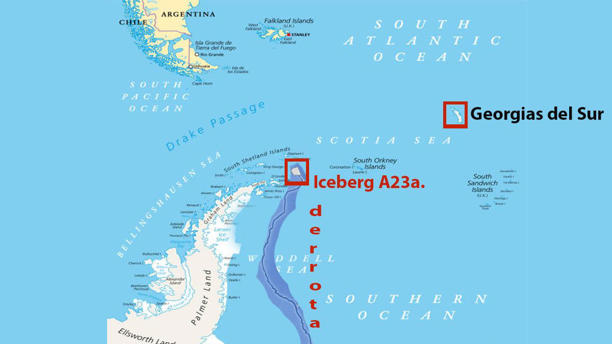
Scientists are **monitoring its course** using surveillance from the **Antarctic continent**, ships, planes, and satellites to determine if it will **remain in the area or move north**. One of the closest destinations is the **South Georgia Islands**, although **ocean currents** could lead it to cross the circumpolar current, where it will undergo significant changes upon reaching **warmer waters**.
## **Three cities like New York, frozen and adrift**
This **drifting iceberg**, gigantic, resembling a scene from “The Day After Tomorrow” multiplied by three, continues to advance through the sea surrounding the **Antarctic continent**. In 2023, initial reports indicated that it had broken free from a much larger portion, a phenomenon attributed to **climate change**.
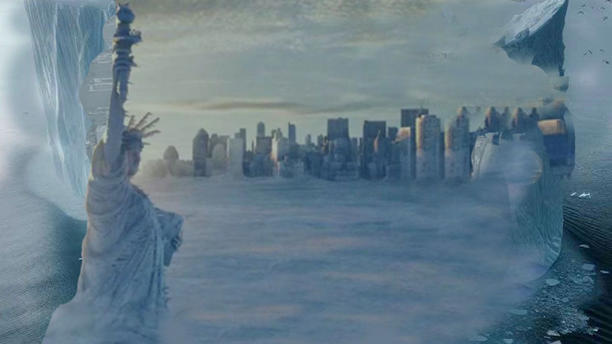
Temperatures are **affecting the planet** in various ways, creating **deserts in agricultural areas and melting ice at the poles**.
It is estimated that **Antarctica** has lost nearly **20% of its icy surface** in the last half-century, and this phenomenon continues to progress, threatening the planet’s natural **freshwater reserves**.
The iceberg **A23a broke off** from a location in **Antarctica** known as the Taylor Column, where it had been trapped for at least **40 years**.
Rising temperatures **melted the pieces holding it in place**, causing it to break off and circulate.
## **The future of the iceberg**
The iceberg is being **monitored with all available scientific means** and is **heading towards the South Georgia Islands**. However, its actual itinerary is **uncertain** due to factors such as **ocean currents** and weather, which could either maintain its size or gradually reduce it. If it continues north past the Georgias, into the Atlantic Ocean, the temperature will cause it to **lose its imposing appearance**, fragmenting into sub-elements until it **disappears**.
## **Like an ice cube in a glass**
When an **iceberg melts in the sea**, the same thing happens as with an ice cube in a glass: **the volume of water does not increase**. Although the **iceberg is 20 times larger than the city of Buenos Aires**, it cannot raise sea levels. However, **climate change** is reducing **freshwater reserves**, essential for **life on the planet**.
**[¿Ya conoces nuestro canal de YouTube? ¡Suscríbete!](https://www.youtube.com/channel/UCrYLIWysAyv4m833zGAQ02g)**



