



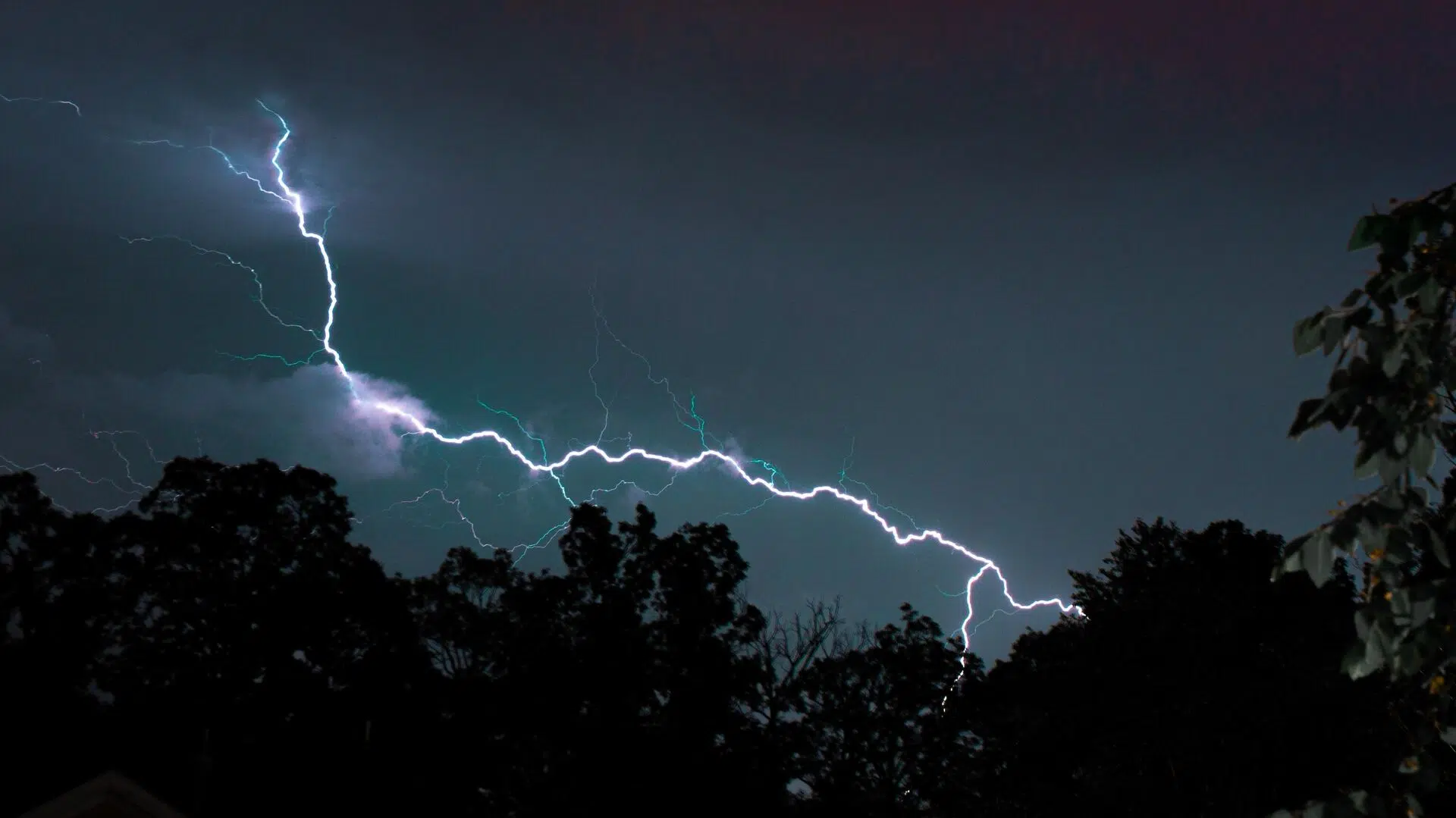
The World Meteorological Organization (WMO) has validated a new world record for a lightning bolt that is the longest ever recorded, reaching an impressive length of 829 kilometers.
This extraordinary phenomenon occurred in the United States, specifically in the Great Plains, a region known for its particular susceptibility to this type of weather events.
The lightning bolt in question occurred in October 2017 as part of a large group of storms. Its path extended from the east of Texas to the vicinity of Kansas City.
This distance is comparable to the one between European cities like Paris and Venice. To put it into perspective, traveling this distance by car would take between eight and nine hours, while a commercial plane would cover it in approximately 90 minutes.
Interestingly, this particular lightning bolt was not detected during the original analysis of the storm. It was discovered later when reviewing the data related to that episode, highlighting the complexity of detection and monitoring of these phenomena.
The distance covered by this lightning bolt surpasses the previous record by 61 kilometers, which was also recorded in the Great Plains.
Dangers of lightning and public safety priorities
The WMO emphasizes that, while lightning is a source of wonder and fascination, it also represents a great danger that claims numerous lives every year worldwide.
For this reason, the study and understanding of these phenomena are a priority of the international initiative Early Warnings for All.
Celeste Saulo, Secretary-General of the WMO, highlighted that this record underscores issues of utmost importance for public safety related to electrified clouds.
In these clouds, lightning strikes can cover enormous distances, which can have serious repercussions in the aviation sector, as well as trigger large-scale forest fires.
Records of extreme events related to lightning
The WMO has also previously verified other extreme phenomena linked to lightning:
- Longest continuous lightning bolt: According to records, the discharge of an individual lightning bolt that lasted continuously for an extended period occurred on June 18, 2020. This phenomenon lasted 17,102 ± 0.002 seconds within a storm that formed over Uruguay and northern Argentina.
- Largest direct impact: The most tragic event of a direct lightning strike took place in 1975, in Zimbabwe, where 21 people died when struck by lightning while seeking shelter in a hut.
- Largest indirect impact: The most devastating indirect impact occurred in 1994, in Dronka, Egypt. In this incident, 469 people lost their lives when lightning struck oil depots, causing the flaming liquid to spill and flood the city.
Essential recommendations to stay safe
Walt Lyons, lightning expert and member of the WMO committee in charge of extreme meteorological and climatic phenomena, offers crucial recommendations for safety.
According to Lyons, the only places where lightning is not a threat are solid buildings with wiring and piping systems.
It is important to note that structures like those found on the beach or at bus stops do not offer the same protection.
Another safe place is the interior of fully enclosed vehicles with metal roofs, excluding motorcycles, for example. If reliable data indicates the presence of lightning within a ten-kilometer radius, immediate refuge should be sought in a building or vehicle that provides the appropriate protection.
“It is worth remembering that, as these extreme cases demonstrate, lightning can not only cover great distances in a matter of seconds, but also be part of larger storms, so one must be alert,” Lyons added, emphasizing the need for constant monitoring in the face of electrical storms.



