



In the heart of the Misiones Jungle, a species grows that challenges traditional ideas about wood. It is the Yacaratiá, a tree whose plant structure can be processed to transform into a food.
Unlike most forest species, its trunk contains fibers that, through specific techniques, can become digestible. For this reason, local communities have begun experimenting with different gastronomic preparations.
Moreover, the phenomenon recently gained popularity after various videos went viral on social media. These videos show the processes by which the wood is turned into sweets and preserves.
In this way, a traditional practice of the region began to arouse international curiosity. Thus, the tree went from being a botanical rarity to a symbol of the food potential of native forests.
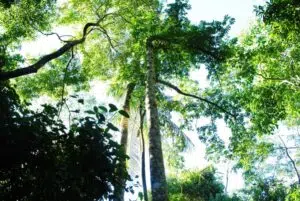
A natural resource that unites local culture, gastronomy, and forest conservation
The interest in yacaratiá also reflects the cultural value of local knowledge. For decades, inhabitants of the region have learned to utilize this tree without compromising the health of the ecosystem.
First, the process involves cutting small sections of the trunk and subjecting them to treatments that soften their fibers. Then, the pulp is cooked for long periods until it acquires a texture similar to that of a candied fruit.
As a result, sweet products are obtained that retain a particular flavor and a translucent appearance. These preparations are often used in regional desserts or as a gastronomic accompaniment.
Therefore, the yacaratiá demonstrates how forest resources can be integrated into the local economy without the need to replace the natural ecosystem.
Edible wood: a botanical curiosity that sparks interest on social media
The digital dissemination was key for this tree to gain notoriety outside of Misiones. On different platforms, videos began to circulate showing the complete transformation process of the wood.
In these images, the different foods that can be made from yacaratiá are shown. Sweets, syrups, and preserves are some of the products that most attract the attention of those discovering this practice.
As expected, the reactions on social media were diverse. While some users expressed surprise, others highlighted the originality of a little-known gastronomic tradition.
Thus, the digital phenomenon ended up expanding the interest in the biodiversity of the jungle and the sustainable practices associated with it.

The potential nutritional and environmental benefits of an underexplored resource
The concept of edible wood also raises questions about new food sources. Although it is still a resource little studied on a large scale, specialists believe it could provide sustainable alternatives.
Firstly, its use promotes the responsible use of native species without the need to clear large areas. This favors the conservation of biodiversity in the subtropical forest.
Additionally, the development of derived products could boost regional economies based on renewable natural resources. In this way, local communities can generate income while keeping ecosystems intact.
Finally, the yacaratiá reminds us that forests harbor a vast diversity of potential foods. In a context of climate change and pressure on agricultural systems, exploring these species could become a key strategy for the future.



