



Tourism is undergoing a profound change. It is no longer enough to have a comfortable hotel or a hearty breakfast: travelers are looking for ways to travel and have authentic experiences in contact with nature. In this intersection emerges glamping, a proposal that combines glamour with camping and that in a few years has gone from being a rarity to becoming a trend in South America.
What started with some luxury tents has multiplied into various forms: dome-shaped structures with large windows facing the forest, wooden cottages hidden in the woods, beds under the starry sky, or shelters with views of glaciers. The phenomenon has expanded so much that platforms like Glamping South have emerged, gathering hundreds of proposals in countries such as Argentina, Chile, Brazil, Peru, and Colombia.
But glamping is not just an accommodation option, it is also a way of traveling. Behind each project, there are personal stories and dreams of those who decided to transform their relationship with the environment into an enterprise. They are examples of how it is possible to open unique landscapes to the world without compromising respect for the land.
In this context, travelers are no longer satisfied with just visiting a destination: they want to connect with it. This quest is driving the rise of ecotourism, which promotes more conscious and sustainable experiences, both for visitors and local communities.
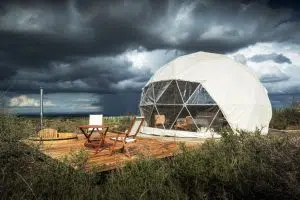
The advantages of ecotourism
Ecotourism has become a key alternative to mass tourism. Among its main benefits is the reduction of environmental impact. Unlike large hotel complexes, glamping proposals and sustainable accommodations seek to integrate with the environment, using renewable energies, bio-construction, and practices that reduce the ecological footprint.
Another contribution is the strengthening of local economies. By choosing accommodations managed by local communities or entrepreneurs from the area, travelers contribute directly to regional development. Jobs are created, local gastronomy is promoted, and cultural heritage is valued.
Furthermore, ecotourism plays a fundamental role in the conservation of biodiversity. Many projects are located in protected areas or private reserves and finance the preservation of the environment with their income. Thus, staying in a dome or shelter can also mean protecting forests, glaciers, or native woodlands.
Traveling with Purpose
In Patagonia, projects like Refugios de Patagonia show how it is possible to combine comfort with proximity to pristine landscapes. Visitors not only rest with views of glaciers and mountains but also participate in guided excursions that promote respect for the environment.
In the Sierras de los Padres, experiences like La Viella Glamp emerged from the intersection of art and nature. There, the domes were born from a musical project that later transformed into a rest space, always with the premise of respecting the landscape. Every detail, from the location of the structures to their construction, was designed to harmonize with the environment.
Further north, in San Marcos Sierras, the Aguas Antiguas project functions as a sustainability laboratory. Its domes and treehouses coexist with organic orchards, solar energy, and mud and stone bio-constructions. There, each stay is also a lesson on how to inhabit the earth with less impact.

A Growing Trend
The rise of glamping and ecotourism reflects a cultural transformation. Travelers seek to disconnect from urban routine and return to the essentials: contact with the landscape, silence, bird songs, and shared fires. This simplicity, accompanied by comfort, becomes a luxury that is hard to find in other environments.
More than a trend, glamping paves the way for a more responsible way of traveling. Each experience becomes an opportunity to learn about the environment, appreciate its richness, and contribute to its care. Traveling is no longer just about discovering a place: it is also about protecting it.
In conclusion, ecotourism shows that it is possible to combine enjoyment with preservation. By choosing these alternatives, travelers not only find comfort and dreamy landscapes but also become an active part of a new way of traveling, one that is more respectful and committed to the future of the planet.


