



Researchers from the IPEHCS institute are collaborating in the design of a high mountain hiking route that will connect various Patagonian provinces under criteria of sustainability and cultural heritage, called the Great Andes Trail.
Experts from the National Scientific and Technical Research Council (CONICET) have actively participated in the design and planning of the Great Andes Trail, a national-scale initiative that aims to establish an uninterrupted hiking route through the mountain range.
This ambitious project, supported by the Ministry of Tourism and Sports and the National Parks Administration, has as its main objective to promote responsible nature tourism that integrates the historical, geographical, and social values of the Patagonian region.
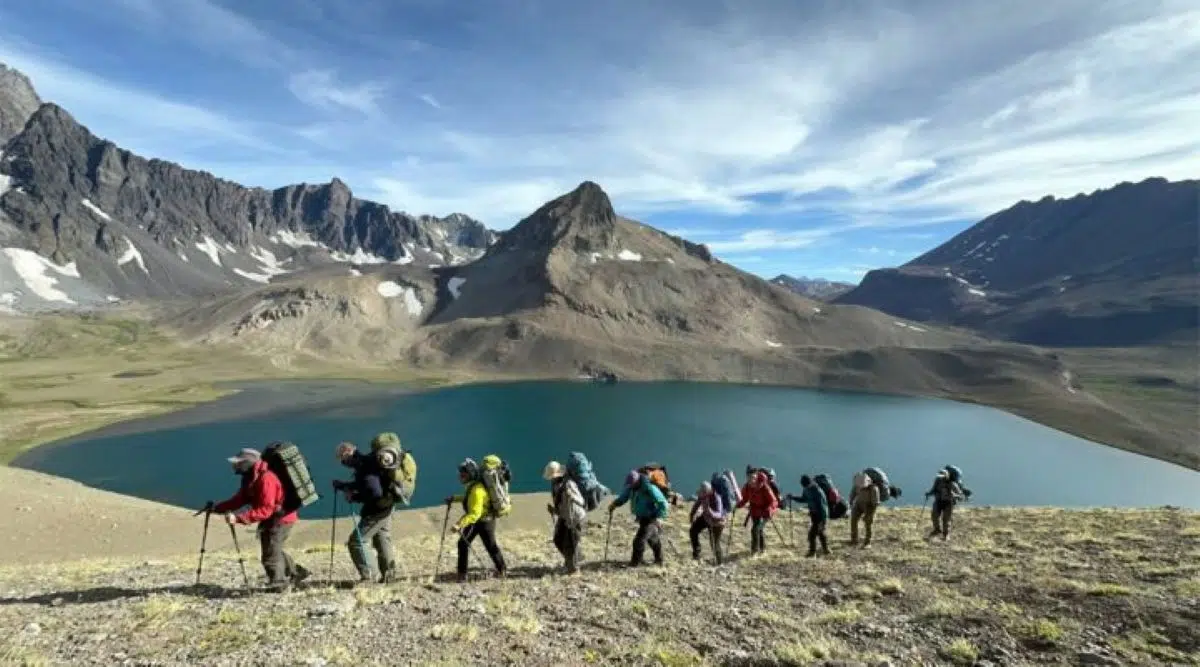
The scientific participation is channeled through the Institute of Research in Cultural Diversity and Change Processes (IPEHCS, CONICET-UNCOMA). The specialists provide a transdisciplinary vision that goes beyond simple map drawing; their work consists of giving the trail an interpretative depth that allows hikers to understand the complexity of the environment they traverse.
This includes identifying archaeological, historical, and environmental points of interest, ensuring that the tourist infrastructure does not negatively impact the ecosystems or the memory of local communities.
Great Andes Trail
It is inspired by successful international models, such as the European “Grande Randonnée” (GR) trails, but adapted to the scale and biodiversity of Argentina.
The route is projected to cross provinces such as Neuquén, Río Negro, and Chubut, connecting pre-existing trails and creating new sections that allow for a long-duration journey.
According to the researchers, these types of proposals are essential to diversify the tourist offer and promote economic development in localities that are usually left out of conventional circuits.
One of the pillars of CONICET‘s work in this project is social and environmental sustainability. The research team emphasizes the importance of the route being a tool for conservation.
To this end, field studies are being conducted to assess the fragility of the soils and the preservation of native fauna and flora.

Additionally, the trail aims to act as a bridge for local inhabitants to participate as service providers, guides, and guardians of the territory, strengthening the sense of belonging and the regional economy.
The implementation of this high mountain path also involves a technical challenge in terms of signage and safety.
The collaboration between scientists and government agencies ensures that the user has accurate information about the terrain difficulties and weather conditions.
With this advancement, Argentina seeks to position itself as a world leader in long-distance hiking, offering a fully immersive experience in nature under the rigor of scientific planning and respect for the national heritage.


