



In the Indian Ocean, off the Gulf of Aden and belonging to Yemen, lies Socotra, a wild island considered one of the most remote and extraordinary on the planet.
Declared a Natural World Heritage Site by UNESCO in 2008, this archipelago is a true natural laboratory where biodiversity and adventure combine in a practically untouched environment.
Endemic Nature and Unique Landscapes
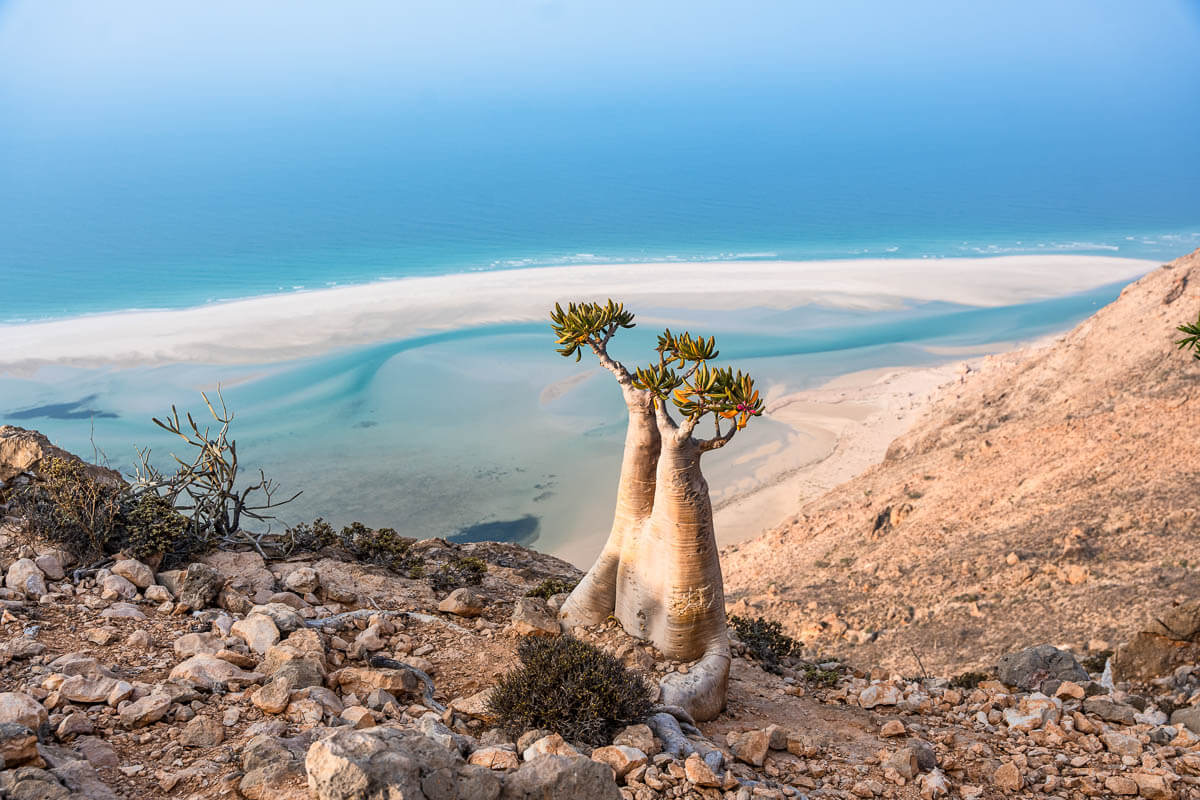
More than a third of Socotra’s plant species are endemic, meaning they exist nowhere else in the world. Among them stands out the emblematic dragon’s blood tree, with its umbrella-shaped crown and red sap, the protagonist of legends and subject of scientific study. Also notable are the Socotra desert rose and the frankincense tree, which complete a fascinating botanical catalog.
The island is a refuge for birds, insects, reptiles, and snails that have evolved in isolation for millennia, forming a unique ecosystem that continues to reveal new species and adaptation processes.
Limited Access and Exclusivity
Reaching Socotra is not easy: commercial flights are scarce, and most visitors access via organized charters from Abu Dhabi. This difficulty of access, far from detracting from its appeal, adds an aura of exclusivity and adventure, ensuring that the human impact on the environment is minimal.
The Yemeni authorities, along with international organizations, have established strict conservation regulations to preserve the fragility of the ecosystem.
Sustainable Tourism
Tourism in Socotra is only possible under a sustainable and responsible model. Specialized ecotourism agencies design environmentally respectful itineraries, support local communities, and limit the number of visitors.
Travelers must commit to minimizing their footprint and contributing to the protection of this unique natural heritage.
An Otherworldly Setting
Those who arrive in Socotra discover a visually striking universe:
- Rocky mountains that resemble lunar landscapes.
- Pristine beaches and white dunes that contrast with the turquoise sea.
- Valleys covered with fantastic trees, worthy of a science fiction novel.
Photography and nature lovers find here a paradise where every corner is worthy of being immortalized.
Socotra is much more than a tourist destination: it is an exclusive natural sanctuary, a living laboratory of biodiversity, and an example of how sustainable tourism can coexist with conservation. Its isolation, endemic richness, and unique landscapes make it one of the wildest and most unknown gems in the world.


