



The world is going through a critical situation in waste management. In this regard, a recent report shows a faster growth than expected.
According to the study, in 2022 2.560 billion tons of waste were generated, a figure that almost reaches future projections. In fact, it is estimated that by 2050 waste will reach 3.860 billion tons. Thus, the increase will be close to 50%.
On the other hand, this growth will be uneven across regions. Consequently, lower-income countries will face greater challenges.
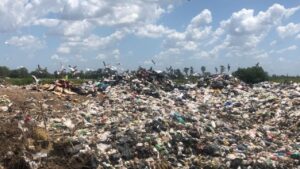
Global inequality in waste generation
The distribution of waste shows strong differences, as high-income countries generate a significant proportion. In fact, only 16% of the population produces 29% of the waste. Therefore, they lead in per capita generation.
Likewise, upper-middle-income countries concentrate 42% of the total. This is how they become the largest global generators. On the other hand, regions like East Asia and the Pacific lead production, while other areas have less participation.
Finally, Sub-Saharan Africa and South Asia record the fastest growth. Therefore, they require priority attention.
Plastics and poor management: a persistent threat
Among the waste, plastics generate special concern, as a large proportion does not receive adequate treatment.
Consequently, about 29% of this waste is not managed correctly and ends up in dumps or without collection. Likewise, middle-income countries concentrate most of the problem, as they produce 87% of poorly managed plastics.
On the other hand, regions like Sub-Saharan Africa and South Asia lead these figures, worsening the environmental impact. Finally, the lack of infrastructure limits effective solutions and deepens pollution.

Environmental and climatic consequences of inadequate management
The poor treatment of waste has direct effects on the environment, contributing to climate change. In fact, open-air burning releases greenhouse gases, worsening air quality. In turn, organic waste generates methane, a gas that increases global warming.
On the other hand, waste pollutes rivers and oceans affecting marine biodiversity, leading to the loss of valuable resources and hindering the transition to circular economies.
The global garbage problem and pending challenges
The generation of garbage is one of the greatest environmental problems today. Furthermore, it reflects patterns of unsustainable consumption.
Consequently, food waste worsens the situation. Therefore, resources such as water, energy, and soil are lost.
Likewise, about a third of food is wasted each year. Thus, emissions from decomposition increase.
On the other hand, many countries already recognize the problem. Consequently, they incorporate policies into their climate plans.
Finally, the implementation remains limited. Therefore, financing, regulation, and international cooperation are needed to advance.



