



The City of Mendoza is moving towards a more efficient and sustainable waste management model through the massive digitization of administrative documents. The process, driven by the Secretariat of Public Management, covered more than 1.2 million pages from the Courts and the Driver’s License Issuing Center. The main goal is to modernize administration, reduce waste and paper consumption, as well as to have a positive impact on the environment.
The measure allowed the removal of 5.4 tons of paper, destined for recycling under a scheme of responsible waste management. This change ensures the preservation of information in secure digital media, while reducing the physical space needed to store paper files. Additionally, it promotes a more agile administration model with better conditions to safeguard sensitive data.
A highlighted element of the project is its charitable component: the proceeds from the sale of recycled material will be allocated to the CONIN Foundation, an organization recognized for its work in combating child malnutrition. In this way, the action combines institutional modernization with direct social benefit.
The process is part of the internal GIRSU program, which aims to optimize waste management in public offices by valorizing materials and strengthening the circular economy. With these actions, the municipality consolidates its role as a reference in triple impact policies, integrating environmental, social, and economic objectives in each initiative.
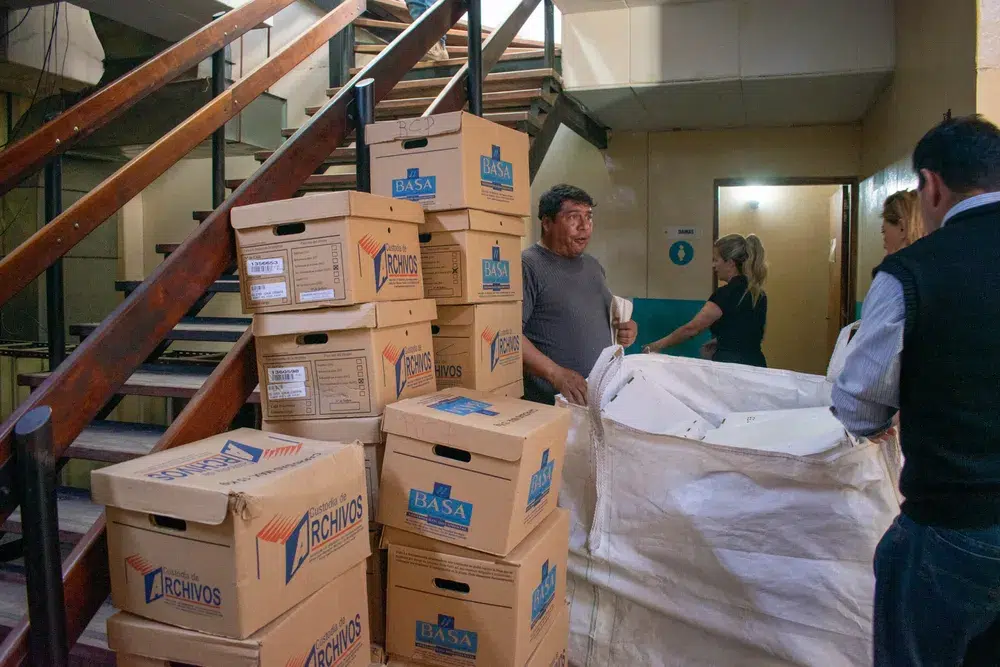 The City of Mendoza seeks to reduce waste and promote recycling. Photo: Los Andes.
The role of waste management in local environmental policy
The Department of Inspection and Integral Waste Management, under the Urban Hygiene Directorate, is a key pillar in Mendoza’s environmental strategy. Its task goes beyond control, as it designs and implements programs that promote reuse and recycling as alternatives to the burial of waste. This approach aims to reinforce transparency and social responsibility in resource management.
A clear example is the recovery of obsolete administrative paper, managed differentially for subsequent recycling. So far in 2025, over 10 tons have been recovered, preventing them from ending up in the sanitary landfill. This material is handed over to CORPA for processing, generating economic resources also allocated to the CONIN Foundation, closing a virtuous circle between the environmental and social aspects.
The management also includes separate collection programs, actions against illegal dumpsites, and a traceability system that allows monitoring the route of waste. Simultaneously, work is being done on updating local regulations to incorporate circular economy criteria and recognize the role of urban recyclers as fundamental players in the recycling chain.
The Inspection Corps plays a central role by touring neighborhoods with a preventive and educational approach. Instead of prioritizing sanctions, the aim is to support residents in adopting good environmental practices, fostering citizen awareness in responsible waste management.
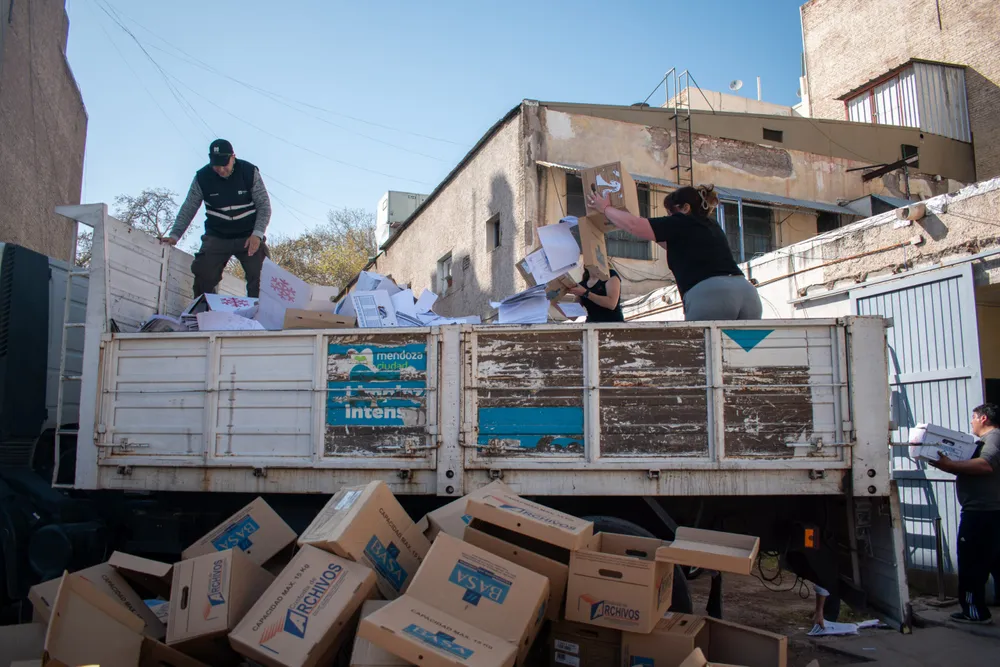 The City of Mendoza seeks to reduce waste and promote recycling. Photo: Los Andes.
More than just reducing waste: the environmental benefits of digitization
The digitization of documents represents a fundamental step towards reducing the environmental impact of public administrations. By reducing paper consumption, the logging of trees and the energy expenditure associated with the production and transportation of this material are also reduced. Digital preservation also allows for savings in supplies such as ink and folders, as well as physical space allocated for filing.
This process also contributes to decreasing greenhouse gas emissions by reducing the need for material transportation and preventing large volumes of paper from ending up in landfills. This way, progress is made towards consolidating a cleaner, more efficient, and sustainable economy.
With these actions, Mendoza reinforces its commitment to technological innovation and environmental protection, integrating solidarity as an essential component. The city demonstrates that digitization not only modernizes public management but can also be a concrete tool to care for the planet and improve the quality of life of its inhabitants.



