



The bright light over the sea can hide a silent but devastating problem: synthetic garments exposed to the sun release microplastics that pollute marine ecosystems.
Research led by the Chinese Research Academy of Environmental Sciences and the Nanjing University of Information Science and Technology shows that solar radiation degrades polyester fabrics, generating thousands of microscopic fibers that end up in the water.
Dark colors, greater degradation
The study found that darker colors accelerate the fragmentation of polyester. Purple fibers, for example, absorbed more solar energy and released more than 47,000 microfibers in less than two weeks, equivalent to a year of exposure in coastal waters.
Azo and nitro dyes, present in purple and green fabrics, absorb more ultraviolet radiation and generate free radicals that accelerate decomposition. In contrast, lighter colors like yellow or blue reflect part of the radiation and show greater resistance.
Ecological and health impact
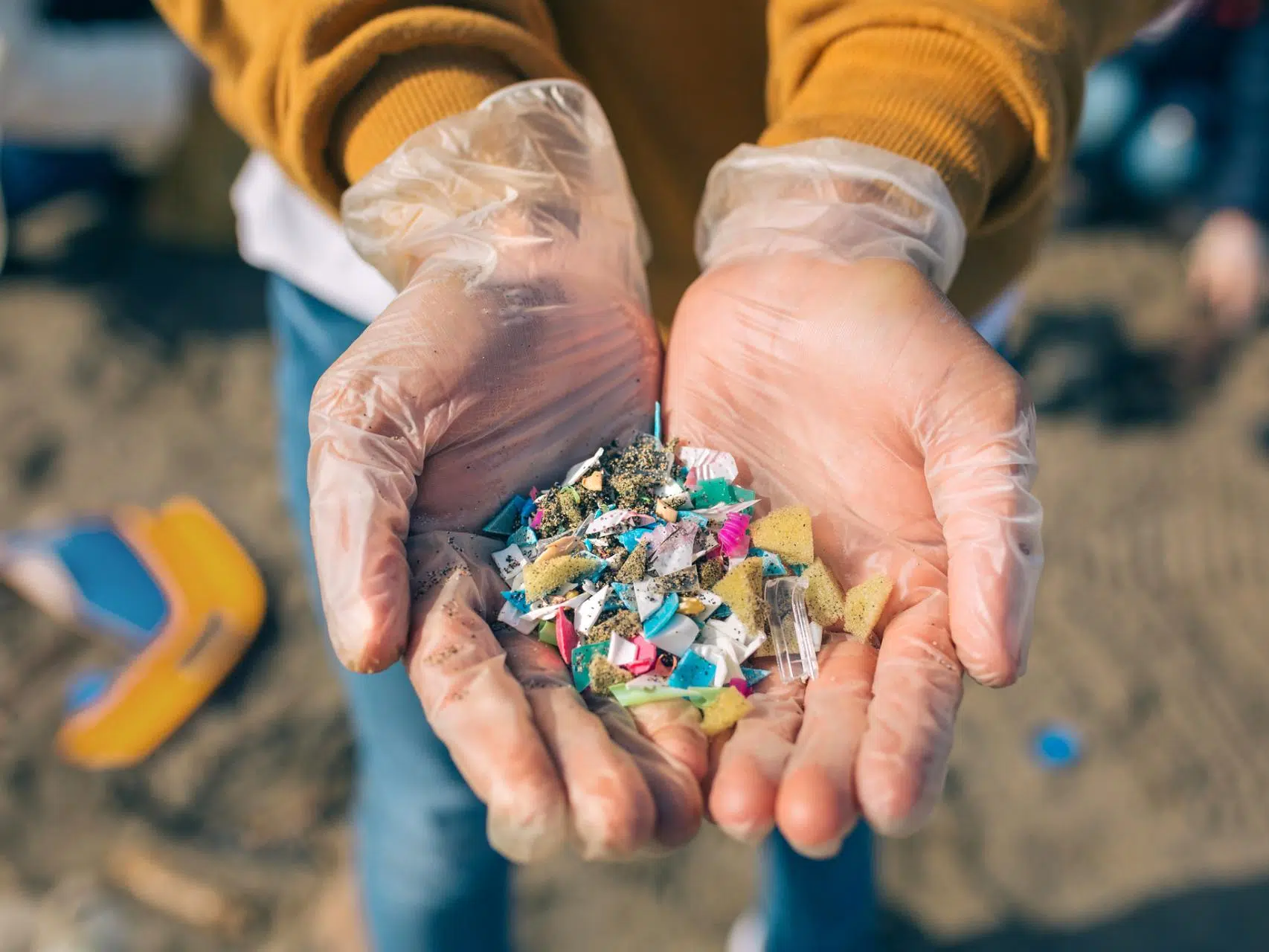
The released microfibers do not dissolve and are ingested by plankton, crustaceans, and fish, entering the food chain. The problem transcends the sea: microplastics have been detected in human lungs, blood, and placenta, confirming their health impact.
Additionally, these fibers act as magnets for pollutants, absorbing heavy metals, pesticides, and persistent organic compounds. The toxic cocktail can alter the endocrine system of marine organisms, cause inflammation, and affect their reproduction.
The role of ultraviolet radiation
UV radiation not only fades garments: it breaks the chemical bonds of plastic, weakening its structure. In the presence of marine oxygen, these breaks generate acidic substances and carbonyl groups that make the fibers brittle. The movement of the waves and the salt complete the fragmentation process.
Persistence and bioaccumulation
Microplastics do not degrade for decades. Some particles pass from fish to seabirds and from there to humans through the consumption of seafood.
Their small size does not mean low impact: on the contrary, their persistence and bioaccumulation capacity make them a chronic threat to ecosystems and public health.
Textile design and sustainability
The study highlights a little-discussed aspect: the relationship between textile design and marine pollution. The choice of color, type of dye, and fabric density have tangible effects on environmental degradation.
Researchers suggest that manufacturers prioritize less reactive dyes to sunlight and consider fabric density, as looser fabrics degrade differently than compact ones. Every design decision, from the type of fiber to the weight, determines the final fate of the textile in the marine environment.
Everyday habits with an oceanic footprint
Garments dried in the sun, whether on urban balconies or remote beaches, release imperceptible fragments that end up in the sea. Thus, without realizing it, we contribute to a diffuse and persistent plastic pollution.
This process, described as secondary generation of microplastics, does not originate in the factory but from continuous environmental wear. It is more difficult to prevent because it occurs silently and inevitably if the production system is not changed.
Conclusion: a global challenge
The study reveals that our everyday habits have a real oceanic footprint. It’s not just about single-use plastic: every synthetic garment, with each wash and each day of exposure, continues to pollute long after we stop using it.
The research opens an urgent debate about the responsibility of the textile industry and the need to rethink garment design to reduce the impact of microplastics in the sea and on human health.



