



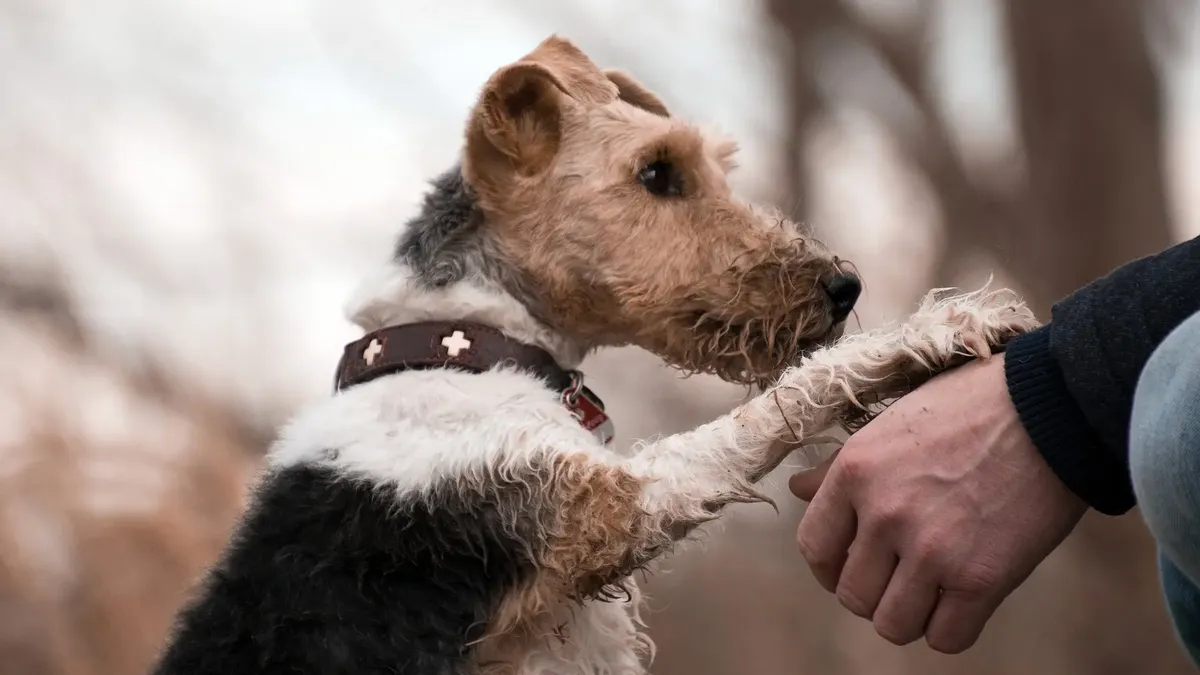
Dogs don’t just bark or wag their tails to communicate. Many times, they do it silently, with gestures as simple as placing a paw on their humans. And although it may seem like just a gesture of affection, that gesture can convey much more than one might imagine.
When a dog places its paw on someone, it’s speaking. Perhaps seeking a caress, a glance, or simply confirming that you are there. That small touch can be their way of saying “I need your attention” without making a fuss.
But it’s not always about whims or demands. Sometimes, it’s a pure display of affection. A form of a doggy hug. In moments of calm, your dog may want to share their peace with you, or they may be offering you comfort without words.
 dog[/caption>
A Message Through Paws
This gesture can also appear in moments of tension. If there is noise, nervousness, or simply a change in routine, placing the paw can be an attempt to calm down, either themselves or you. It’s their way of saying “everything will be okay.”
In other cases, although less frequent, it may involve an element of control. If the gesture is insistent, repeated forcefully, or accompanied by growls or nudges, they could be marking territory or seeking to impose their will.
Whatever the reason, the truth is that paw has a message. Observing the context, their body language, and your daily bond will help you decipher what they are trying to tell you. Because for them, every gesture counts. And for you, it can be another way to get to know them better.
 dogs and humans
The Silent Language of Dogs
Dogs communicate mainly through body language. The position of their ears, tail, overall posture, and even the rhythm of their movements are signals that reveal how they feel. A tail wagging in a relaxed manner indicates joy, while a low or tucked between the legs can reflect fear or insecurity.
Facial expressions also play a key role. A dog with squinted eyes, relaxed ears, and a slightly open mouth is usually comfortable, while a furrowed brow or a fixed gaze may indicate alertness or discomfort. Yawning and nose licking, though seemingly simple, can be signs of stress.
In addition, sounds complement their communication: barks, growls, whines, or howls express anything from enthusiasm to warning. Along with these gestures, physical actions —such as placing a paw, leaning on the human body, or licking— reinforce the bond and are clear ways to interact emotionally with their caregivers.



