



Facing the challenge of reducing urban pollution and mitigating climate change, zero-emission public transportation has become a strong goal for major cities.
World urban centers are strongly betting on electric public transportation.
Urban electromobility: towards emissions-free public transportation and cleaner cities
From the Americas to Europe and Asia, more and more local governments are adopting urban electromobility as a central axis to achieve environmental goals and improve the quality of life in urban environments.
 Urban electromobility, the great bet.
According to recent data from the C40 initiative, a global network of cities committed to climate action, more than 70 cities have already committed to progressively eliminating combustion engine buses.
They plan to replace them with electric or hydrogen-powered units before 2030.
Electric public transportation: a key solution against pollution
Transportation is one of the major sources of greenhouse gas emissions in cities. Traditional buses not only emit carbon dioxide, but also polluting particles that affect the respiratory health of millions of people.
Given this scenario, the electrification of public transportation is presented as an effective and necessary solution.
Cities like London, Paris, New York, Bogotá, and Santiago de Chile have already begun a transition to zero-emission fleets, in line with the commitments of the Paris Agreement.
In addition to reducing the carbon footprint, electric buses generate less noise and contribute to better air quality.
In Latin America, Bogotá leads with one of the largest fleets of electric buses in the region, while Santiago de Chile has a public transportation system with over a thousand operational electric units.
This year, the City of Buenos Aires launched its own initiative with electric buses that began circulating in the downtown area.
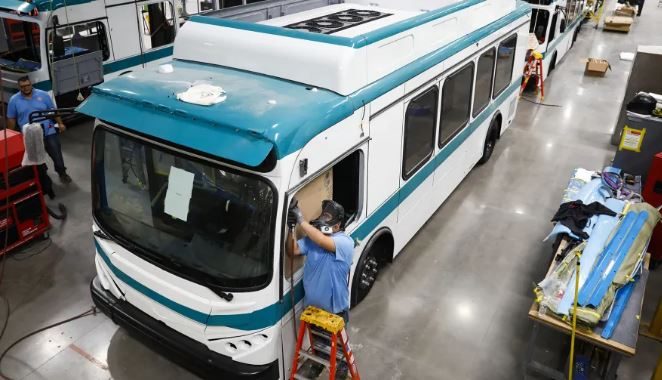 Electrification of transportation around the world.
In Europe, Amsterdam and Oslo stand out for implementing policies to completely restrict polluting vehicles from public transportation before the next decade.
2030 Goal: zero-emission cities
The transformation of public transportation is part of a comprehensive strategy to build more sustainable, healthy, and climate-resilient cities. Among the main objectives of this global plan are:
-
Eliminating diesel buses from the streets.
-
Promoting the electrification of public and private transportation.
-
Encouraging accessible electric charging infrastructure.
-
Reducing traffic and promoting active mobility (biking and walking).
The cities signing the “C40 Green and Healthy Streets” commitment also pledge to only purchase zero-emission buses from 2025 onwards and to make central areas emission-free by 2030.
The main challenges of the transition
Although the transition to clean public transportation faces challenges such as financing, charging infrastructure, and fleet renewal, the global momentum is already irreversible.
More and more governments, transportation companies, and citizens understand that moving towards sustainable mobility is key to addressing the climate crisis and ensuring more livable cities.


