



Argentina is home to a wildlife as diverse as its landscapes, but this natural richness is facing increasing threats. Agricultural expansion, poaching, and climate change are pushing many species towards extinction.
Like in other countries, several native species are on the endangered list. Some, like the jaguar or the southern right whale, are emblematic. However, others remain anonymous despite their delicate situation.
The concept of endangered species applies when a species’ population drops to critical levels. Habitat loss, illegal trade, and ecosystem alterations are its main causes.
Argentina is not immune to this issue, despite efforts to conserve its biodiversity. Among the lesser-known cases is that of the armadillo, a true hidden treasure of the Chaco fauna.
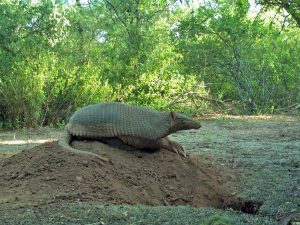 Tatú carreta, en peligro de extinción.
The armadillo: a threatened survivor
The armadillo is the largest in the world and one of the most enigmatic mammals in South America. It can reach over a meter in length and weigh up to 60 kilos.
It mainly inhabits the wooded areas of the Argentine Gran Chaco, especially in the provinces of Chaco, Formosa, Santiago del Estero, and Salta. However, its presence has drastically decreased in recent decades.
The loss of its natural habitat, caused by deforestation and agricultural expansion, along with illegal trafficking and poaching, have decimated its populations. Today, its conservation status is critical and it is protected by national and international laws.
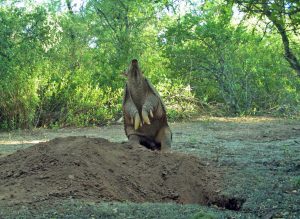
This giant plays an essential ecological role, as its large burrows serve as shelter for other species. Its disappearance would have a negative impact on the biodiversity of the Chaco forests.
Conservation as an urgent challenge
Conservation programs seek to reverse the armadillo’s situation, but threats persist. The destruction of native forests is advancing at an alarming rate, limiting the available habitat for the species.
Protecting natural areas and promoting respect for wildlife are urgent measures. Additionally, environmental education and surveillance against wildlife trafficking are key to halting the march towards extinction.
The armadillo is not only a symbol of the Chaco fauna, but also a reminder of the delicate balance of ecosystems. Preserving it means betting on the health of the environment and biological diversity.



