



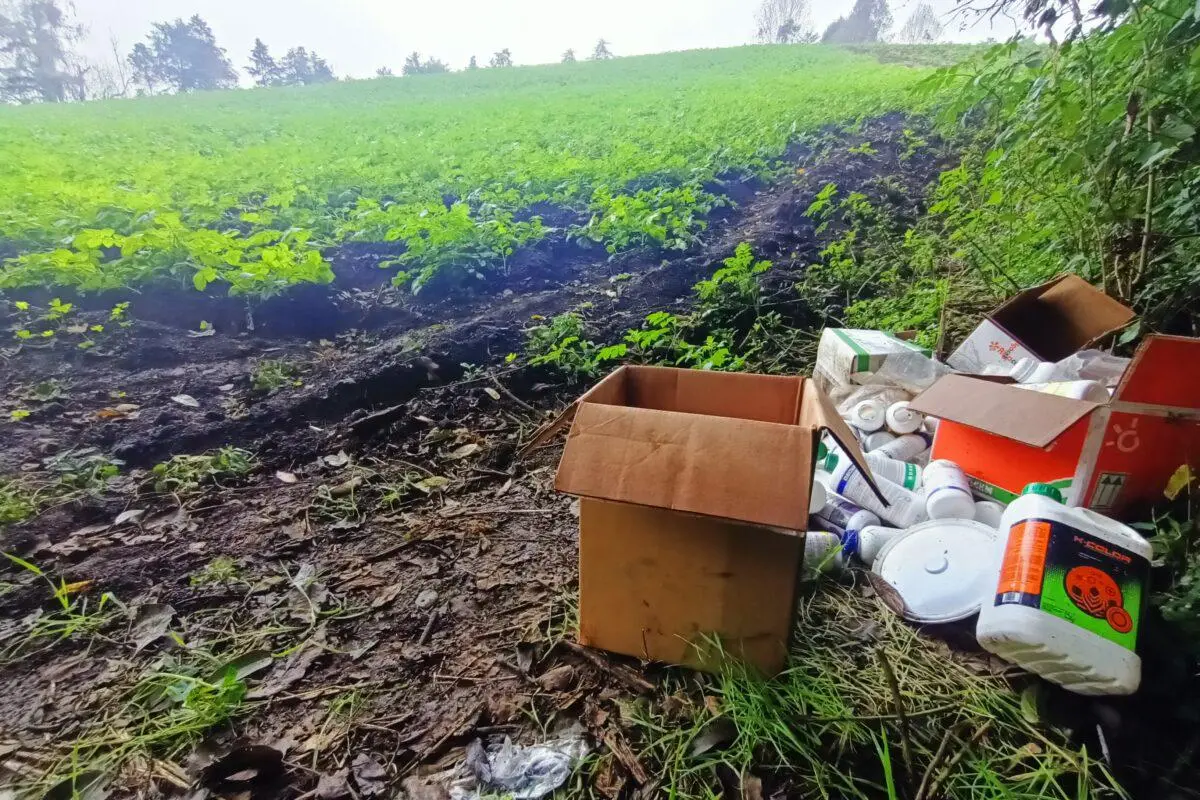
The classrooms of the **Adolfo López Mateos elementary school**, in the community of **El Naranjo**, municipality of **Tlalnelhuayocan (Mexico)**, have remained empty since June 2024. The closure was caused by the **abandonment of students and teaching staff**, who presented **health issues** that, according to local testimonies, would be linked to exposure to **intensively used synthetic pesticides** in the **potato crops** located a few meters from the institution.
Founded three decades ago, the school became surrounded by lands rented to **potato producers** since 2010. Although the **municipal regulations approved in March 2024** prohibit the **use of toxic substances** in crops near public spaces like schools, the local landscape shows that **agrochemical practices persist**.
## Symptoms, complaints, and toxic substances
Between 2022 and 2024, biologist **Linda Marín**, a researcher at the **Universidad Veracruzana**, documented the use of **at least 16 pesticides** in the fields surrounding the school.
The list includes fungicides, herbicides, nematicides, rodenticides, and pesticides classified as **highly toxic**, some of them **banned by international agreements** such as the Stockholm and Rotterdam Conventions, ratified by Mexico.
During her research, Marín collected testimonies from mothers whose children showed:
– Vomiting
– Dizziness
– Lack of appetite
– Hives
– Fatigue and difficulty concentrating
Similar symptoms were also detected in the two teachers at the school, who **taught without a voice** and reported **frequent respiratory ailments**. The situation worsened in August when **metamidophos** and **aluminum phosphide** were used, **highly harmful compounds** that have been banned in other countries in the region.
## Cloud forest under agricultural pressure
The school is located in a wooded area at 1600 meters above sea level, in the third most populous state in Mexico. Here begins the **cloud forest**, considered the last tropical region before the Mexican highlands.
This ecosystem is part of the **Archipelago of Forests and Jungles of the Veracruz Capital Region**, a protected natural area since 2015, with **5880 hectares of cloud forest and strategic environmental services**.
Between 2010 and 2023, the area dedicated to potato cultivation in Tlalnelhuayocan **increased from 10 to 79 hectares**, according to data from the Agri-food Information System (SIACON). The advance of **monoculture with agrochemicals** has been replicated in other municipalities:
– **Xico**: from 20 to 140 hectares
– **Ayahualulco**: from 530 to 597 hectares
– **Jalacingo**: from 649 to 1035 hectares
In places like **Coatepec** and the community of **Cinco Palos**, the landscape and environmental impact has been significant.
## Ecological planning and institutional void
Faced with the increase in crops in ecologically valuable areas, the organization **SENDAS**, together with the **Mexican Center for Environmental Law (CEMDA)**, the **Institute of Ecology A.C.**, and the **Veracruz Ministry of Environment**, promoted a **Regional Ecological Planning Program**. This mandatory document regulates the use of **agrochemicals within 500 meters** of homes, water bodies, and sensitive areas.
However, communities denounce **lack of compliance, absence of municipal oversight, and omission of health outcomes**. The Ministry of Health claims to have carried out “health verifications in the region” in the last ten years but **has not revealed its conclusions or linked the impacts to intensive agriculture**.
## Voices of the territory
According to the NGO **[SENDAS](https://www.instagram.com/sendasac/)**, producers have migrated to the cloud forest from depleted highland areas due to decades of cultivation. Researcher **Jordi Vera**, from the **Collective Territories Free of Agrochemicals**, collected testimonies from farmers seeking performance on new lands, where agricultural practices with **high pesticide use** are replicated.
In April 2024, SENDAS and **Ánima Mundi** met with legislator **Adrián Naveda**, who represents the region in the Chamber of Deputies. The organizations provided impact studies and requested a **coordinated intervention from the health, environment, and education sectors**.


