



An unprecedented finding on the coast of Río Negro has once again highlighted the abandonment that many marine species face outside their natural habitat. In November 2023, a specimen of the Yellow-crested Penguin of the North was sighted at the Tercera Bajada, within the San Antonio Bay Natural Protected Area.
This type of penguin rarely appears on the South American mainland. Its natural distribution is restricted to islands in the Indian Ocean, such as Tristan da Cunha or Gough. Therefore, its accidental presence in Argentina is considered an extraordinary event by the scientific community.
The specimen was detected and transported by trained environmental personnel, following established protocols for marine species. The rescue not only allowed for clinical assistance, but also included its registration on the country’s official bird list.
The event reinforces the value of protected areas as key spaces for conservation, while also highlighting the risks that vulnerable species face when they reach coasts altered by tourism, garbage, or climate change.

Beyond the discovery: the threat of abandonment
The case of this penguin serves as an example of what happens to many species that appear far from their natural environment. In many cases, marine animals arrive weakened, injured, or disoriented. Without proper intervention, their recovery is almost impossible.
Human disturbances—such as maritime traffic, pollution, or habitat destruction—increase the likelihood that isolated individuals will be adrift. Once on solid ground, without resources or suitable conditions, they are exposed to abandonment, diseases, or even contact with humans who do not always understand their fragility.
The timely rescue of the Yellow-crested Penguin of the North was a positive exception. However, most of these events go unnoticed or end with the death of the animal, highlighting the need to strengthen surveillance and assistance networks along the entire coastline.
A unique and endangered visitor
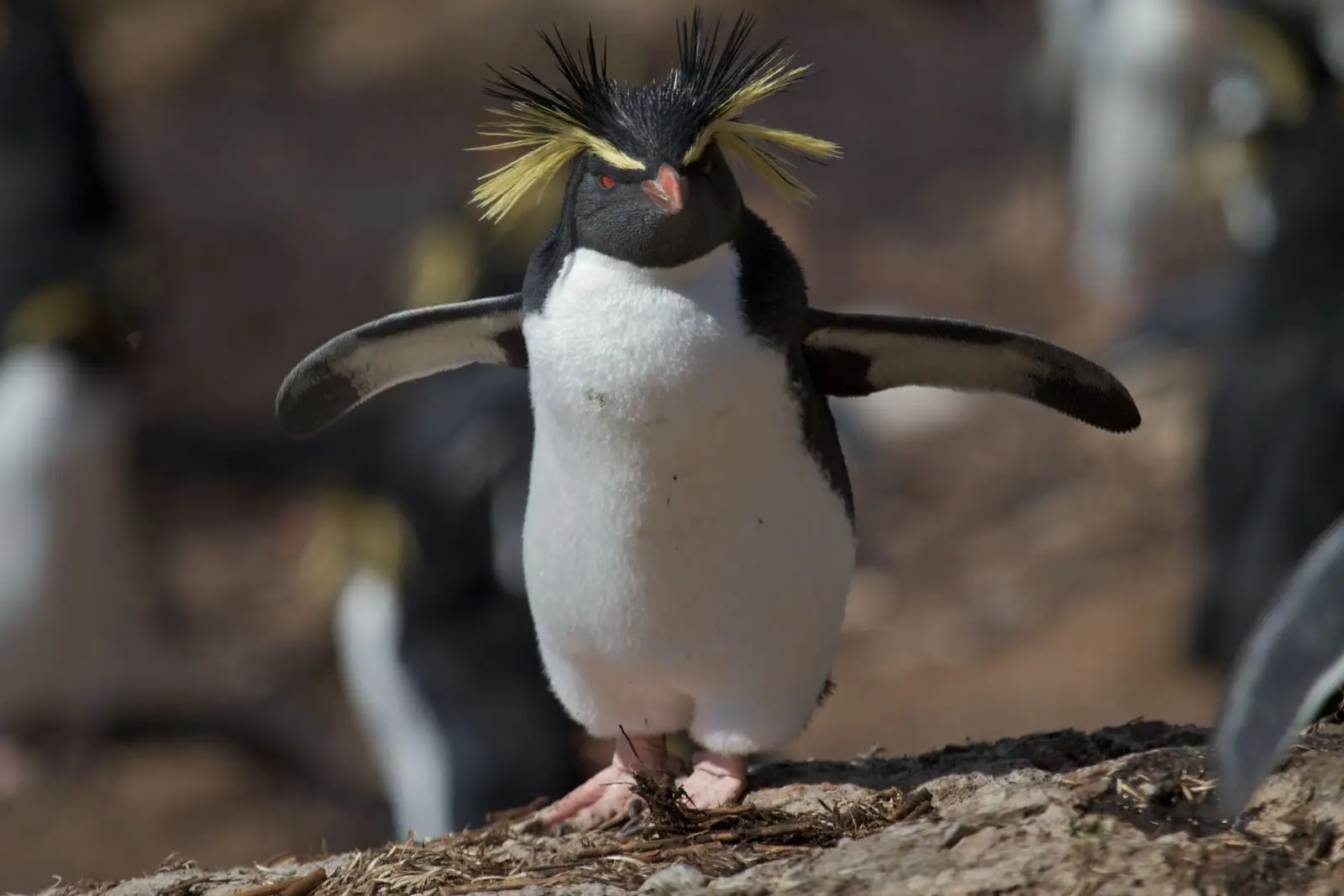
The Yellow-crested Penguin of the North (Eudyptes moseleyi) is a marine species considered “endangered” by the International Union for Conservation of Nature (IUCN). Its population is declining due to industrial fishing, climate change, and the introduction of exotic species into its breeding areas.
It is distinguished by its bright yellow feather crest protruding from both sides of the head, its orange beak, and its active behavior. It is one of the smallest crested penguins, but also one of the most threatened on the planet.
Its presence on the continental Argentina does not imply a change in distribution, but rather an exception. Still, this discovery provides valuable information about its movements and confirms that Argentine coasts are also transit areas or refuges for globally threatened species.
The appearance of this penguin in San Antonio Bay was not only a unique event, but also a warning about the urgent need to care for the sea and its coasts. Ecosystems are changing, and each species that appears out of place reminds us that their habitats are often disappearing.


