



In a new step towards the proper management of waste, a new electronic waste plant was inaugurated in Santa Fe. This involves the expansion and relocation of the treatment plant at the San Genaro Environmental Complex.
It involved an investment of over $31 million, aimed at improving the management of this type of obsolete devices.
These products, due to their toxicity, pose an environmental risk and to public health if not handled correctly.
## Electronic waste plant in Santa Fe: total investment and environmental objectives
The project, as reported by the provincial government, includes a complementary component that covers water, soil, and environmental impact studies for the future disposal and treatment site for waste, with an additional investment of nearly $10 million.

In total, the investment exceeds $40 million. In the next stages, new treatment strategies are expected to be implemented and landfills in the region that integrates the GIRSU San Jerónimo Consortium are to be closed.
The event was attended by Vice Governor Gisela Scaglia, Environment and Climate Change Minister Enrique Estévez, Senator for the San Jerónimo department Leonardo Diana, and the Mayor of San Genaro and President of the consortium Gastón Marconcini.
## Provincial commitment: environmental management and circular economy
“Santa Fe is currently the only province with a clear environmental direction, the result of the sustained work we are doing. This is the first space of its kind that we inaugurated in the province, and we want there to be many more,” stated Scaglia.
The Vice Governor emphasized that the project is the result of joint work between the Consortium, the Municipality of San Genaro, and the Ministry of Environment, highlighting that it generates new green job opportunities and circular economy prospects.
Minister Estévez, on his part, stressed: “consumer society generates constant needs, that’s why it’s crucial to rethink our habits and policies with an environmental perspective.”
“The planet is facing a triple crisis: climate change, biodiversity loss, and pollution, and we need to provide a local response to this global conflict,” he added. He also highlighted the importance of coordinated consortium management between municipalities and communes.
The San Jerónimo consortium with San Genaro as the main locality is comprised of:
– Coronda, Gálvez
– Maciel, Barrancas
– Centeno
– Puerto Gaboto
– Desvío Arijón
– Arocena
– Monje, Díaz
– Bernardo de Irigoyen
– López
– Colonia Belgrano
– Clason
– Pueblo Irigoyen
– Gessler
– San Fabián
– Larrechea
– Loma Alta
– Casalegno
– San Eugenio
– Campo Piaggio
## What are WEEE?
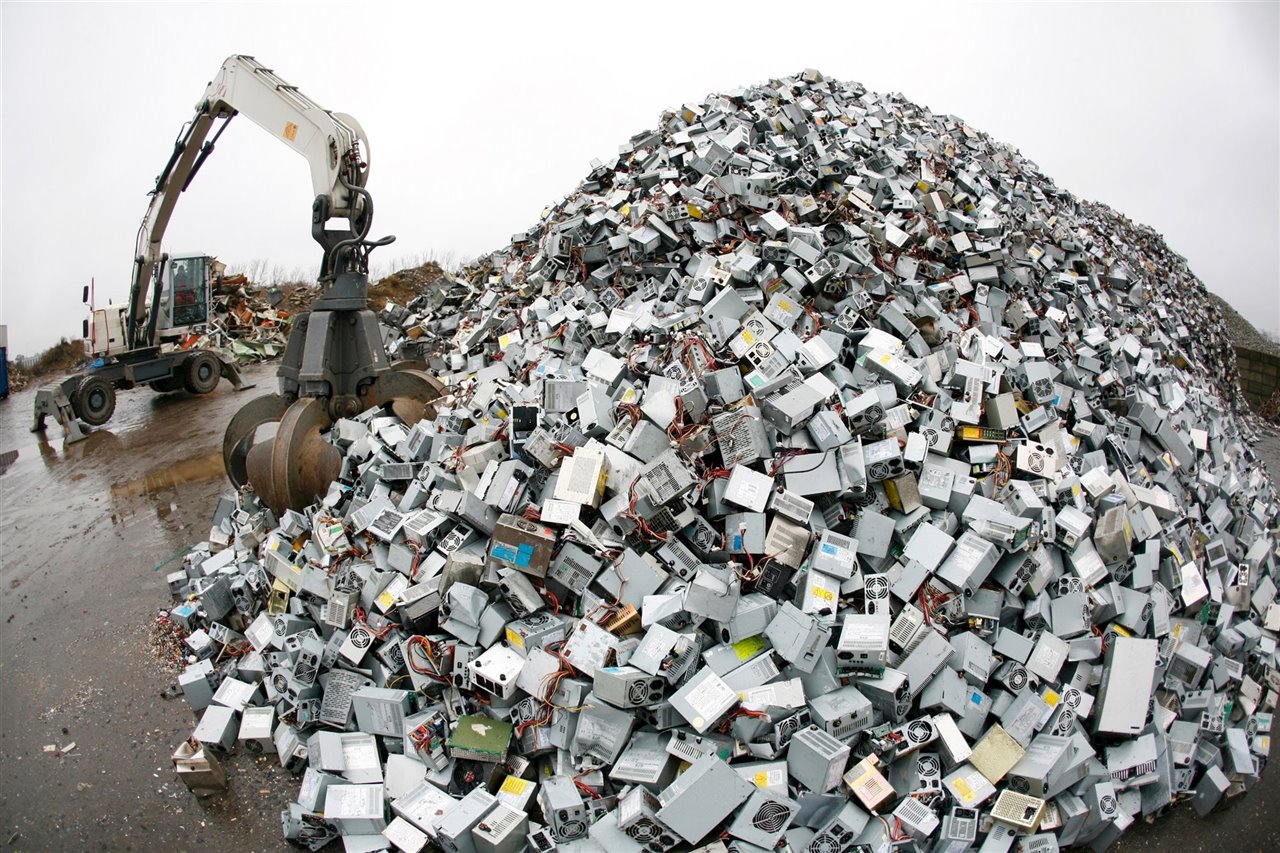
Any electrical or electronic device that is discarded (appliances, computers, cell phones, TVs, lighting, solar panels, etc.) becomes WEEE.
This type of waste presents logistical, environmental, health, and economic challenges.
Composition:
– 72%: recyclable materials (plastics, metals, glass).
– 25%: reusable components.
– 3%: hazardous waste (mercury, cadmium, lead).
Despite being in a smaller proportion, they are highly toxic. They affect health (seizures, infertility, kidney and neurological problems) and the environment (non-biodegradable, generate toxic gases, contaminate air, soil, and water).
– Batteries and cells
In this case, they present similar risks. Their variety and composition make their management difficult, and many still retain charge when disposed. Argentina does not manufacture them (except lead-acid batteries), so it is crucial to control what enters and ensure their safe treatment.


