



On the coasts of the Blue Patagonia Provincial Park in Chubut, when the tide goes out and the air is filled with salt, an aerial spectacle unfolds on the horizon: flocks of terns soar through the sky with energetic flights, sharp turns, and precise dives.
These acrobatic seabirds, related to seagulls but smaller and more aerodynamic, are key indicators of the state of the sea and can be easily observed from the park’s beaches.
What are terns and how to recognize them?
Terns are characterized by their immaculate white plumage, pale gray back, long and slender beak, and a black hood that covers their head during the breeding season.
“Unlike other seabirds, they don’t glide: they constantly flap their wings and have a very active flight,” explains Ignacio Gutiérrez, conservation coordinator of the Blue Patagonia Project at Rewilding Argentina.
Three nesting species on the Argentine coast
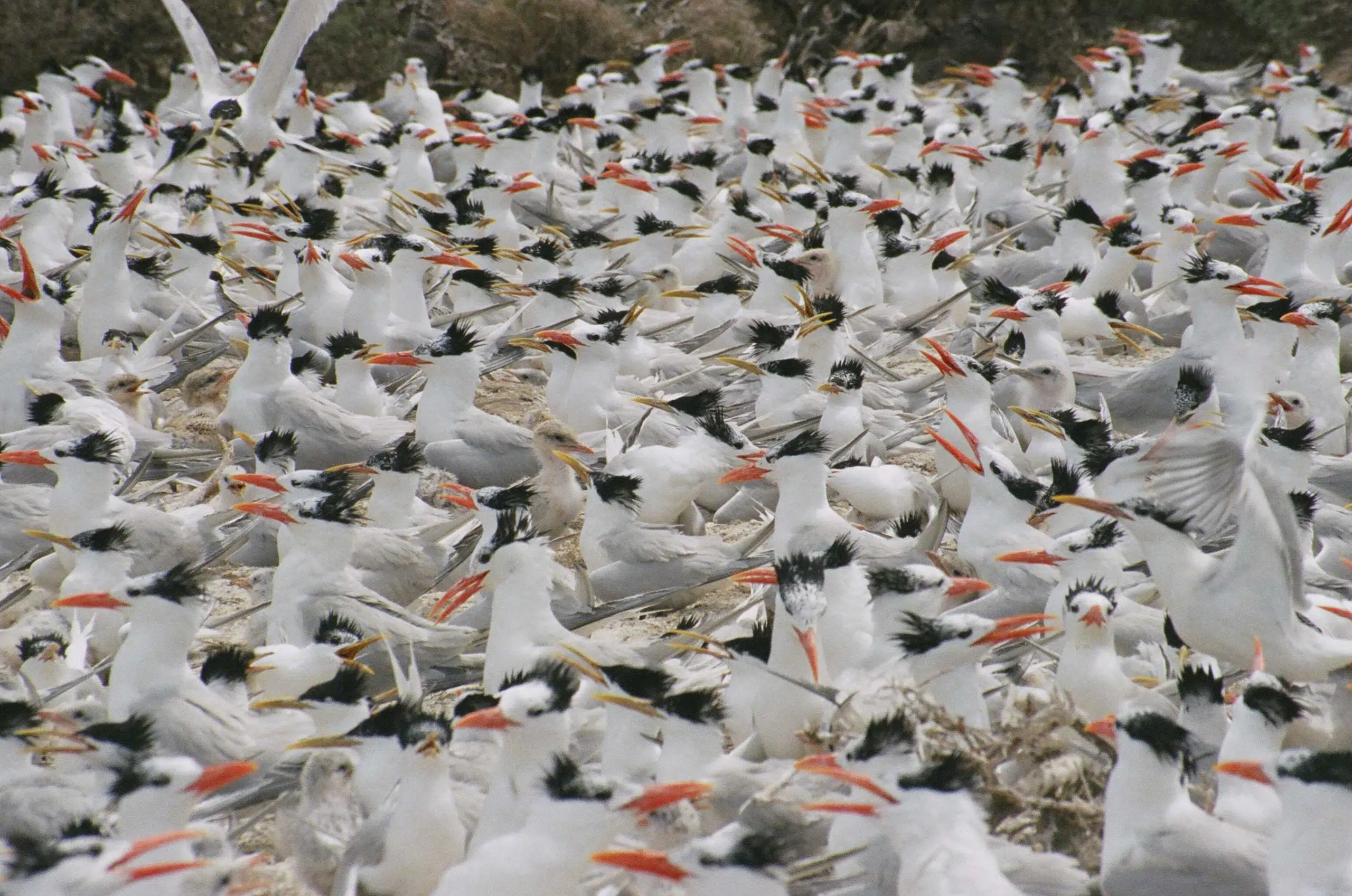
During spring and summer, three species nest in dense colonies on islands like Isla Larga, where more than 15,000 nests can be found:
- Royal tern: the largest, with an intense orange beak and a black crest during the breeding season.
- Yellow-billed tern: medium-sized, with a bright yellow beak and also a black crest.
- South American tern: the smallest, with red beak and legs, and shorter and sharper calls.
These colonies function as a collective defense strategy: in the presence of predators such as hawks or black-chested buzzard-eagles, all individuals fly together to scare them away.
Migratory visitors: species that cross continents
In addition to resident species, three others can be observed during their seasonal migrations:
- Arctic tern: performs one of the longest migrations on the planet, from the Arctic to Antarctica.
- Swallow tern: very similar to the South American tern, but without red legs.
- Antarctic tern: less common, but visible in transit.
These species usually pass through the region in April, May, and November, although they are not in breeding plumage, which makes identification difficult.
Relentless parents and sea bioindicators
During summer, terns fish tirelessly to feed their chicks. Unlike other seabirds, they don’t regurgitate food, but carry it whole in their beaks. This makes them precise indicators of the state of the sea: if there is good food, they bring large and frequent prey; if not, nesting fails.
Furthermore, their hunting method exposes them to kleptoparasitism: birds like skuas chase them to steal the fish in mid-flight, taking advantage of the fact that terns cannot defend it.
Where and how to observe them in Blue Patagonia
The best places to see terns in action are:
- Arroyo Marea Campsite
- Bahía Bustamante Portal
- Rocas Coloradas (in front of Camarones)
- Marisma and Isla Leones Camps
- Isla Tova Portal (opening soon)
It is ideal to bring binoculars and observe during the morning or at sunset, when they are most active near their colonies. “The details are minimal: the color of the beak, the size, the legs,” Gutiérrez recommends.


