



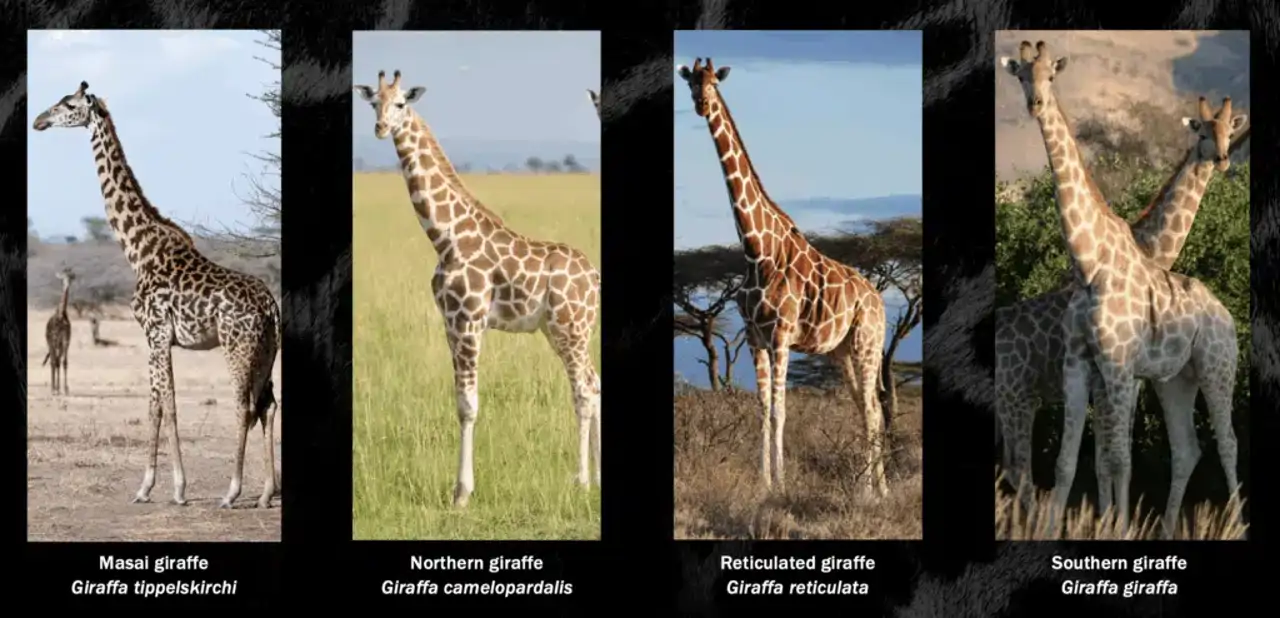
For over a century, giraffes were considered a single species with nine subspecies, but a new taxonomic review conducted by the IUCN Giraffe and Okapi Specialist Group revealed that there are actually four distinct species, allowing for more precise and effective redefining conservation strategies.
The four species recognized by the IUCN
A new look at the genetic and morphological diversity of this African icon
The current classification distinguishes the following species:
- Northern giraffe (Giraffa camelopardalis)
- Reticulated giraffe (Giraffa reticulata)
- Maasai giraffe (Giraffa tippelskirchi)
- Southern giraffe (Giraffa giraffa)
This redefinition is based on recent genetic studies, which analyzed nuclear and mitochondrial DNA, as well as morphological characteristics, bone structures, and geographical barriers such as rivers, arid areas, and the Rift Valley, which isolated populations throughout their evolution.
A measure with direct impact on conservation
Separate assessments will allow to identify species at critical risk.
IUCN emphasizes that treating all giraffes as a single species diluted the severity of threats facing specific populations. With this new classification, it will be possible to:
- Monitor differentiated regional dynamics
- Prioritize conservation actions according to the level of risk
- Highlight the decline of species with critical populations
Declining Populations: A Silent Decline
Despite their iconic image, giraffes have experienced a 40% decline between 1985 and 2015, reaching just 98,000 individuals across the continent. The IUCN warns that:
- Eastern and Central Africa show the most severe declines
- Southern Africa presents moderate increases
- South Sudan, DRC, and Niger are home to critically endangered populations of northern giraffes
Subspecies and Geographic Distribution
Seven of the initial nine subspecies are now maintained under three main species.
The new classification retains seven subspecies, now distributed among three species. For example:
- Nubian giraffe: under Giraffa camelopardalis
- Angolan giraffe: under Giraffa giraffa
This taxonomic adjustment not only responds to scientific criteria, but also redefines conservation priorities based on geographical distribution and population status.
An Urgent Call to Protect Giraffe Diversity
The reclassification sheds light on previously hidden threats and opens up new opportunities for action.
The IUCN believes that this update is key to addressing the silent decline of giraffes, caused by:
- Habitat loss
- Poaching
- Armed conflicts and political instability
With this new perspective, it will be possible to design more specific policies, strengthen regional programs, and prevent the extinction of highly vulnerable subspecies.


