



Last Monday, from 10 in the morning, a new exotic pine extraction day was carried out in the area of the Army Power Plant, located at km 10 of Av. Bustillo, in Bariloche.
The activity was organized by the Pines Network, the Mountain Military School, and the Bariloche Andean Club, and had an excellent community turnout.
Collective work and environmental awareness
Neighbors, scouts, and volunteers join the restoration of the Andean-Patagonian landscape.
The day began with a technical talk about the impact of invasive pines on the local biodiversity and the increasing risk of forest fires, exacerbated by drought and climate change.
Then, with shovels, gloves, and enthusiasm, the participants dedicated themselves to removing saplings of exotic species. The organization highlighted the participation of scout groups, who contributed energy and commitment.
“It was very gratifying to see boys and girls learning about the problem and working with enthusiasm,” said the Pines Network.
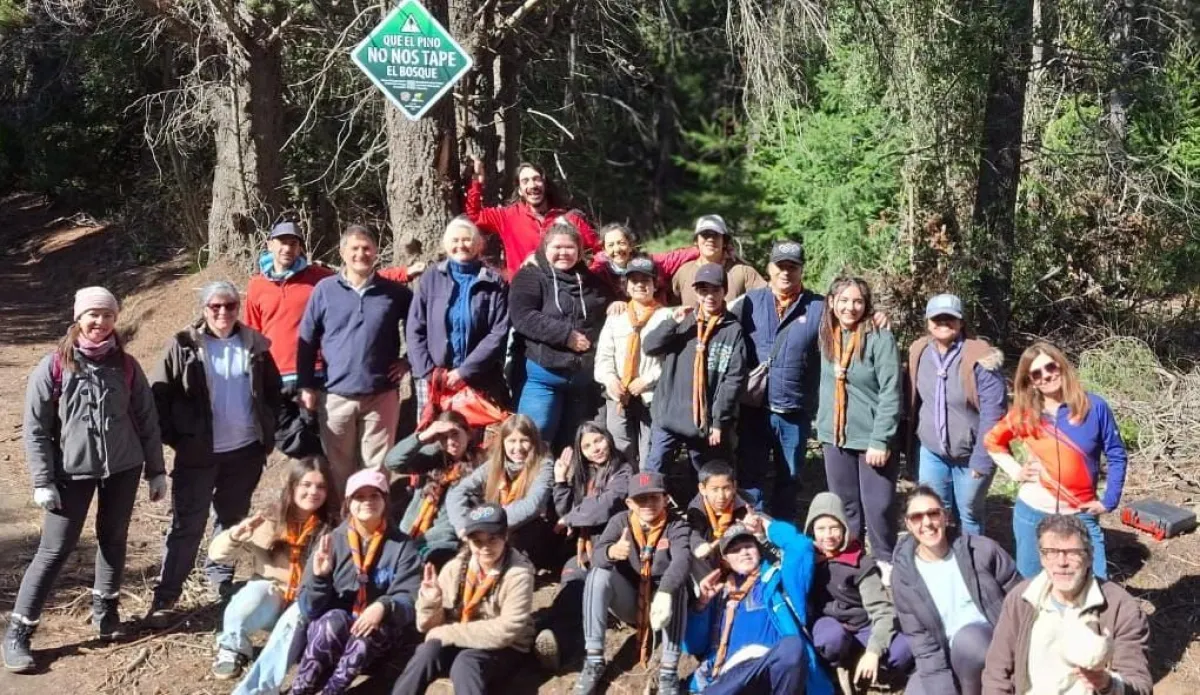 Event in Bariloche to eradicate exotic pines[/caption>
Exotic pines: a silent threat
In Bariloche, species such as ponderosa, radiata, and insignis pines, introduced for the forestry industry and ornamentation, are displacing native flora, modifying the landscape, and hindering the regeneration of the original forest after fires. They also generate urban problems such as damage to sidewalks, underground networks, and ice accumulation.
These species are pyrophytic, meaning they benefit from fire: their resin is highly flammable and they release seeds after fires, which favors their expansion. According to researcher Juan Paritsis (IIB-INIBIOMA, CONICET), in many burned areas, the native forest fails to regenerate and is replaced by these invasive species.
Pines Network: ecological restoration with a participatory approach
A collaborative initiative that articulates science, territory, and community.
The Pines Network works with institutions such as INTA, CONICET, National Parks, and the Bariloche Municipality to map invasion hotspots, plan interventions, and promote reforestation with native species such as ñire, notro, lenga, coihue, and roble pellín.
It also encourages citizen reporting of invasive specimens and participation in eradication events.
Forest fires and climate change: a dangerous combination
The spread of exotic pines worsens the environmental crisis in Patagonia.
Researchers from CONICET warn that the propagation of exotic species is increasing the frequency and intensity of forest fires.
Drier and hotter summers make fire control more difficult, and the pines, by dominating the landscape, alter the functioning of ecosystems.


