



The Amsterdam canals are a globally recognized symbol, with over a hundred kilometers running through the city and forming a landscape declared a World Heritage Site by UNESCO. However, they pose a significant risk to the abundance of stray cats in the Dutch capital.
In recent months, there has been a increase in deaths by drowning of cats in these waters. The felines, attracted by curiosity or hunting birds and fish, fall into the canals and struggle to find a way out due to the vertical stone walls that line much of the urban center.
To address this situation, the city council announced the installation of wooden stairs along the most dangerous points of the water network. The measure, funded with 100,000 euros, aims to provide animals with an escape route and, at the same time, enhance the city’s image as an inclusive space in terms of animal welfare.
The initiative includes placing these structures in strategic areas where a natural exit is impossible. The stairs will be discreetly integrated into the architectural environment to preserve the heritage aesthetics without compromising the safety of the fauna.
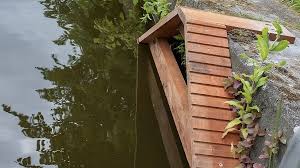 Amsterdam will install hundreds of cat stairs to prevent them from drowning in its canals. Photo: Euronews.
Dangers for Stray Cats
Life on the streets is already a daily challenge for cats. Lack of food, exposure to diseases, and accidents are common problems. Added to this is the risk of falling into the canals, where the absence of inclined surfaces or vegetation condemns them to a fatal fate.
The cold water and currents make it nearly impossible for a cat to swim to safety. Even if they survive the initial exhaustion, the smooth stone walls offer them no foothold. Drowning occurs within minutes, explaining the alarming numbers reported by rescue organizations.
The vulnerability of these animals also reflects the need to rethink the relationship between cities and urban wildlife. Although many stray cats manage to adapt to the environment, they remain victims of a space designed only for humans, where the risks exceed their natural survival abilities.
A Pioneer Measure in Europe
Amsterdam is following in the footsteps of Amersfoort, another Dutch city that in 2024 installed 300 similar stairs with the collaboration of residents. In that case, the local community identified the most dangerous points, ensuring the structures were placed in strategic areas. The success of this initiative was crucial in inspiring the capital’s action.
The project is not limited to cats. Any animal that accidentally falls into the water, from birds to hedgehogs, will be able to use the stairs as an emergency exit. This makes it a measure with broader benefits for urban biodiversity.
The idea is integrated into the city’s plan to improve coexistence between humans and wildlife in a densely populated environment. Stairs, shelters, and green corridors are part of a broader vision of sustainability, where animal welfare is placed on the same level as protection of historical heritage.
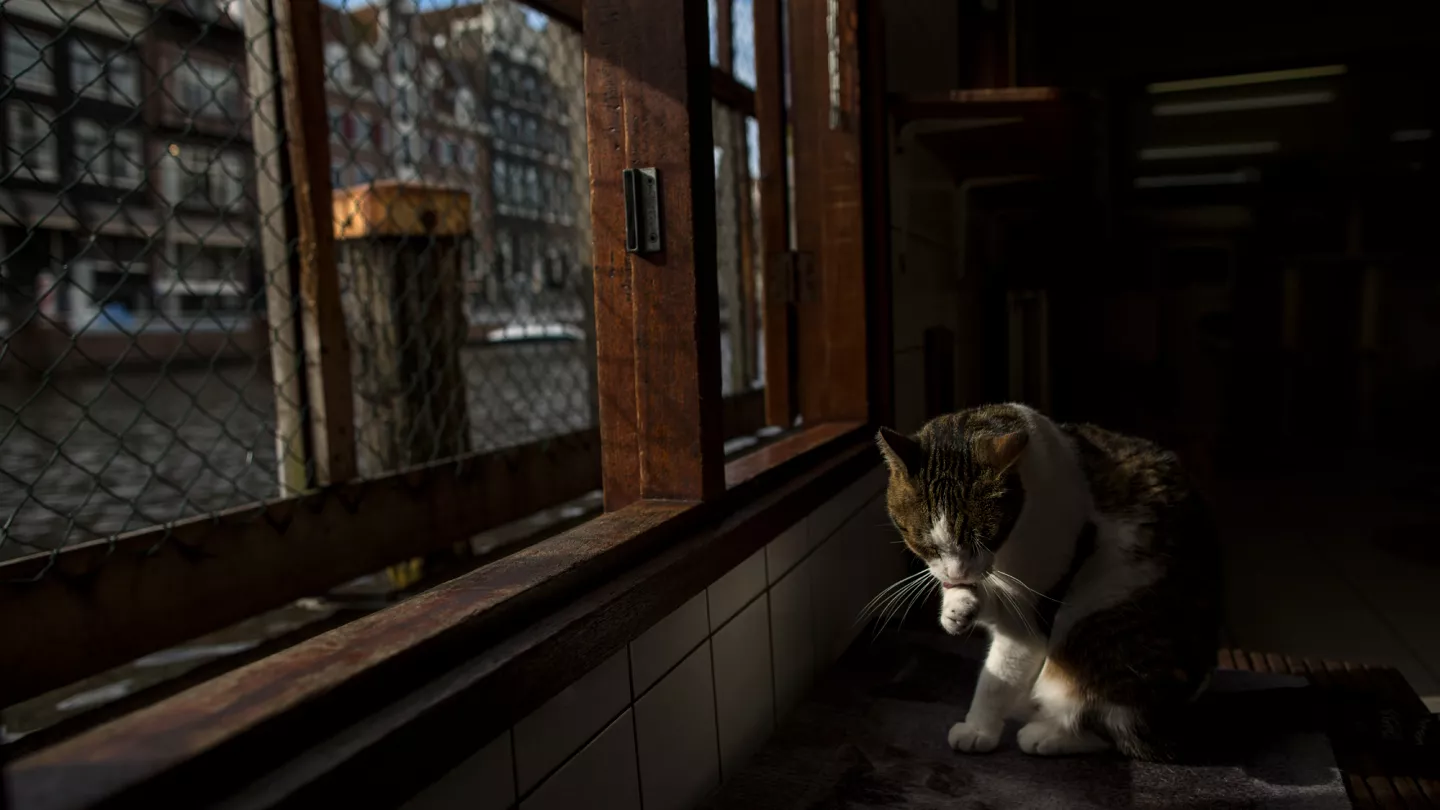 Amsterdam will install hundreds of cat stairs to prevent stray cats from drowning in its canals. Photo: Euronews.
Coexistence Beyond Tourism
The Amsterdam canals are a cultural pride, but their management must also consider the safety of those who share them: tourists, residents, and wildlife. The stairs represent a practical solution that, though simple, can make the difference between life and death for hundreds of animals each year.
The challenge goes beyond an isolated measure. The presence of stray cats in European cities requires rethinking how urban spaces are designed, considering wildlife as an active part of the community. In this sense, Amsterdam emerges as a model of compassionate innovation that could inspire other cities across the continent.
The future of the canals will depend not only on their heritage conservation but also on the city’s ability to ensure they remain safe for all inhabitants, humans and animals alike.



