



On September 19th, the Uruguay Sub200 expedition concluded, a submarine exploration journey that traveled through the depths of Uruguayan maritime territory and broadcasted real-time images through YouTube.
Aboard the ship Falkor (Too), national and international scientists revealed unknown landscapes, never-before-seen species, and historical remains, in a mission funded by the Schmidt Ocean Institute.
Figures that illustrate the scope of the project
Over 60 kilometers of explored seabed, 23 sampling stations, and thousands of views on YouTube.
- 2,000 miles traveled
- 23 sampling points between 200 and 4,100 meters deep
- 400,000 views on the first live broadcast
- 70 people involved, including 36 scientists from five countries
“We found an abundance and quality of life that amazed us all,” expressed Alvar Carranza, a researcher from Udelar and one of the leaders of the expedition.
 The legacy of the Uruguay Sub 200 journey: 200 hours on the seabed
Deep-sea coral reefs: an unexpected discovery
Healthy, extensive, and biodiverse reef complexes were identified off the coast of Uruguay.
Thanks to the underwater robot ROV Subastian, the team discovered cold-water stony coral fields, recently classified as vulnerable to extinction. One of the largest reefs was located at 300 meters deep, covering an area of 1.3 km² with mounds reaching 40 meters in height.
“The diversity and complexity exceeded all our expectations,” stated Carranza, who had detected signs of these reefs in 2010 through underwater mapping.
Over 30 new species and hundreds of unpublished records
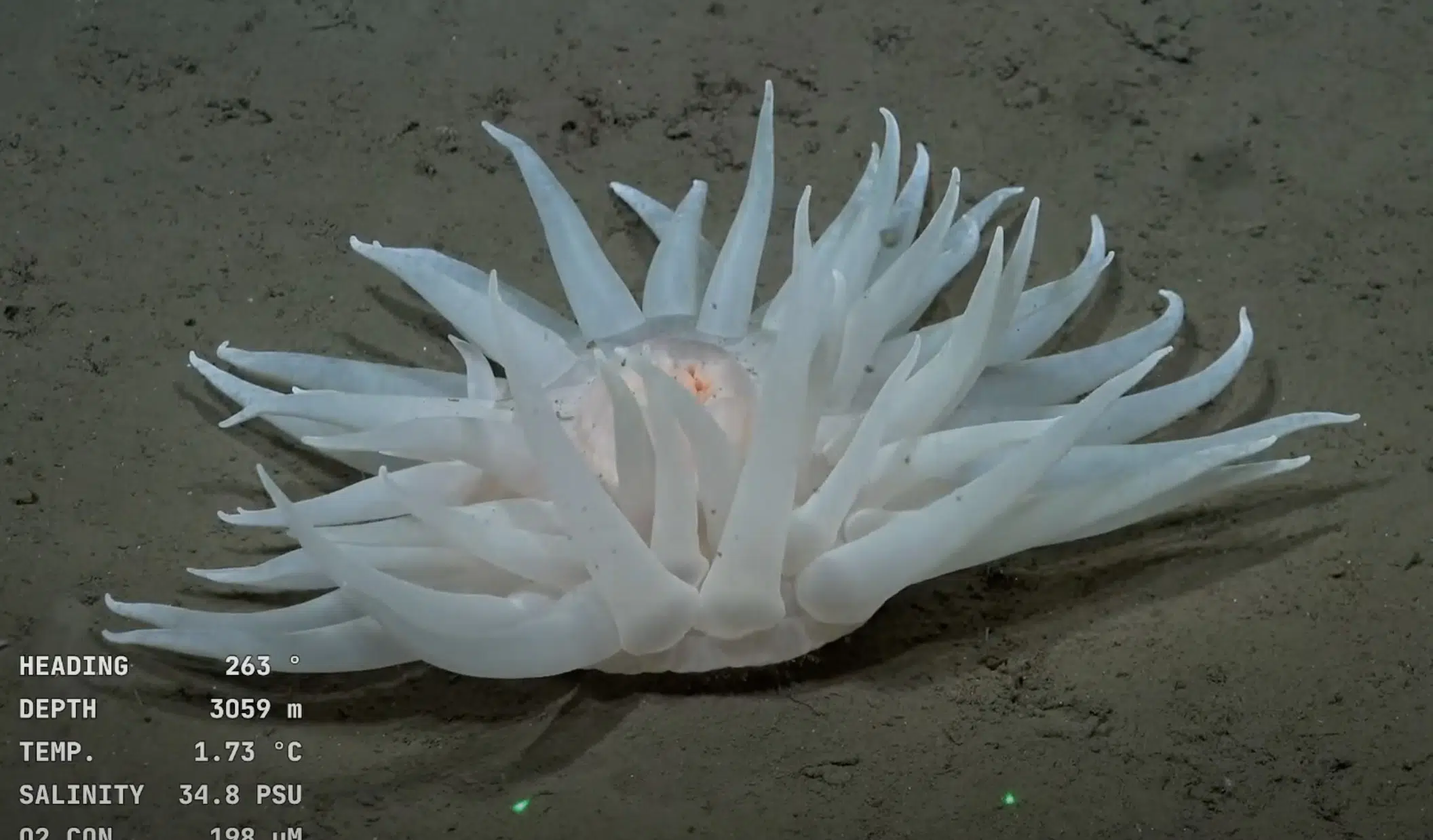
Among the findings of the Uruguay Sub200 expedition are sponges, snails, crustaceans, and emblematic species such as the dumbo octopus and the glass squid.
The expedition identified at least 30 potentially new species, as well as hundreds of specimens never before recorded in Uruguayan waters, positioning the country as a new benchmark in deep-sea marine biodiversity.
“Discovering marine life transforms our perception of the world,” highlighted Dr. Leticia Burone, emphasizing the value of real-time broadcasting to connect with the public.
Science, technology, and oceanic sovereignty
The 100th expedition of the Schmidt Ocean Institute marks a milestone for Uruguay.
“We were honored by President Yamandú Orsi visiting the ship before setting sail,” stated Dr. Jyotika Virmani, executive director of the institute.
The mission reinforces the importance of investing in scientific exploration, strengthening local capacities, and protecting vulnerable ecosystems, in a global context of climate change and biodiversity loss.


